
Key Takeaways
- AI-powered chat automation personalizes every interaction guiding customers from discovery to purchase in one seamless WhatsApp journey.
- WhatsApp Flows create rich, interactive experiences like product quizzes and guided forms that qualify leads and improve conversion rates.
- Integrated in-chat payments through UPI or Razorpay make checkout frictionless, dramatically reducing cart abandonment.
- Data-driven personalization & retention—with automated follow-ups, feedback, and loyalty messages keeps customers engaged long after purchase.
Success today depends on speed. The faster you can turn a customer question into a purchase, the better.
WhatsApp makes that possible. It’s where your customers already spend their time, where they expect fast replies, and where the full journey from discovery to checkout can happen smoothly.
The fastest-growing D2C brands are not the ones with the biggest ad budgets. They are the ones turning everyday conversations into sales. Instead of treating WhatsApp as only a support tool, they use it as their main growth channel.
This guide shows how D2C brands use WhatsApp to turn interest into purchases and how Flowcart makes the process simple and scalable.
You will learn what conversational commerce means, why it is essential, and how to set it up without rebuilding your tech stack.
What Is WhatsApp for D2C?
WhatsApp for D2C is using the app as your main channel for attracting customers, making sales, and keeping them loyal. Traditional eCommerce pushes shoppers to a website and hopes they complete checkout. WhatsApp keeps everything inside the chat.
- Customers browse products in chat
- Ask questions instantly
- Pay and get order updates without leaving WhatsApp
D2C brands access these features via the WhatsApp Business API, using a Business Solution Provider like Zoko, Interakt, TheBotMode, or Flowcart.
The API adds tools for automation, ERP connection, broadcasts, and payments. Once set up, you can manage thousands of chats while still giving each customer a personal experience.
Why WhatsApp Is Becoming the Growth Engine for D2C Brands
1. Rise of Mobile-First Shopping and Chat Commerce
Customers no longer browse desktop websites. They shop on their phones while multitasking. WhatsApp fits perfectly into that behavior.
Clicking an ad or link takes them directly into a chat, removing barriers between curiosity and action. Chat commerce is not a passing trend; it is how mobile shopping naturally works.
2. WhatsApp as a Complete Marketing and Sales Channel
Most D2C brands still treat each channel separately: Instagram for awareness, email for nurturing, and websites for checkout. WhatsApp combines all of these in one place. With it, you can:
- Start instant conversations from ads
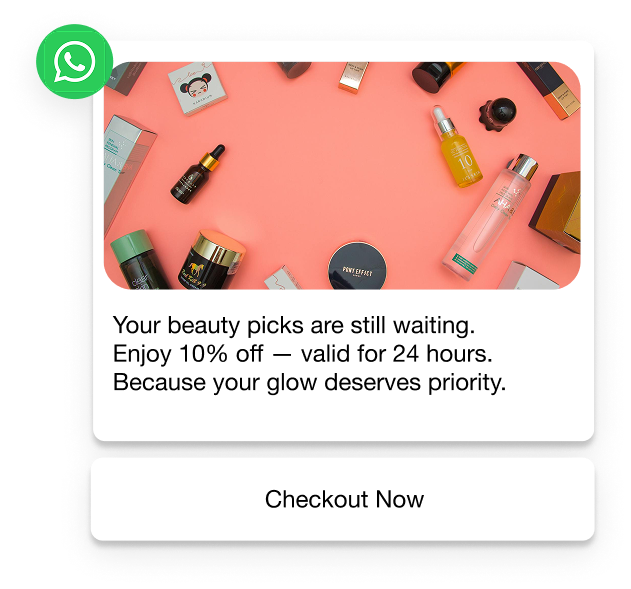
- Recover abandoned carts with personalized timely messages
- Send timely repurchase reminders
When your entire customer journey runs at WhatsApp’s speed, purchase decisions happen in minutes instead of days.
3. Why D2C Brands Prefer Direct Relationships Over Marketplaces
Selling on Amazon or Flipkart gives reach, but not ownership. Those customers belong to the platform, not your brand. WhatsApp changes that by giving you direct, ongoing access to your buyers.
Every chat is a relationship you control, and every opt-in is a customer you can re-engage anytime without paying for ads or chasing algorithms.D2C brands win through loyalty and repeat purchases, not just one-time transactions.
You build that loyalty by talking directly to customers and making them feel part of your brand, not just another order in a marketplace.
Use Cases for D2C Brands on WhatsApp
1. Conversational Commerce
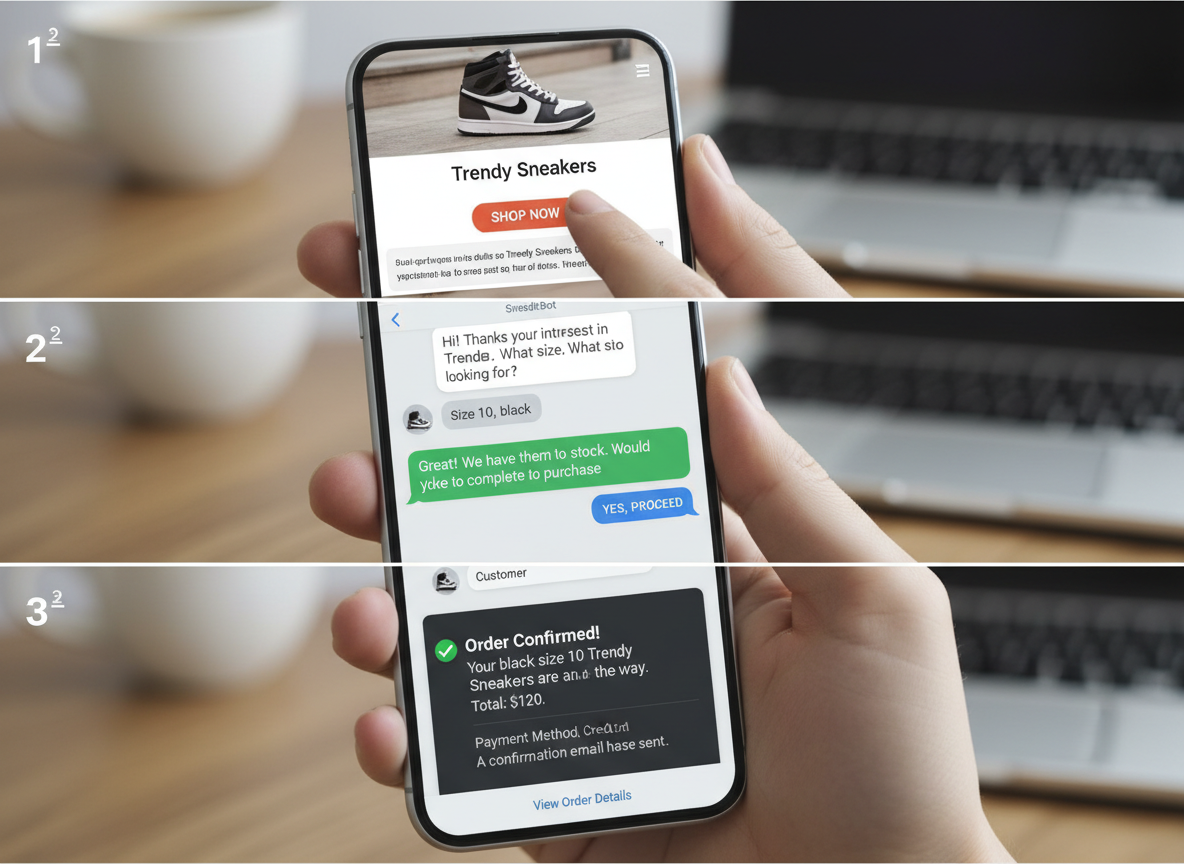
Customers browse, ask questions, and buy directly on WhatsApp. Flowcart handles product discovery, checkout, and order confirmation. No website needed.
2. Lead Generation and Nurturing
Click-to-WhatsApp ads send leads straight into chat. Automated flows qualify prospects and pass them to sales instantly. D2C brands using WhatsApp marketing see 30–40% higher sales.
3. Personalization at Scale
Flowcart automatically segments customers and sends messages based on purchase history. Buyers get restock reminders and cart abandoners get recovery messages without any manual effort.
4. Streamlined Payments
Customers confirm orders and pay in one step. Fewer redirects mean fewer abandoned carts and faster conversions.
5. Post-Sale Engagement
Order updates, delivery alerts, and support all happen in chat. Fast replies build trust and triple repeat purchases compared to email.
6. Broadcast Campaigns
WhatsApp broadcasts get 95% open rates within minutes. Target the right customers with flash sales and restock alerts they’ll actually see.
What are the benefits of WhatsApp for D2C Brands?
- Faster conversions – Customer questions get answered in seconds instead of hours. Quick responses remove hesitation and turn interest into sales.
- Stronger customer relationships – You own every conversation. No algorithms or marketplaces control your reach. Every interaction is direct with your buyers.
- Fewer abandoned carts – Checkout happens right inside the chat. Fewer steps and no redirects mean more customers complete their purchases.
- Better data, better retention – Every conversation adds insight to your CRM. Use this data to create personalized flows that boost repeat purchases.
How to Get Started with WhatsApp for D2C
Step 1: Choose a Business Solution Provider (BSP)
Pick a BSP like Zoko, Interakt, TheBotMode, or Flowcart to access the WhatsApp Business API. Make sure it offers CRM integration, automation tools, payment options, and analytics that fit your business.
Step 2: Set up and verify your number
Your BSP will guide you through setup. You’ll need a dedicated phone number, business documents, and a Facebook Business Manager account. Verification usually takes 3–7 days.
Step 3: Connect your eCommerce catalog
If you use Shopify, WooCommerce, or Magento, your BSP can sync your product catalog directly. Customers can browse products and prices inside WhatsApp with automatic inventory updates.
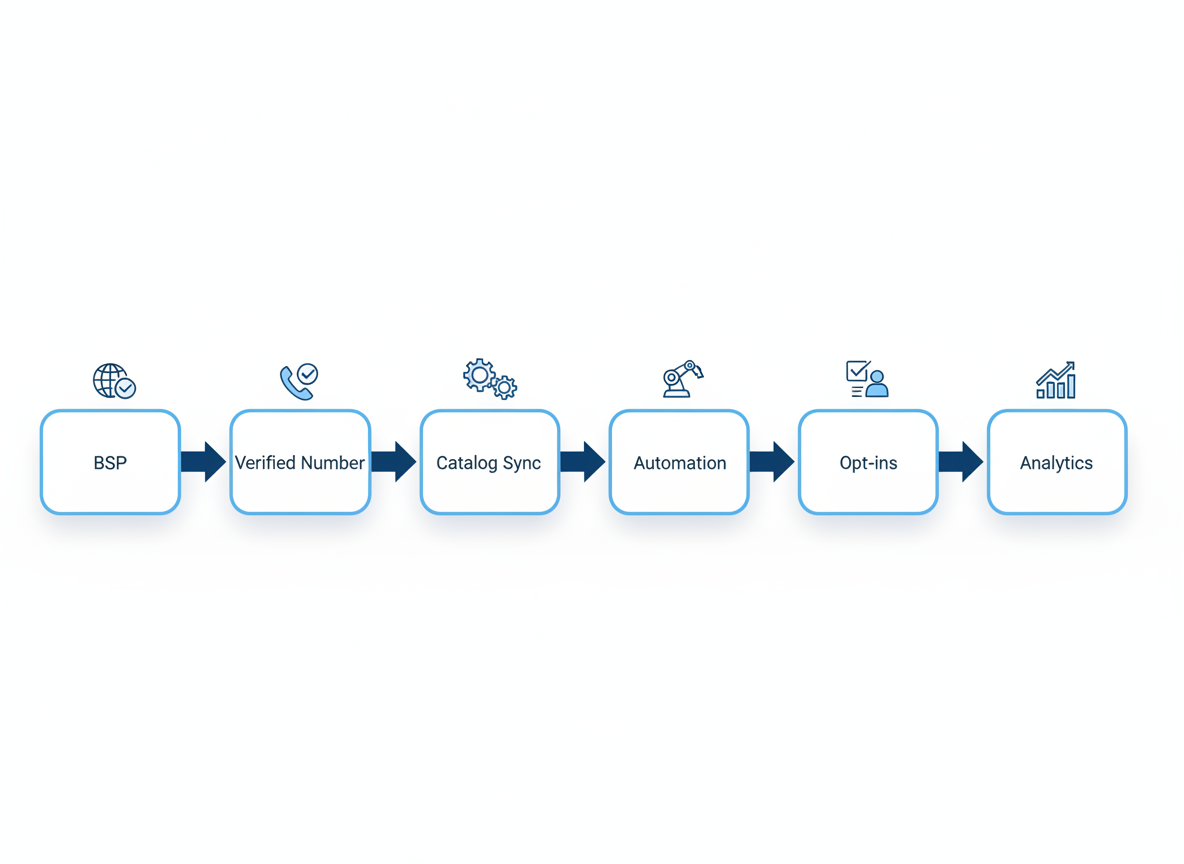
Step 4: Create automation flows
Set up workflows for order confirmations, shipping updates, abandoned cart recovery, and post-purchase follow-ups. These flows handle most customer interactions automatically.
Step 5: Build opt-in lists and send broadcasts
Collect opt-ins via click-to-WhatsApp ads, QR codes, website prompts, or post-purchase messages. Send targeted broadcasts based on purchase history and engagement.
Step 6: Track and optimize performance
Monitor open rates, conversions, response times, and repeat purchase rates. Review results regularly and improve your flows to maximize performance.
How Flowcart Helps D2C Brands Sell More on WhatsApp
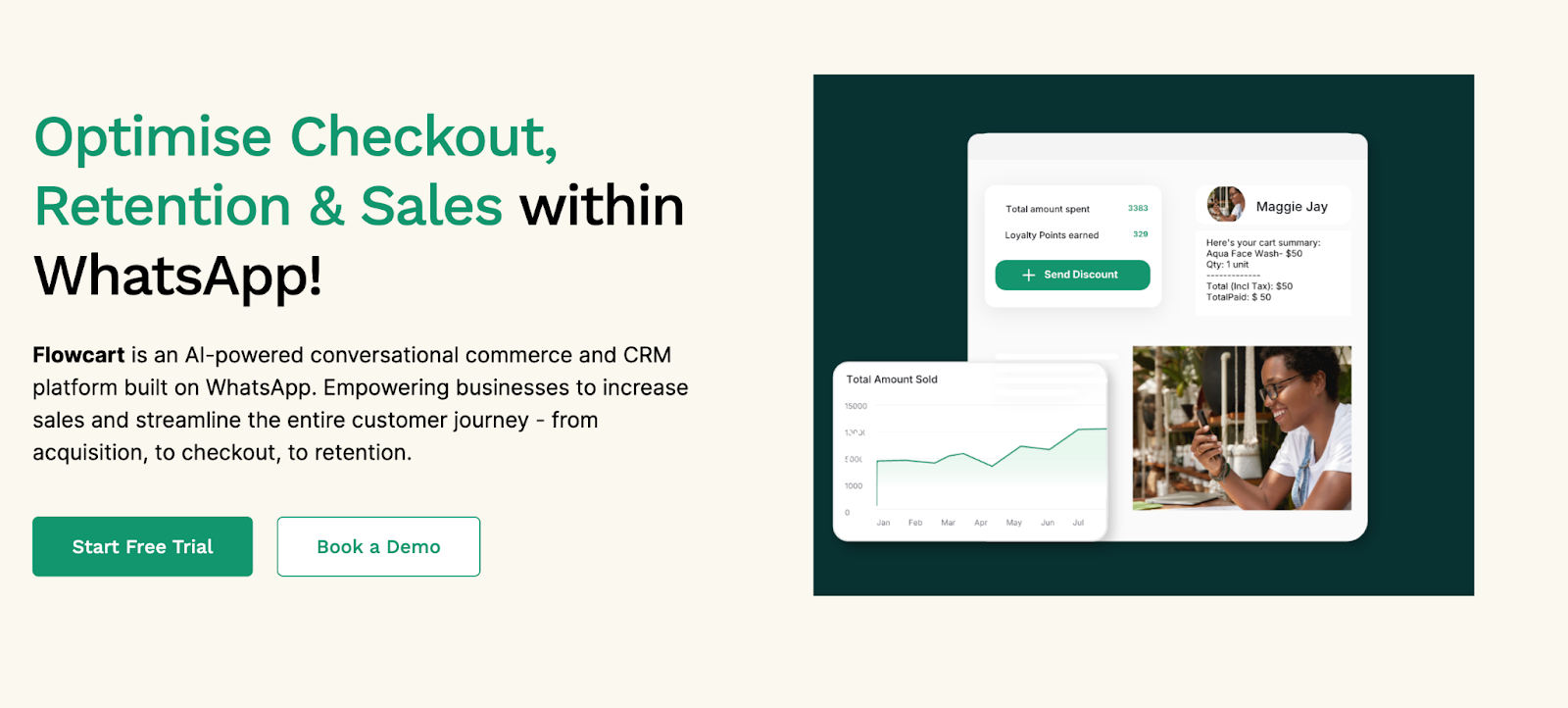
Flowcart brings every part of your D2C conversation together. From the first message to the final payment, everything happens in one place. You can chat with customers, share products, take orders, and collect payments without switching apps.
This makes daily operations faster and simpler. Your team spends less time juggling tools and more time helping customers.
- Automated conversations – When a customer messages you, Flowcart shows relevant products, recalls past purchases, and guides them to checkout automatically.
- Smart follow-ups – If someone leaves a cart, they get a reminder within minutes. Past buyers receive personalized re-engagement messages, all without manual effort.
- Manage multiple stores easily – Assign chats to the right store or agent, track performance by location, and manage inventory from one dashboard.
- Data that drives growth – Monitor conversions, response times, repeat purchases, and campaign results. Optimize what matters most.
- Works with your tools – Flowcart connects seamlessly with Shopify, WooCommerce, Magento, Razorpay, Stripe, UPI, and top retail CRMs.
Ready to turn conversations into revenue? Flowcart gives you everything you need to build, automate, and scale conversational commerce. Start your free trial today
Best Practices for WhatsApp Commerce in D2C
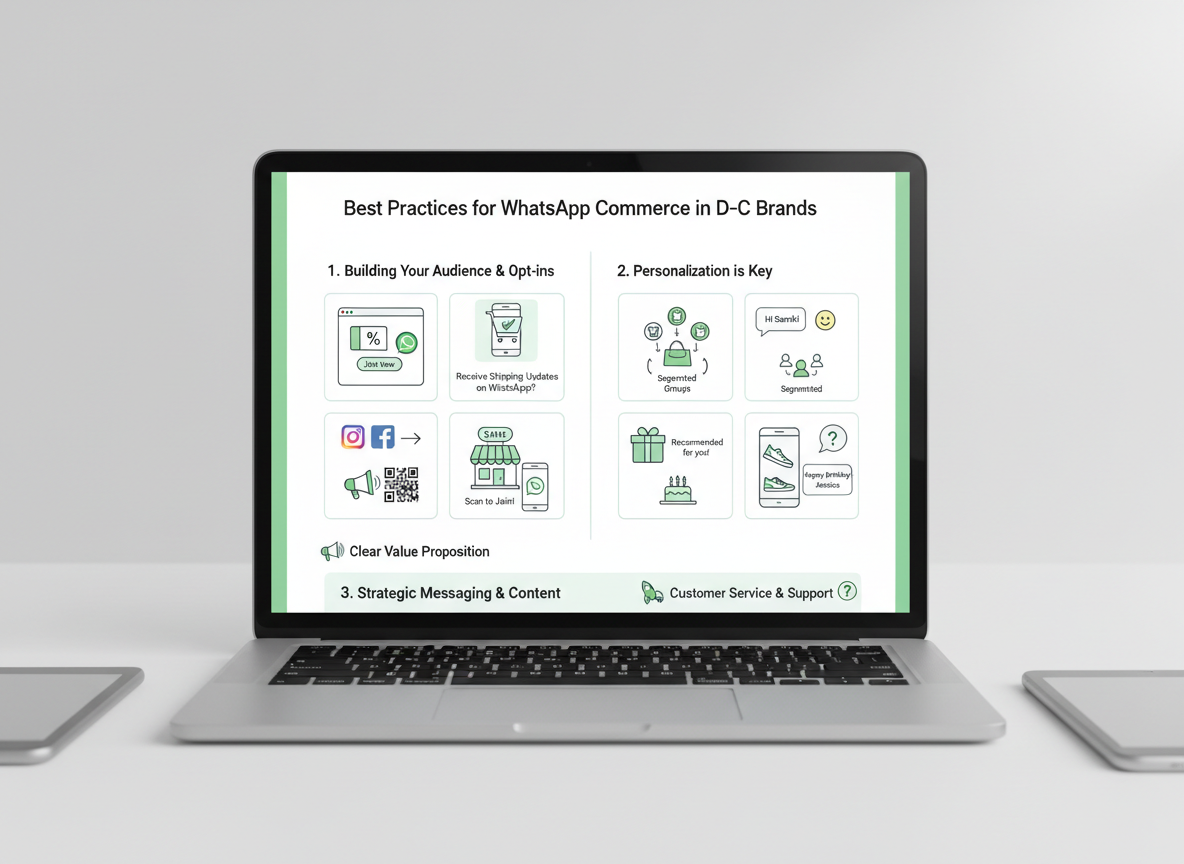
To get the most out of WhatsApp for your D2C brand, focus on communication that is personal, engaging, and compliant.
- Segment and personalize communication – Group customers by purchase frequency, cart value, product interest, or engagement. Send messages that are relevant to each segment for better results.
- Automate but keep a human tone – Write automated messages like your team would speak. Use contractions, ask questions, and show personality to make conversations feel natural.
- Use media-rich messages – WhatsApp supports images, videos, PDFs, and product carousels. Messages with visuals get higher reply rates and keep customers engaged.
- Respect opt-in policies and privacy – Always get explicit consent before messaging customers. Never buy lists or scrape numbers, and remove opt-outs immediately.
- Monitor metrics and optimize campaigns – Track open rates, responses, conversions, and repeat purchases. Test different approaches and improve continuously rather than setting up once and forgetting.
Following these practices ensures your WhatsApp conversations drive sales, strengthen customer relationships, and protect your brand reputation.
Conclusion
WhatsApp has become the growth engine for D2C brands. The fastest-growing companies are turning everyday chats into sales and lasting customer relationships. They no longer treat WhatsApp as just a support tool; it's now the heart of their commerce strategy.
If you are still relying on emails and multi-step checkout pages, you are adding friction that your competitors have already removed. The shift to conversational commerce is happening now, and Flowcart makes it easy to get started.
Ready to grow your D2C brand on WhatsApp?
Book a free demo with Flowcart today.
FAQs
1. Is WhatsApp automation expensive for new D2C brands?
No. You pay per conversation, and WhatsApp converts 2–3x better than email, giving quick ROI.
2. Will automated messages feel spammy?
Not if you message only opted-in customers with relevant content. Useful messages get great response rates.
3. How is WhatsApp better than email for retention?
Messages are read in minutes, not hours, leading to faster responses and more repeat purchases.
4. Can I use WhatsApp if I sell on Amazon or Flipkart?
Yes. It helps you build direct relationships and repeat sales outside marketplaces.
5. Do I need tech skills to set it up?
No. Flowcart handles setup. You can go live in days with simple visual tools.





%201.webp)



.png)