.png)
.png)


105,972 new units sold across 3,350 Stores with Flowcart’s Loyalty Program.
3,350
Retail Stores Onboarded
105,972
QR Scans
53.1%
Activation Rate
30%
High-Value Stores
.png)
About the company
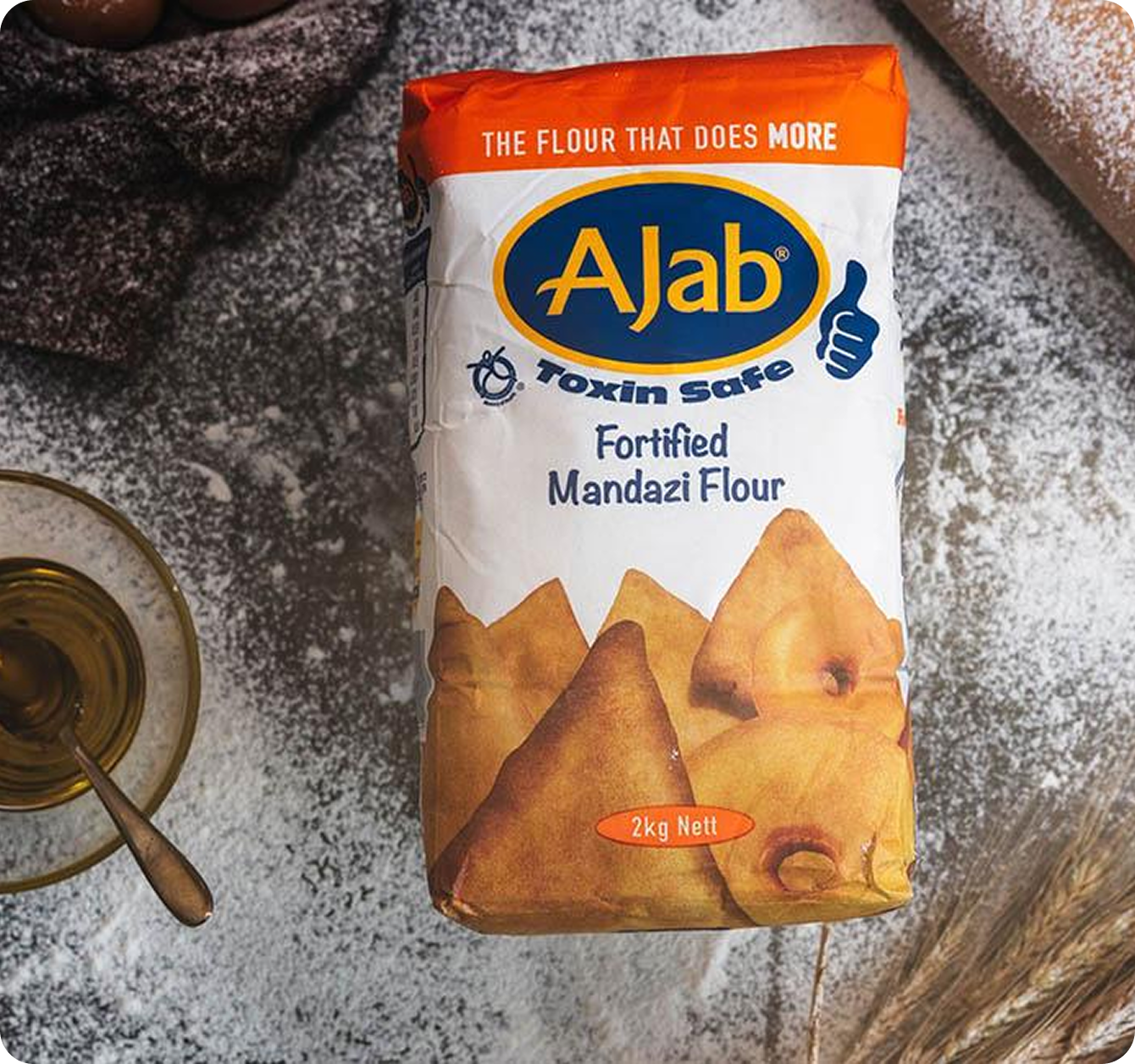
Ajab, operating under Grain Industries Ltd., is one of Kenya's most recognised flour brands. With a product range spanning processed foods, wheat flour, and maize flour, Ajab has built a wide distribution footprint across the country - supplying wholesalers and distributors who in turn stock retail stores, supermarkets, and hypermarkets from the coast to the lake.
For a brand operating at this scale, the real risk is silent attrition. A retail store that stops stocking Ajab's flour rarely announces it. There is no churn notification, no cancellation, no signal. It is just a gradual, invisible loss of shelf space to a competitor. In a staples category where purchase habits are sticky, winning a store back is far harder than never losing it.
Ajab's challenge was not production. It was not the product. It was retention and the intelligence needed to protect it. Without visibility into which stores were buying, which were slipping, and where a competitor was quietly gaining ground, there was no way to act before the loss became permanent. That changed with Flowcart.
The Challenge
Ajab is one of Kenya's leading flour manufacturers - but for years, their visibility into the market ended at the distributor. Once a bale of flour left the warehouse, it disappeared into a black box.

Distributor-level blindspot
Ajab’s market visibility ended the moment a bale of flour left the warehouse. Once in the distributor network, product movement became a complete black box. Strategy relied on unverified internal assumptions rather than real store-level data.

Retention by guesswork
Without line-of-sight into the retail network, driving retention was purely intuitive. Ajab had no clear way to spot slipping sales, prioritize high-value regions, or even identify who their top-performing retail partners actually were.

An invisible leak
A key competitor was steadily eating into Ajab’s market share, triggering a prolonged drop in sales. The core issue wasn't just a lack of top-line growth, it was an untracked, invisible leak quietly bleeding sales across unmonitored regions.
The Flowcart Solution
Flowcart turned every bale of flour into a data point. Inside each bale, Ajab included a unique QR code provided by Flowcart. When a retailer scanned the QR code, they were enrolled in a loyalty programme and rewarded with points
Loyalty Points
A simple, tangible incentive for a store owner to register. But behind that simple scan, Flowcart was capturing something far more valuable for Ajab: store-level data at scale. Every scan gave Ajab: the exact location of the store - county, constituency, region, nearest landmark, purchase frequency - how often a store was buying and a live map of retail penetration across Kenya. For the first time, Ajab could see their distribution network not as assumed, but as it actually was.
The Results
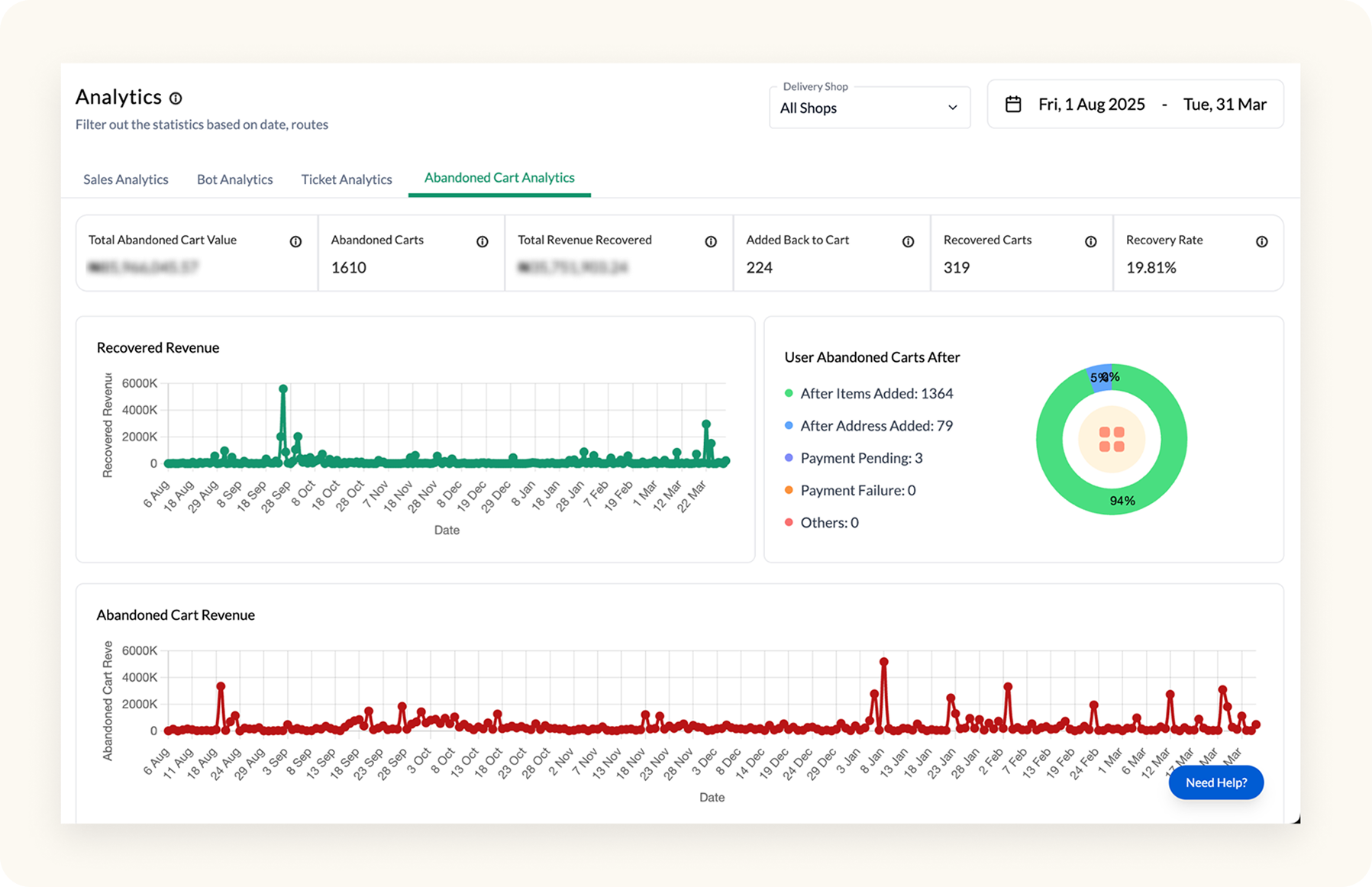
In the first 6 months, Ajab enrolled a total of 3,350 stores and built the most granular store-level dataset in their category.
Nearly 1 in 3 enrolled stores - around 1,005 outlets - are buying at least one bale every single week. That is not a loyalty programme metric. That is a retained, high-frequency customer base that Ajab can now see, segment, and serve - for the first time. The 53.1% monthly active rate means over 1,775 stores are purchasing at least once a month, sustained entirely through a programme that required no sales force expansion - just a QR code inside every bale.
Stop losing buyers to drop-offs, friction, and silence, from first click onward
You've done the hard work of generating the demand. Now, let us convert it for you!




%201.webp)




.png)