.png)
.png)

Key Takeaways
- Upselling on Shopify increases AOV by nudging shoppers toward higher-value variants, bundles, and subscriptions at high-intent moments.
- Poorly timed, irrelevant upsells hurt conversion; relevance, timing, and low-friction placements make upsells feel genuinely helpful.
- Flowcart connects Shopify behavior with WhatsApp conversations to trigger contextual in-chat upsells, follow-ups, and post-purchase offers.
The moment a customer walks into a store, one thought crosses the owner’s mind: I hope they buy big. Ecommerce is no different.
When a visitor lands on your website, you want more than just a sale. You want that traffic, ad spend, and effort to pay off with a huge purchase.
But here’s the challenge: how do you nudge someone browsing a basic or mid-range product toward the best version you offer? The answer is upselling. Used well, upselling doesn’t feel like selling more but like helping customers make a better choice.
In this guide, we’ll break down what upselling really is, when it works best, and proven strategies ecommerce brands use to increase revenue without hurting the customer experience.
What Is Upselling (and How Is It Different from Cross-Selling)?
Upselling is the practice of encouraging a customer to buy a higher-value version of the product they’re already interested in. Think of it as helping the customer upgrade their choice.
For example, if someone is looking at a basic skincare kit, upselling would mean recommending the premium kit with better ingredients or added benefits.
The goal isn’t to push an unnecessary option, but to demonstrate greater value in a slightly higher-priced option that better meets their needs.
Upselling vs. Cross-Selling: What’s the Real Difference?
But don’t confuse upselling with cross-selling. You would have seen options on ecommerce stores like “Frequently bought together” or “You may also like.” That’s cross-selling. It is about suggesting additional products, not an alternative product that complements what the customer is already buying.
Using the same example, if a customer adds a skincare kit to their cart, cross-selling would mean recommending a sunscreen or a face serum that pairs well with it. The original product stays the same; you’re simply expanding the basket.
The key difference lies in direction. Upselling moves the customer to a higher-tier version of the same product, while cross-selling moves them to related products. Both strategies aim to increase order value, but when done right, they also improve the customer experience.
Instead of feeling sold to, customers feel guided toward a choice that either offers more value (an upsell) or completes their purchase (a cross-sell).
Also Read: How to Measure ROI from WhatsApp Marketing Campaigns
How Important Is Upselling to Your Shopify Store?
Upselling plays a quiet but powerful role in how profitable your Shopify store becomes. It doesn’t change who you sell to, but it does change how much you earn from each purchase. Here’s how upselling contributes to your business:
Generates more revenue from the same traffic
Bringing new visitors to your store costs money in the form of ads, influencers, SEO, and time. By contrast, upselling increases revenue from customers who are already ready to buy. In fact, studies by Accenture show that effective upselling can increase revenue by 10–30% on average.
Example: A shopper planning to buy a $19 product upgrades to a $29 premium version after seeing the added benefits.
Directly increases your Average Order Value (AOV)
A higher AOV means each order contributes more to your bottom line. Even a small uplift per order compounds over hundreds or thousands of purchases.
Example: Offering a “buy 2 and save more” or a value pack instead of a single item at checkout.
Helps customers make better purchase decisions
Upselling isn’t about pushing expensive products. It’s about showing customers an option that delivers more value for a slightly higher price.
Example: Recommending a larger pack that lasts longer and costs less per use.
Fits naturally into the buying journey
When placed on product pages, in the cart, or during checkout, upsells feel like helpful suggestions rather than interruptions.
Example: Showing a higher-tier product right below the one a customer is viewing, with a clear comparison.
Scales without adding operational complexity
Once your upsell logic is set up, it runs automatically for every shopper. No extra marketing effort. No manual follow-ups.
Example: An automated checkout upsell that appears for every qualifying order.
In simple terms, upselling helps you earn more, serve customers better, and grow your Shopify store sustainably without constantly chasing new traffic.
When and Where to Offer Upsells?
Upsells are most effective when they appear at the right moment in the customer journey. Instead of pushing upgrades randomly, place them where shoppers are already engaged and ready to decide, such as:
On the product page
This is where customers are actively comparing options. Presenting higher-value versions or bundles here helps them make a more informed choice before committing to a purchase.
In the cart
The cart is a high-intent stage. Upsells placed here should focus on increasing value without creating friction or distraction from checkout.
At checkout
Checkout upsells must be simple and highly relevant. At this point, customers are ready to complete the purchase, so any upgrade should require minimal effort and decision-making.
After purchase
Post-purchase upsells work well because the buying decision is already made. These offers should feel like a natural extension of what the customer has just bought, not a new sales pitch.
For returning customers
Upsells become more effective when they reflect past behavior. Showing higher-tier options during repeat visits feels personalized and helpful rather than promotional.
When upsells are placed at the right points in the journey, they increase order value without disrupting the experience.
5 Strategies to Effectively Upsell on Shopify
When upsells feel helpful and relevant, customers are far more likely to accept them. Here are some of the top proven strategies to make upselling effortless and convincing for the buyers:
1. Use smart product bundling
Product bundling is one of the easiest ways to upsell without making customers feel like they’re spending more. Instead of pushing a higher-priced single item, you bundle related products to clearly offer better value.
Bundles work well because they simplify decision-making. Customers don’t have to think about what else they might need; you’ve already curated it for them. When the bundle is priced slightly lower than buying each item individually, the upgrade feels logical and cost-effective.
But the key to smart bundling is relevance. Every product in the bundle should add clear value to the main purchase. When done right, bundles increase average order value while making customers feel like they’re getting more, not paying more.
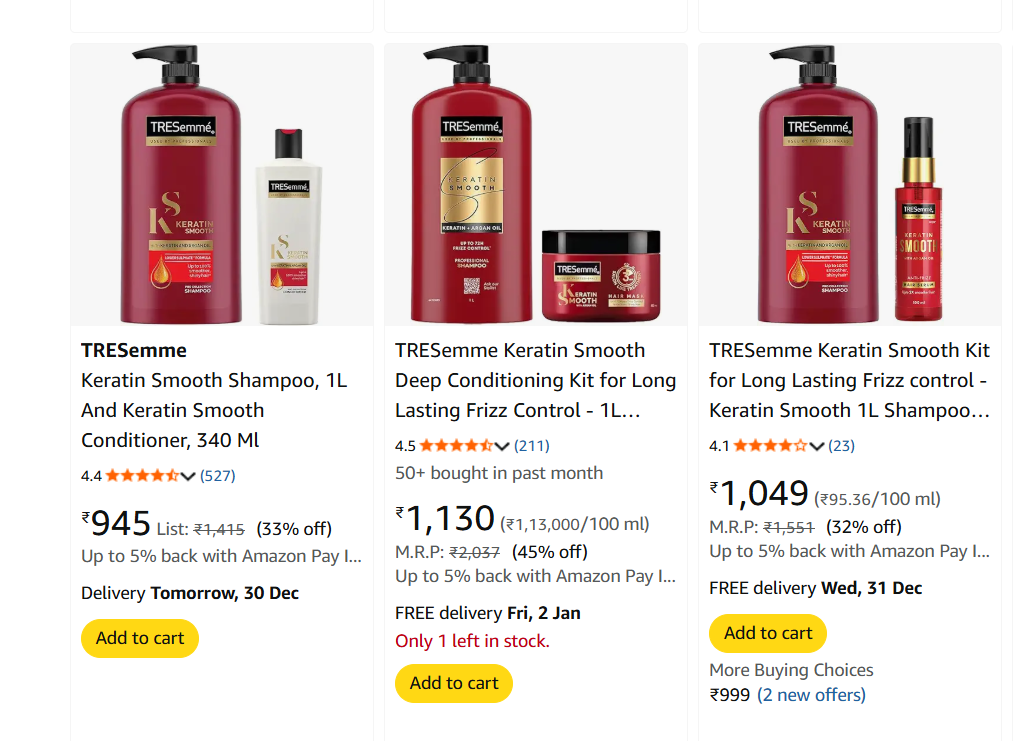
A simple example of smart bundling is TRESemmé shampoo on Amazon. Instead of selling only the shampoo, the brand offers multiple bundles: one with a matching Keratin Smooth conditioner, another with a hair mask, and a third with a hair serum.
Each bundle reflects a natural step in the hair-care routine. By packaging these steps together, TRESemmé nudges buyers to choose a complete solution rather than just the shampoo, increasing order value while delivering real value to the customer.
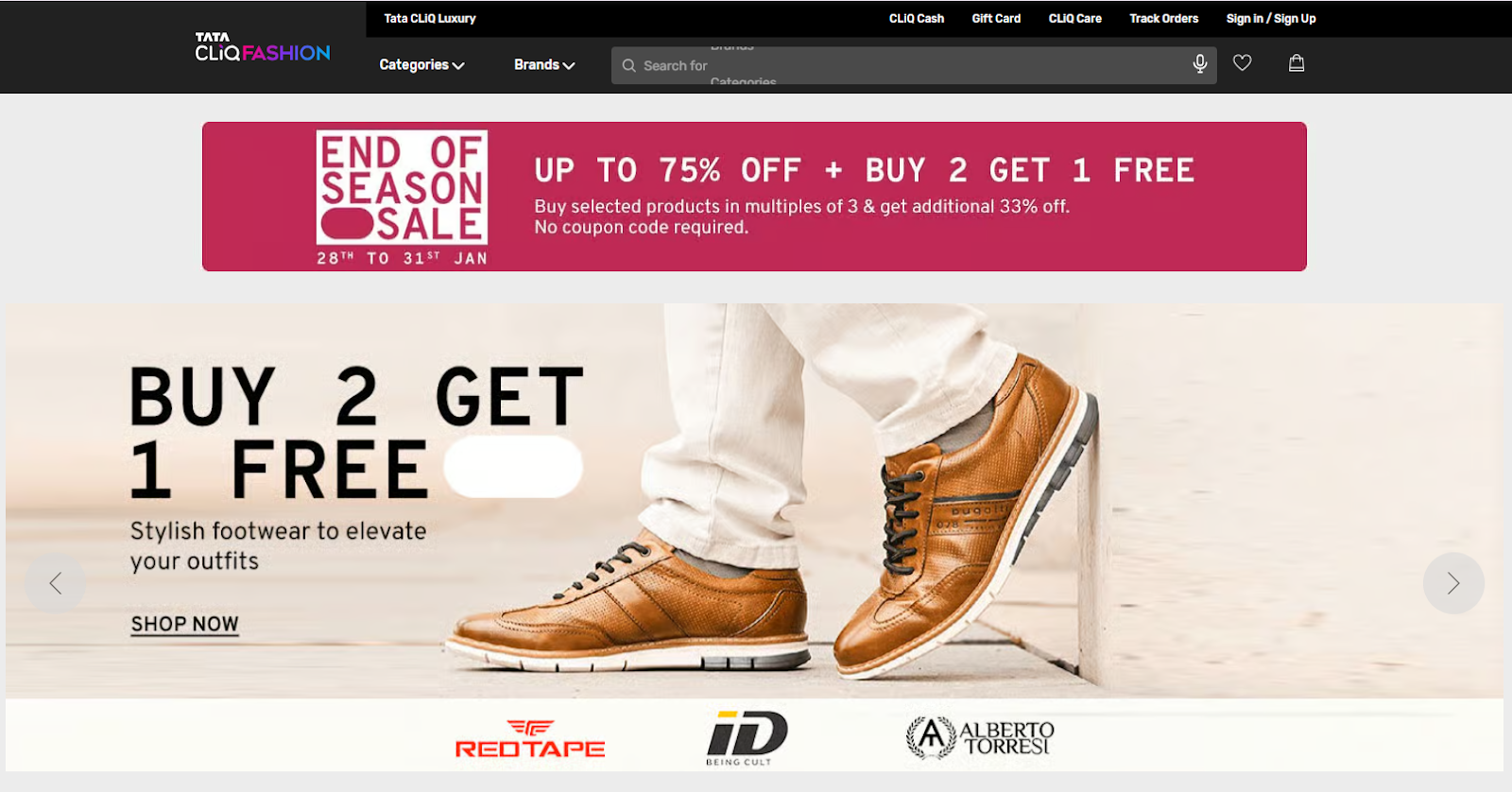
Another effective bundling approach is quantity-based discounts. For instance, on Tata CLiQ Fashion, shoppers often see offers like “Buy 2, Get 1 Free” on shoes and other products. While the customer may initially plan to buy a single pair, the discount makes purchasing multiple items feel like a smarter deal. This strategy increases basket size while giving customers a clear incentive to buy more upfront.
2. Checkout Add-Ons
Upselling doesn’t have to stop at checkout. In fact, this is one of the highest-intent moments in the entire buying journey. Shopify checkout add-ons let you offer small, relevant upgrades within the checkout flow.
Because the customer is already entering payment and shipping details, these offers feel like helpful finishing touches rather than sales interruptions.
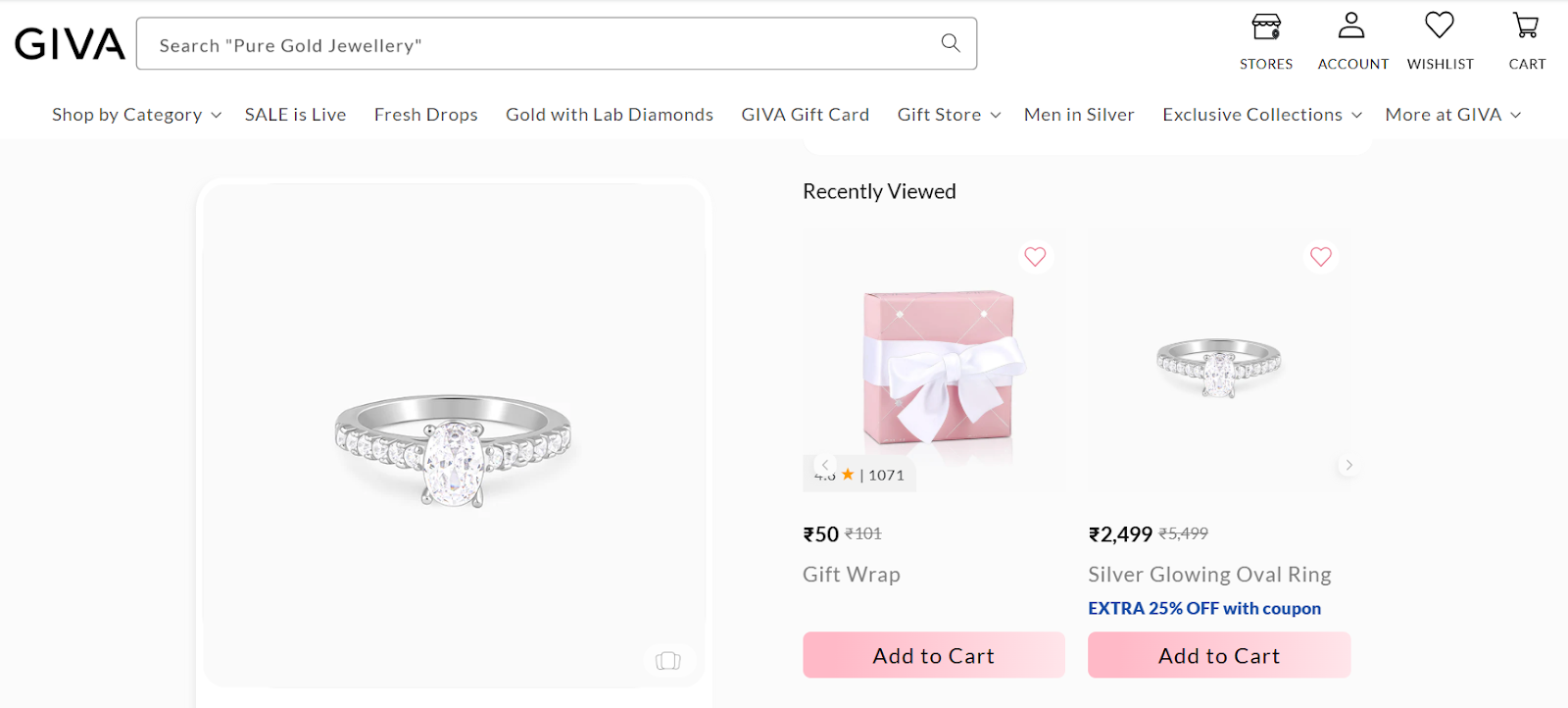
Checkout add-ons work best when they are simple and low-friction. Options like gift wrapping, extended warranties, faster or preferred delivery dates, or premium versions of the same product add convenience or peace of mind for a small additional cost.
A good example of this in action is GIVA. During checkout, GIVA allows customers to add gift wrapping for a small additional fee while completing their purchase. This add-on fits naturally into the checkout flow, especially for shoppers buying jewelry as a gift.
It feels less like an upsell and more like a thoughtful finishing touch, enhancing the overall experience while increasing the order value with minimal effort from the customer.
3. Personalization and Customization
Personalization is a powerful upselling strategy because it transforms a standard product into something uniquely personal. By allowing shoppers to customize details such as names, colors, or components, you give them a reason to pay more without changing the core product.
These custom options increase perceived value and create an emotional connection. Customers aren’t just buying a product; they’re buying something made for them. Even a small customization fee, such as charging extra for engraving or custom finishes, can significantly improve margins while remaining justifiable to the buyer.
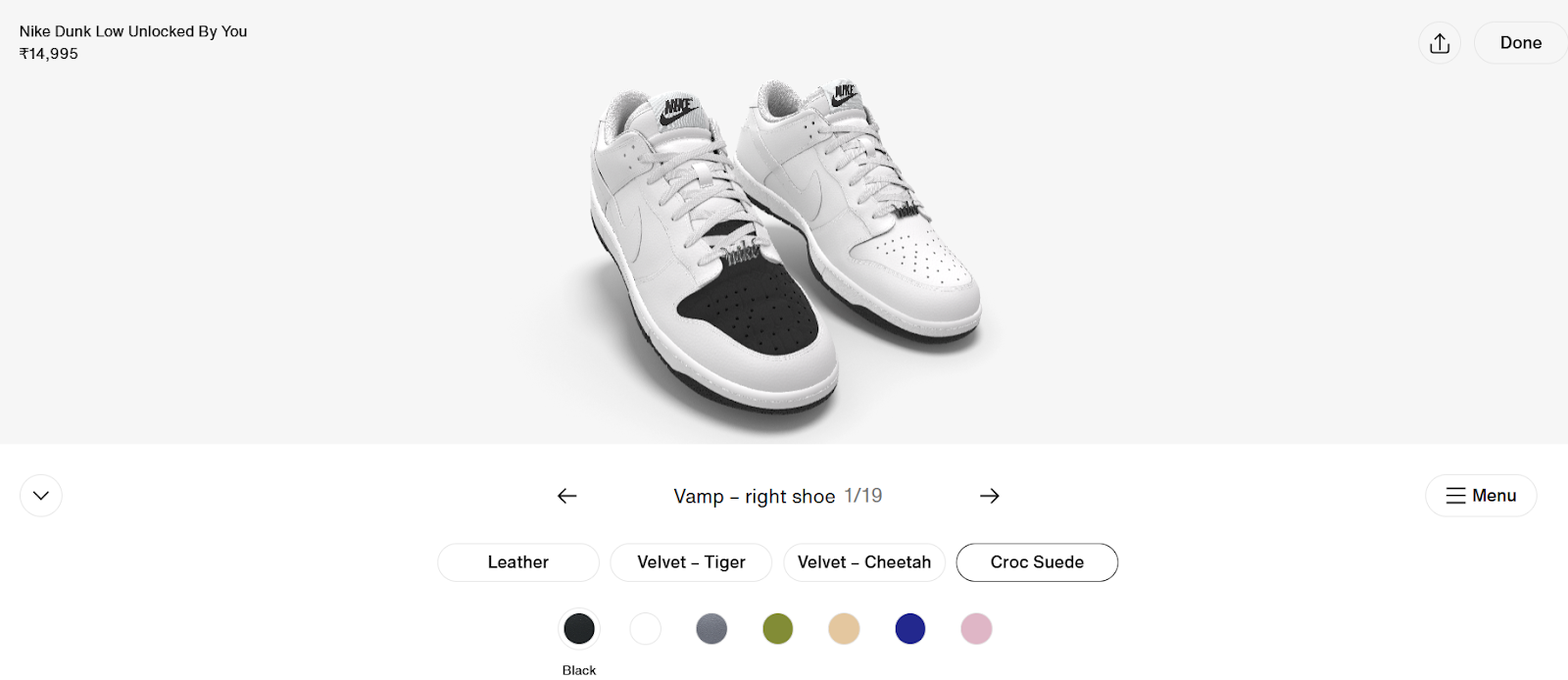
A strong example of this comes from Nike By You. When customers customize a pair of sneakers, they can choose colors, materials, and design details before checkout. Each customization elevates the product from a standard item to a one-of-a-kind purchase, making customers far more willing to pay a premium.
When used thoughtfully, personalization-based upsells feel less like a sales tactic and more like a value-added service, one that benefits both the customer and the brand.
4. Subscription Upgrades
A subscribe-and-save option is one of the most effective upselling strategies because it converts a one-time purchase into recurring revenue. Instead of buying a product once, shoppers can choose a delivery cadence (every 30, 60, or 90 days) and receive incentives such as 10–20% discounts, free shipping, or exclusive perks.
This type of upsell creates value on both sides. Customers benefit from convenience and cost savings, while businesses gain predictable cash flow and higher customer lifetime value. Once a subscription is in place, repeat purchases occur automatically, reducing churn and reliance on repeat marketing.
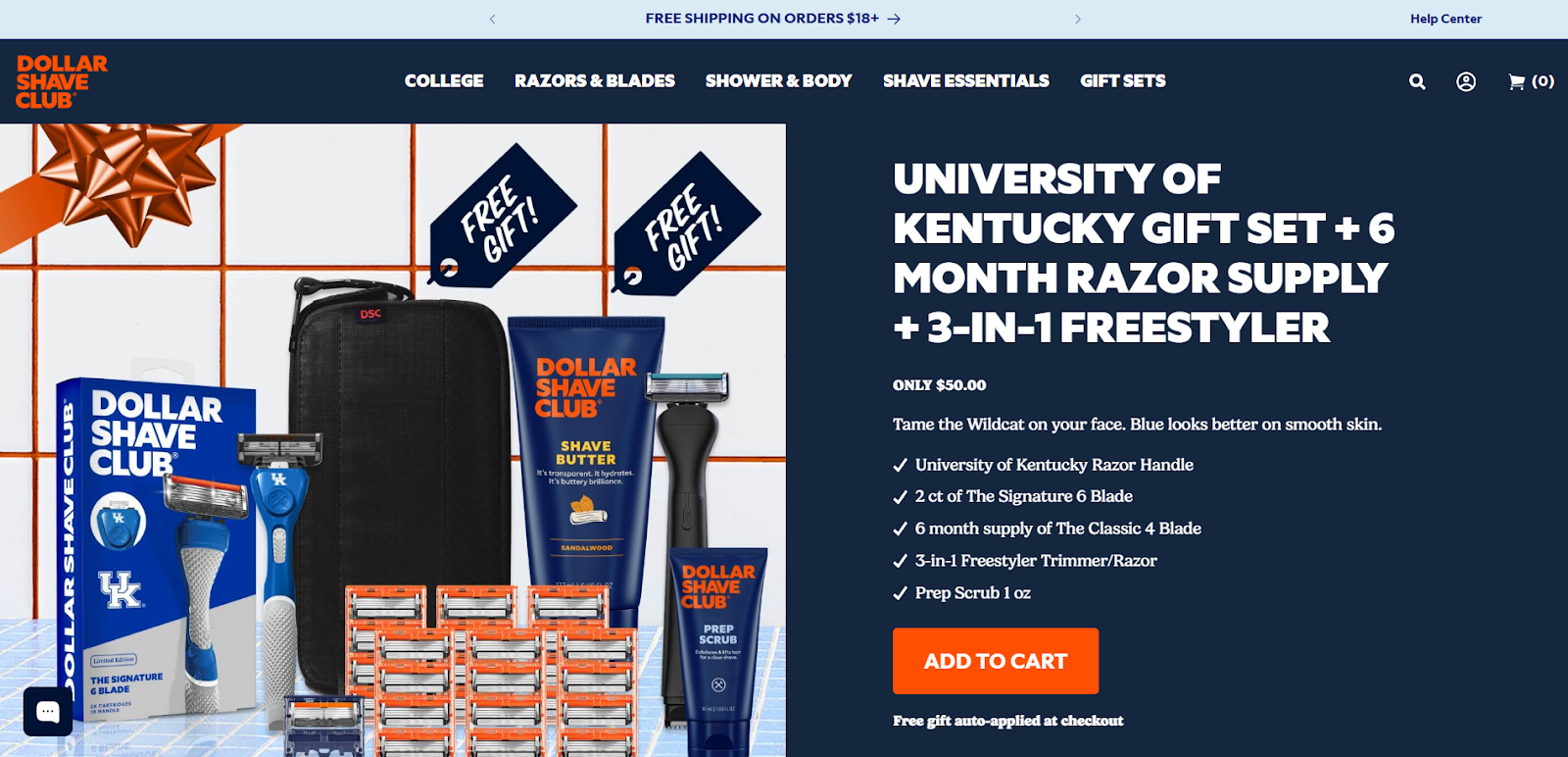
A strong example of this strategy comes from Dollar Shave Club. The brand uses subscription-based upsells through curated membership offers like the University of Kentucky Gift Set + 6-month Razor Supply + 3-in-1 Freestyler.
By bundling a long-term razor supply with grooming products, Dollar Shave Club encourages customers to commit upfront, making the subscription feel like a smarter, better-value choice rather than a recurring obligation.
When clearly positioned and paired with meaningful incentives, subscription upgrades shift the conversation from a single transaction to a long-term relationship, driving sustainable growth for Shopify stores.
5. Discounts Based on Total Order Value
Order-value–based discounts encourage customers to spend more by rewarding them once they cross a specific cart threshold. Instead of offering flat discounts on individual products, this strategy encourages shoppers to add more items to unlock a better deal.
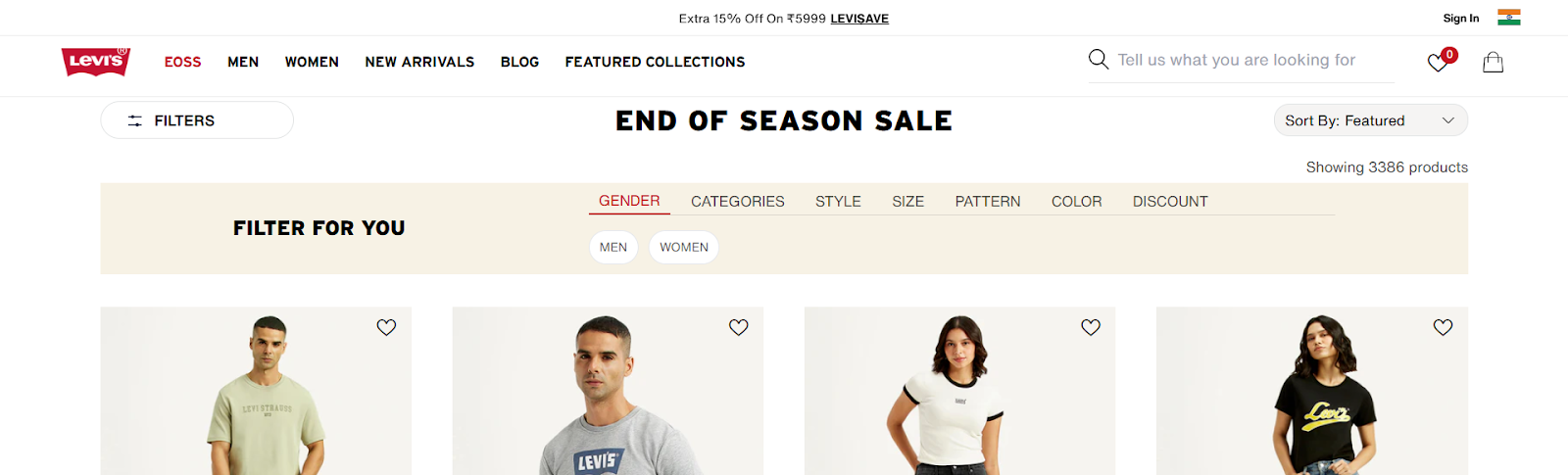
A common example of this strategy is Levi’s sales promotions. Levi’s often displays a prominent banner at the top of the website announcing offers like “Get 15% off on purchases above ₹6,000.” By making the discount visible before shoppers even begin browsing, the brand sets a clear spending goal upfront.
As a result, customers are more likely to add multiple items to their cart from the start so they can reach the threshold and unlock the discount, naturally increasing the overall order value.
This approach works well because the incentive feels earned rather than forced. Customers perceive greater value by hitting the threshold, while brands increase average order value without discounting every product individually.
Read More: How to Build App-Like Shopping Journeys Using WhatsApp Webviews for Ecommerce
Common Shopify Upsell Mistakes to Avoid
Upselling can significantly increase revenue, but when done poorly, it can hurt conversions and customer trust. Many Shopify stores make the mistake of focusing on selling more instead of selling smarter. Here are some common upsell mistakes to watch out for:
Pushing irrelevant upgrades
Recommending higher-priced products that don’t match the customer’s needs or intent is one of the fastest ways to lose trust. Upsells should feel like a natural improvement, not a random push for more money.
Overloading customers with too many offers
Showing multiple upsells at once, whether on the product page, in the cart, and again at checkout, can overwhelm shoppers. Too many choices increase decision fatigue and often lead to cart abandonment.
Introducing upsells too late or too early
Upsells shown too early can confuse customers, while those introduced at the wrong stage of checkout can feel disruptive. Each upsell should match the customer’s readiness to upgrade.
Adding friction to the checkout flow
Upsells should never slow down or complicate checkout. Forcing page reloads, redirects, or additional form fields can undo all the progress made toward conversion.
Avoiding these mistakes ensures your upsells add value rather than create friction. When done right, upselling enhances the shopping experience while steadily increasing revenue for your Shopify store.
How Flowcart Helps You Upsell on Shopify Using WhatsApp
Upselling is far more effective when it occurs within the same conversation where buying decisions are made. WhatsApp directly supports upselling by providing Shopify brands with three critical advantages: real-time interaction, intent-based guidance, and zero-friction follow-ups.
On WhatsApp, customers don’t just browse; they ask questions, seek reassurance, and compare options. This is the exact moment when upsells work best. A shopper asking, “Is this good for daily use?” or “Does this come in a bigger pack?” is already signaling upsell intent.
Unlike static product pages, WhatsApp allows brands to respond instantly with a better variant, a bundle, or a higher-value option while the customer is actively engaged.
Flowcart, an AI-powered conversational commerce and CRM platform built on WhatsApp, connects this conversational advantage directly to your Shopify store, turning WhatsApp chats into structured upsell journeys. Here’s how Flowcart enables upselling on Shopify using WhatsApp:
In-chat product catalogs synced with Shopify
Flowcart lets you display your Shopify catalog directly inside WhatsApp. This makes it easy to surface premium versions, higher-value variants, and bundles exactly when customers are comparing options.
Contextual upsells based on customer messages
Upsells aren’t random. Flowcart allows you to recommend upgrades via AI-Powered Segmentation and Smart Broadcasts based on what the customer is asking, viewing, or adding, making suggestions feel relevant and helpful.
In-chat checkout that supports higher-value orders
Customers can complete purchases without leaving WhatsApp using the Flowcart In-Chat Checkout feature. This reduces friction and improves acceptance of higher-priced products, bundles, and upgrades.
Post-purchase upsells inside the same conversation
Once an order is placed, Flowcart makes it easy to send follow-up offers for add-ons or upgrades through WhatsApp, where customers are already engaged.
By combining Shopify’s product engine with WhatsApp’s conversational power, Flowcart turns upselling into a natural, high-converting part of the customer journey.
Discover Flowcart’s pricing to find the plan that best fits your Shopify store’s needs and growth goals.
Here’s what Purity Waweru, the CEO of Tanj Curtains, has to say about Flowcart: “Partnering with Flowcart changed everything for us. We saw faster transactions, stronger engagement, and a real connection with our customers. In just a few months, our sales grew by 40%, and every lead that came through Flowcart converted. It’s been a game-changer for our business.”
Explore how other brands are leveraging Flowcart to drive higher sales and boost revenue in the Flowcart Success Stories.
Selling Smarter On Shopify
Upselling is one of the most effective ways to grow your Shopify store. When done right, it increases average order value, improves customer experience, and helps shoppers make better purchase decisions. The key is to upsell thoughtfully: focus on relevance, timing, clarity, and simplicity, while avoiding friction and overload.
WhatsApp marketing becomes a powerful upselling channel. Conversations help you understand intent, answer questions in real time, and naturally guide customers toward higher-value options.
With Flowcart, you can bring this conversational upselling experience directly to your Shopify store. From in-chat product upgrades and seamless WhatsApp checkout to automated upsell flows and post-purchase nudges, Flowcart helps you upsell where customers are most engaged.
Ready to boost sales and increase AOV through WhatsApp marketing? Book a demo with Flowcart now!
Frequently Asked Questions (FAQs)
What is the best upsell strategy for Shopify?
The best upsell strategy is one that’s relevant, timely, and easy to accept. Focus on offering higher-value versions, bundles, or subscriptions that clearly add value to what the customer is already buying.
When should I show upsells on Shopify?
Upsells work best at high-intent moments such as on product pages, in the cart, during checkout, and immediately after purchase.
Do upsells hurt conversion rates?
Upsells don’t hurt conversions when done correctly. Problems arise only when offers are irrelevant, poorly timed, or add friction to checkout. Clear, contextual upsells usually increase overall revenue without affecting conversions.
Can I upsell after checkout on Shopify?
Yes. Post-purchase upsells are highly effective because the buying decision is already made. Customers are more receptive to relevant upgrades or add-ons at this stage.
Are WhatsApp upsells better than email?
WhatsApp upsells often perform better because messages are opened and acted on faster. The conversational format also enables real-time interaction, making upsell offers feel more helpful than promotional offers.
LinkedIn Post
Most Shopify stores don’t have a traffic problem. They have a value-per-order problem.
You spend heavily to drive customers to your store through ads, content, and influencer partnerships. But if every visitor only buys the cheapest option, growth stalls quickly.
This is where upselling becomes critical.
Upselling isn’t about pushing expensive products. Done right, it helps customers make better choices while increasing your Average Order Value (AOV).
Upsell strategies like smart bundling, checkout add-ons, and subscription packages mostly work, but the real shift is that upsells perform best in conversations, not pop-ups.
That’s why WhatsApp commerce is changing how Shopify brands sell. Customers ask questions, compare options, and seek reassurance in chat. That’s the perfect moment to recommend a higher-value option, that too naturally.
With Flowcart, brands are upselling directly through WhatsApp by:
- Showing in-chat product catalogs synced with Shopify
- Recommending premium variants and bundles based on intent
- Enabling in-chat checkout for higher-value orders
- Triggering post-purchase upsells while engagement is still high
The result?
Higher AOV. Better customer experience. And sales that feel assisted, not forced.
If you’re serious about growing revenue without chasing more traffic, it’s time to rethink how and where you upsell. Book a Flowcart demo and see how WhatsApp can become your highest-converting upsell channel.

.png)




%201.webp)



.png)