.png)
.png)

How Nectar Beauty is recovering 24.49% of Abandoned Carts while the Industry Avg. is around 3-5%.
.png)
24.49%
Abandoned Cart Recovery Rate
60%
of Revenue from Recovered Carts
7.5
Avg SKUs per Customer
40%
Revenue from Returning Buyers
.png)
.png)
About the company
Nectar Beauty is a Nigerian beauty wholesaler founded by Beatrice, supplying products across 38 retail outlets in Nigeria. With a Shopify storefront and an active social media presence, Nectar Beauty had built genuine, consistent demand across every channel.
The problem was not attracting customers. It was keeping them through to purchase. Leads were coming in through Instagram, through the website, through WhatsApp. But at every handoff point between interest and a completed sale, a portion of those customers was quietly dropping away.
Beatrice is a founder who runs toward technology rather than away from it. She was already building an app. She was already thinking about automation. When she met Flowcart, the question was not whether to use technology. It was which technology would close the gaps fastest.
The Challenge

Abandoned carts with no recovery
Nectar Beauty was not struggling with demand. Customers were finding the brand on Instagram, on their Shopify store, on WhatsApp. The intent was there at every touchpoint. The problem was what happened next.
.svg)
WhatsApp conversations ending at a link
Agents were having great conversations, building genuine buying intent, then sending a product link to close the sale. Customers were dropping off at the redirect. The sale was already won in the conversation. The handoff was losing it.
.svg)
No path back to existing customers
Buyers from the website and WhatsApp could not be re-engaged at scale. There was no broadcast capability, no retargeting layer. Every new sale required finding a new customer.
.svg)
Out-of-hours leads going unanswered
When the team was unavailable, inbound WhatsApp enquiries received no response until someone returned to their phone. By then, the moment of intent had often passed.
The Flowcart Solution
Flowcart connected directly to Nectar Beauty's existing Shopify store and WhatsApp number. No migration. No rebuild. Three features addressed each revenue leak directly.
Abandoned Cart Recovery
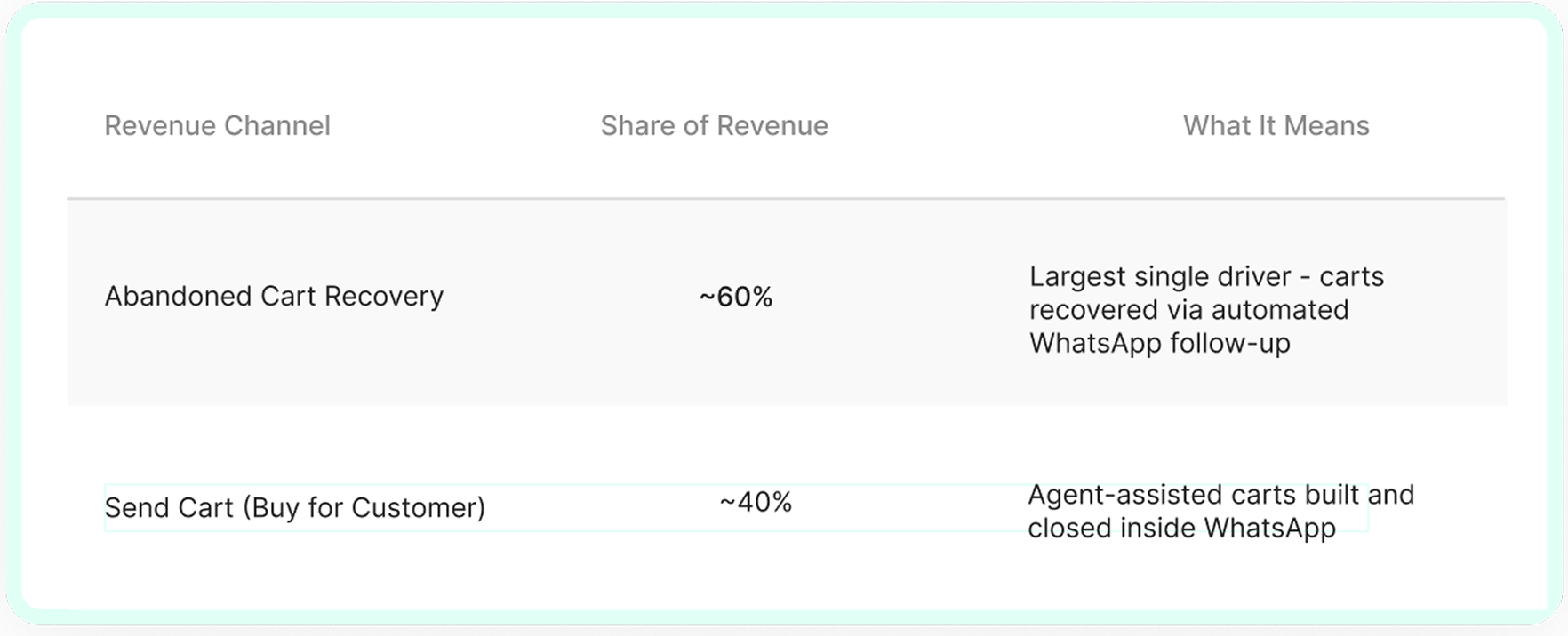
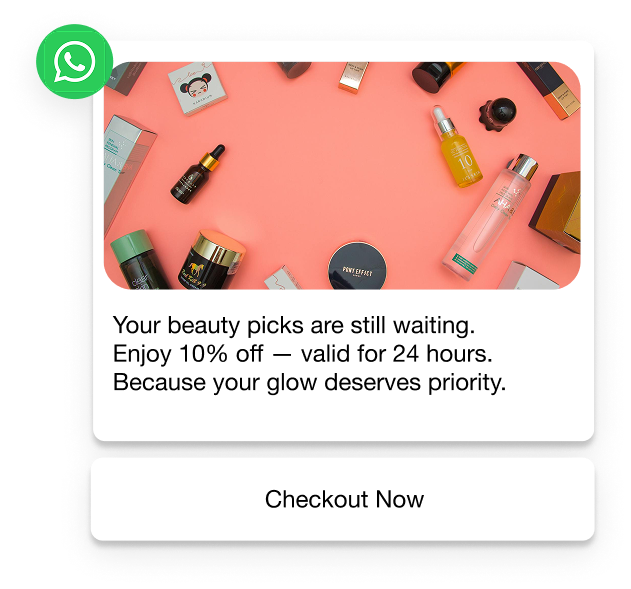
Flowcart set up automated WhatsApp messages triggered whenever a customer abandoned their Shopify cart. Instead of a recovery email that most customers never open, the nudge arrived inside WhatsApp where they could review their cart and make payment inside the chat. The result speaks for itself.
Abandoned cart recovery has become Nectar Beauty's single largest WhatsApp revenue driver, accounting for approximately 60% of all WhatsApp sales. A channel that did not exist before Flowcart now anchors the majority of their digital revenue.

Send Cart (Buy for Customer)
Flowcart's Send Cart feature changed how Nectar Beauty's agents close sales on WhatsApp. Rather than sending a product link and hoping the customer navigates back to checkout on their own, the agent builds the cart directly within Flowcart and sends it as a ready-to-pay order inside the conversation. The customer confirms and pays without ever leaving WhatsApp. No redirect. No drop-off point.
This feature now accounts for the majority of Nectar Beauty's agent-driven WhatsApp revenue, with customers averaging 7.5 SKUs per order - a basket size that reflects genuine, considered purchasing rather than impulse buying.
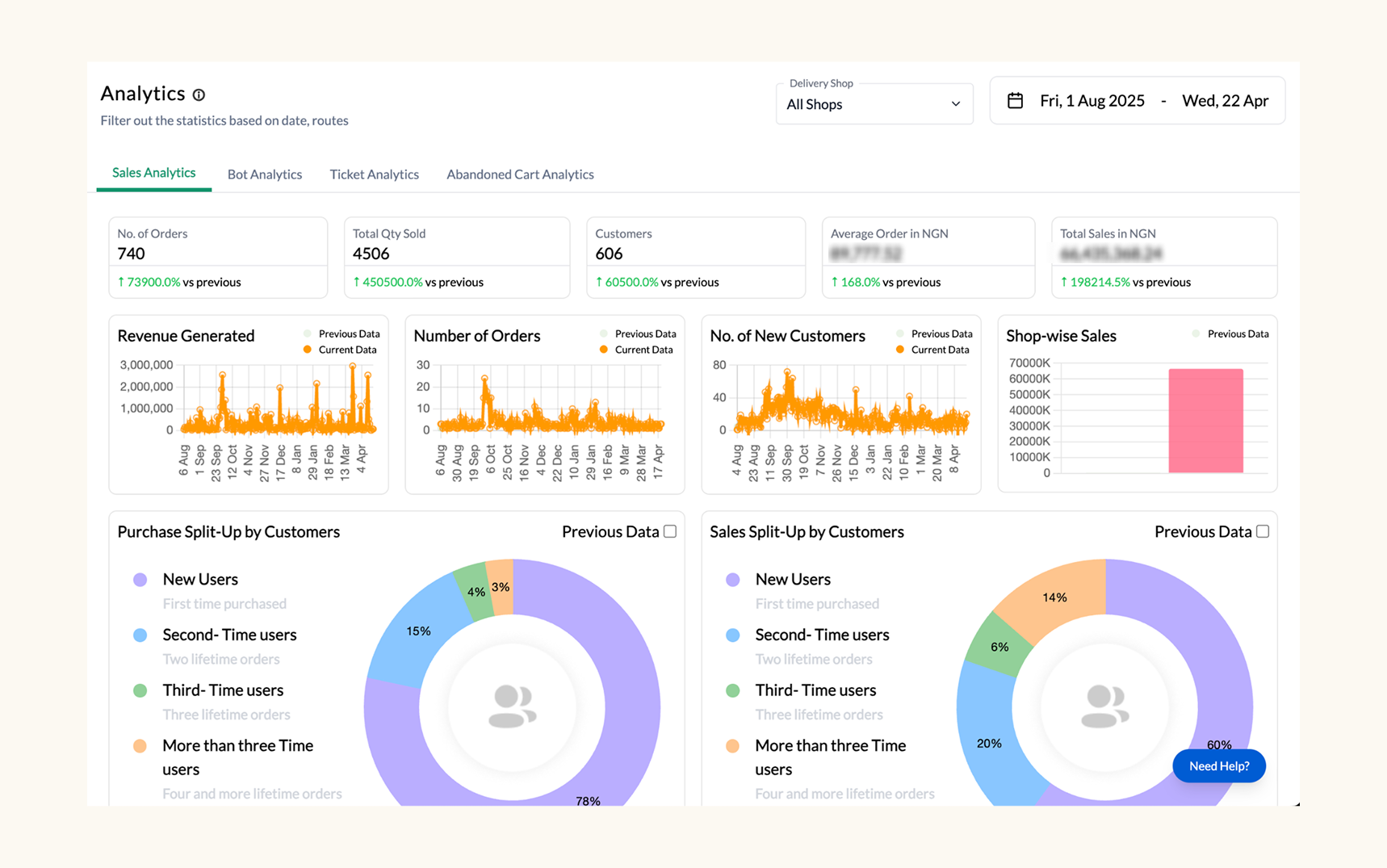
The Results:
From July 2025 to April 2026, Nectar Beauty generated WhatsApp revenue across 741 orders and 606 customers - driven by three Flowcart features that closed the gaps their existing setup was leaving open. The numbers tell a story not just of volume, but of behaviour change.
Revenue by Channel
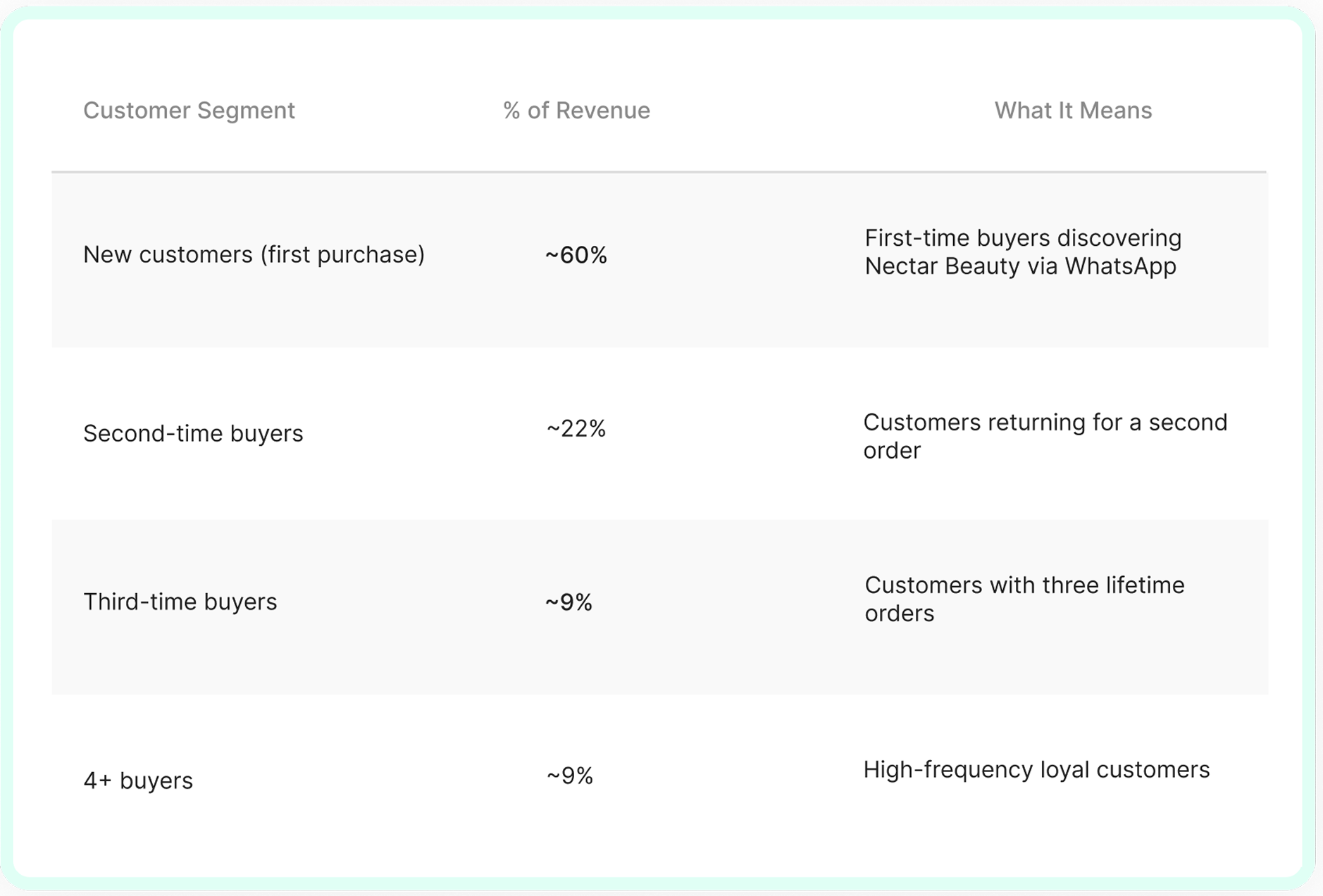
New vs. Returning Customer Split
60% of WhatsApp orders came from first-time buyers. The remaining 40% came from customers returning for a second, third, or fourth purchase through the same WhatsApp channel.
The 40% returning buyer share is the most telling signal. These are customers who bought once through WhatsApp and chose to return, without a loyalty programme, without a points system, and without any re-engagement campaign beyond periodic broadcasts. The experience itself kept them coming back.
Stop losing buyers to drop-offs, friction, and silence, from first click onward
You've done the hard work of generating the demand. Now, let us convert it for you!




%201.webp)



.png)