.png)
.png)

.png)
Key Takeaways
Learn which Shopify payment methods and gateways drive the highest success rates and trust across different geographies and AOVs.
Understand how local preferences, failed payments, and checkout friction directly impact your Shopify store’s conversion rates.
See how WhatsApp payments and Flowcart’s in-chat checkout turn conversations into completed orders instead of abandoned carts.
You can have the perfect product, competitive pricing, and a beautifully designed store, and still lose the sale at the very last step, simply because your payment options are limited.
Here’s the truth: the payment options you offer directly influence your conversion rates. If shoppers don’t see a method they trust or use every day, they drop off.
And in 2026, checkout no longer lives only on your website; it’s expanding into conversations. More and more shoppers are discovering products, asking questions, and completing purchases right inside WhatsApp chats.
In this guide, we’ll break down the best payment methods, the top Shopify payment gateways, and how WhatsApp payments are reshaping the way customers complete their purchases so your store is ready for every type of shopper, every time.
Payment Methods vs Payment Gateways on Shopify
Shopify merchants often use the terms payment method and payment gateway interchangeably because they show up together at checkout and feel like one single system. But behind the scenes, they serve very different roles.
What is a payment method?
A payment method is what the customer uses to pay you. It’s the option they see at checkout and choose from. Here are some examples of different payment methods:
- Credit or debit cards
- UPI / Google Pay / PhonePe
- PayPal
- Apple Pay / Shop Pay
- Cash on Delivery
So when a shopper clicks “Pay with UPI” or “Pay with Card,” they’re choosing a payment method. It’s the front-facing part of checkout, the customer experience side.
What is a payment gateway?
A payment gateway is the behind-the-scenes technology that processes the payment. It securely sends the customer’s payment details to the bank, checks if the money is available, and confirms whether the transaction is approved or declined. Here are some examples of payment gateways:
- Shopify Payments
- Razorpay
- Stripe
- PayU
- PayPal (acts as both a method + gateway)
So while the customer simply sees “Pay with Card” on the screen, the payment gateway is working quietly in the background, communicating with the bank to check:
Is this card valid? Does it have enough funds? And can this transaction be approved right now?
Why Payment Methods and Gateways Matter for Shopify Conversions?
Before introducing you to different choices, let's understand why payment methods and gateways matter so much:
Checkout friction leads to drop-offs
Every extra field, redirect, delay, or missing payment option adds friction. If checkout feels slow, confusing, or restrictive, shoppers hesitate. And hesitation at this stage often means abandonment. The smoother and more flexible your payment flow is, the fewer reasons customers have to walk away.
Trust, familiarity, and local preferences drive decisions
People buy through what they recognize. A shopper in India expects UPI, while a buyer in the US looks for Apple Pay or PayPal. When customers see payment options they use every day, their confidence rises. The right mix of global and local payment methods makes your store feel trustworthy.
Failed payments hurt more than you think
Declined cards, timeouts, and gateway errors don’t just lose that one sale; they often lose the customer. A good payment gateway reduces failures, supports smart retries, and offers backup methods instantly. That way, even if one payment attempt fails, the shopper doesn’t give up.
The easier, safer, and more familiar you make checkout, the more sales your Shopify store will close.
Read More: WhatsApp Webview Integration: Complete Guide for 2026
Top Shopify Payment Methods in 2026
Each payment method plays a different role in shaping trust, speed, and conversion rates. Here are the top choices along with their advantages:
Credit and Debit Cards
Credit and debit cards remain the most globally accepted payment option. No matter where your customers are, cards give your store instant international reach. They’re familiar and trusted, which lowers mental friction at checkout.
Shoppers don’t have to learn anything new to complete the purchase. The trade-off is that card payments come with higher processing fees and the risk of chargebacks, which can hamper margins if not managed carefully.
UPI and Bank Transfers
UPI and bank transfers are the backbone of conversions in India. Customers expect instant, mobile-first transactions that confirm immediately. That real-time confirmation helps stores fulfill orders faster and reduces failed payments.
Additionally, because UPI transactions succeed at much higher rates than cards on mobile, especially in low-bandwidth environments, they’ve become a critical driver of completed checkouts.
Digital Wallets
Digital wallets make checkout incredibly fast on mobile. With one tap and biometric verification, customers can pay without filling out long forms. That speed is a major advantage when shoppers are browsing on their phones.
However, wallets are heavily dependent on geography. Apple Pay and Google Pay dominate in Western markets, while PhonePe, Paytm, and similar apps lead in India. Their effectiveness depends on whether your audience already uses them daily.
Buy Now, Pay Later (BNPL)
BNPL changes how customers perceive price. When shoppers can split payments into smaller chunks, they’re more likely to buy premium products or add extra items to their cart. This often leads to a noticeable lift in Average Order Value.
However, the flip side is that BNPL providers charge service fees, which means merchants have to balance higher sales volume with slightly reduced margins per order.
Cash on Delivery (COD)
COD still plays a powerful role in trust-building, especially in emerging markets. It removes the fear of paying online and boosts conversion rates among first-time buyers.
At the same time, COD increases the risk of returns and fake orders (RTO), which can raise logistics costs. It makes the most sense for new brands, price-sensitive audiences, and regions where digital payment trust is still developing.
WhatsApp Payments and Conversational Payments
WhatsApp payments are reshaping how checkout happens altogether. Instead of forcing customers back to a website, payments can now be initiated directly inside WhatsApp chats using UPI, payment links, and intent-based flows.
This is especially effective for assisted buying, repeat orders, and high-consideration products where customers ask questions before purchasing. By using tools like Flowcart to keep the entire journey inside the conversation, stores reduce drop-offs caused by redirects and turn chats into high-converting sales channels.
How to Choose the Right Payment Method for Your Business
Choosing the best payment method involves offering the right options for how your customers actually buy. Use this quick framework to decide.
- Customer location: Payment habits are local. In India, UPI drives conversions, and in the US and Europe, cards and BNPL lead. If shoppers don’t see what they use daily, they hesitate, so you must match your methods to where your buyers are.
- Match the buying journey to the channel: Instant purchases work best on your website with fast checkouts. Assisted purchases convert better on WhatsApp, where questions, reassurance, and payment happen in the same conversation.
- Let AOV guide your setup: Low-AOV items need speed (UPI, wallets, links). High-AOV items need flexibility and trust (BNPL, WhatsApp-assisted payments).
- Account for product complexity: Simple products sell themselves on the site. Complex or customizable products close faster when a human helps, and WhatsApp payments remove the final friction.
- Balance prepaid vs COD: COD boosts first-time conversions but increases RTO risk. Use it selectively and push prepaid with incentives and WhatsApp follow-ups.
- Offer fewer, smarter options: Too many choices slow decisions. A clean, focused payment mix converts better than a cluttered checkout.
Best Shopify Payment Gateways for 2026
Your payment gateway decides how fast money moves, how often payments succeed, and how much trust shoppers feel at checkout. Here are the best Shopify payment gateways:
Shopify Payments (Built-in Gateway)
Shopify Payments is Shopify’s native gateway, which means there’s no third-party setup needed to start accepting credit cards, Apple Pay, Google Pay, and Shop Pay. Around 90% of Shopify merchants who can use Shopify Payments have it enabled, which translates to roughly 1.89 million stores by the end of 2024 and into 2025.
Because it’s built directly into Shopify, merchants don’t pay extra transaction fees on top of their plan. The plan charges vary by region and plan, and availability is limited to supported countries like the US, UK, Europe, Australia, and parts of Asia.
The biggest advantages of this gateway are seamless integration, fast onboarding, and accelerated checkouts with Shop Pay. However, the downside is that it’s not available everywhere, and merchants have less control over risk rules and payout policies compared to external gateways.
Regional Payment Gateways
Regional gateways such as Razorpay, Cashfree, PayU, iDEAL, and Boleto are designed for local markets and support country-specific methods like UPI, net banking, and regional wallets.
Since these gateways match how people already pay in that geography, they deliver higher success rates and better conversion than global card-only gateways.
Another big benefit is faster settlements, since these providers are integrated directly with local banking systems. They’re ideal for stores selling mainly in one country or region where local payment behavior matters more than global brand recognition.
PayPal and Wallet-Based Gateways
Wallet gateways like PayPal, Amazon Pay, and Apple Pay work especially well for trust and familiarity. Shoppers already have accounts, saved cards, and a sense of security with these brands, which reduces hesitation at checkout.
This makes them powerful for international stores and first-time buyers. However, many wallet flows redirect users off your site, and every extra step increases the chance of drop-off. So while they boost trust, they need to be balanced with on-site payment options to protect conversions.
BNPL Gateways (Buy Now, Pay Later)
BNPL providers like Klarna, Afterpay, and Affirm allow customers to split payments into installments, which significantly reduces price friction. They work best for high-AOV products like fashion, electronics, and furniture because they make expensive items feel more accessible.
BNPL often increases both conversion rate and average order value, but the trade-off is margin. These providers charge higher fees than standard gateways, so merchants need to factor that into pricing and profitability strategies.
Features to Look for in a Shopify Payment Gateway
Here are the key features that matter most for Shopify stores while choosing the appropriate payment gateway:
- Shopify-native integration: The best gateways plug directly into Shopify without messy workarounds. Native integration means faster setup, fewer bugs, and smoother updates when Shopify rolls out new features. It also ensures your checkout stays optimized for speed and mobile performance.
- High success rate and smart retries: Not all failed payments mean a customer doesn’t want to buy. Sometimes it’s a network issue or a temporary bank block. A strong gateway automatically retries failed transactions and routes them intelligently, increasing the number of payments that actually go through.
- Fast settlements: Cash flow matters. Gateways with quick settlement cycles (same day or next day) help you reinvest in inventory, ads, and operations faster. Slow settlements can quietly hurt growing stores.
- Fraud detection and security controls: You want protection without blocking real buyers. Look for gateways that use AI-driven fraud detection, 3D Secure, and risk scoring to stop suspicious transactions while keeping genuine customers flowing through checkout.
- Multi-currency support: If you sell internationally, your gateway should handle local currencies smoothly. Showing prices and charging in the shopper’s own currency builds trust and reduces hesitation at the payment step.
- Compatibility with WhatsApp payment flows: Modern checkout isn’t limited to your website anymore. Your gateway should work with WhatsApp payment links, UPI intents, and in-chat checkout experiences so customers can pay without being pushed back into long web flows.
- Transparent pricing: Hidden fees directly impact your margins. The right gateway makes its charges clear (transaction fees, cross-border fees, refunds, and chargebacks) so you can forecast costs and scale without surprises.
The right payment gateway protects revenue, improves conversions, and supports the way customers shop today.
Also Read: WhatsApp Webview for Shopping: Complete Guide for 2026
How Flowcart Helps Shopify Stores Accept Payments on WhatsApp
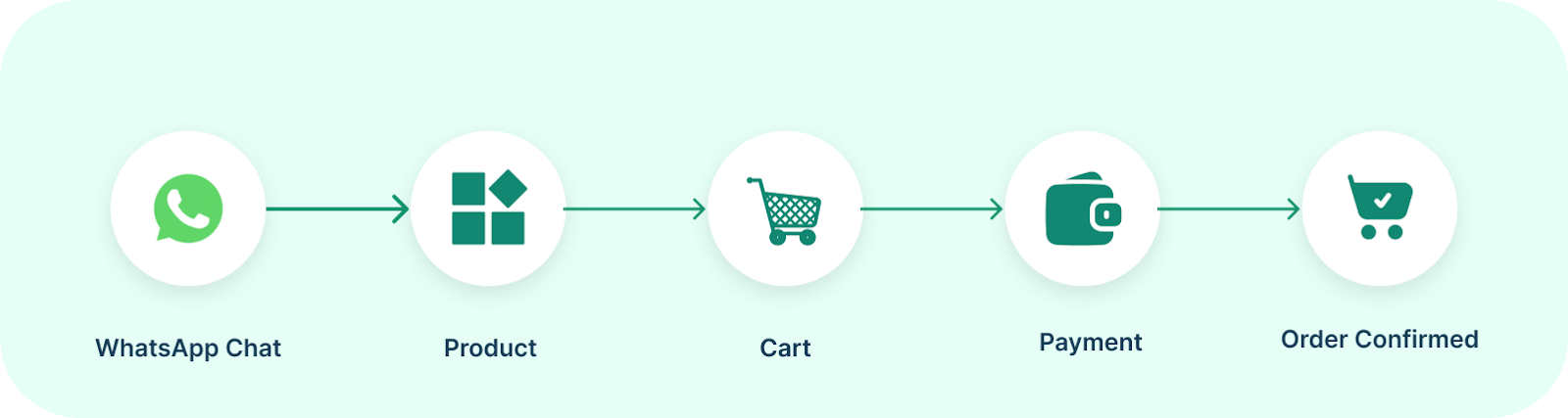
Flowcart bridges Shopify checkout and WhatsApp conversations, turning chats into completed orders.
In 2026, customers don’t just shop on websites. They ask questions on WhatsApp, compare options in chat, and expect to buy without being pushed through long web forms. That’s exactly where Flowcart fits in. It’s built for WhatsApp-first, conversational payments to make the buying journey smoother.
Here’s how Flowcart helps Shopify stores turn WhatsApp conversations into paid orders:
1. From chat to checkout without breaking the flow
Instead of sending shoppers back to your website, Flowcart In-Chat Checkout lets them move from product discussion to payment inside the same WhatsApp conversation. Customers can view their cart, confirm items, and pay without feeling like they’ve been redirected out of the experience.
2. Assisted buying for higher conversions
When customers hesitate, ask about variants, or compare options, Flowcart enables your team or automation to recommend the right product with AI-powered Segmentation and instantly attach a checkout-ready payment flow. That human + automation combo removes friction and speeds up decisions.
3. Perfect for repeat orders and re-buys
For returning customers, Flowcart makes reordering extremely easy with its No-code WhatsApp Flows. A simple “Want to reorder the same item?” message can turn into a paid order in seconds without login, cart rebuilds, or website visits.
4. Built for WhatsApp commerce, not just payments
Flowcart isn’t trying to replace your payment gateway. It connects your Shopify store with WhatsApp in a way that supports discovery, support, recovery, and checkout, all in one conversational layer.
In short, Flowcart doesn’t just let you accept payments on WhatsApp. It transforms WhatsApp into a revenue channel where conversations naturally end in completed orders.
Explore Flowcart pricing to get started with the plan that suits you best.
Here’s what Purity Waweru, the CEO of Tanj Curtains, has to say about their experience using Flowcart:
“ Partnering with Flowcart changed everything for us. We saw faster transactions, stronger engagement, and a real connection with our customers. In just a few months, our sales grew by 40%, and every lead that came through Flowcart converted. It’s been a game-changer for our business.”
Want to know how 300+ companies used Flowcart to meet their business goals faster? Read Flowcart success stories.
Whether it’s on your product page, in the cart, or inside a WhatsApp chat, the brands that win are the ones that remove friction and make buying feel natural.
Choosing the Best Shopify Payment Options
By combining the right strategies with the right tools, Shopify stores can increase AOV, improve customer experience, and drive sustainable growth without being pushy or complicated.
Ready to take your checkout beyond the website and into real-time conversations? Flowcart lets you turn WhatsApp chats into completed orders effortlessly. Book a demo today and start converting conversations into revenue.
Frequently Asked Questions (FAQs)
What are the most popular payment methods for Shopify stores?
Credit and debit cards, UPI/bank transfers, digital wallets, Buy Now Pay Later (BNPL), and Cash on Delivery (COD) are the most popular Shopify payment methods.
What is the best payment method for Shopify in India?
UPI and bank transfers are top choices due to instant confirmation, high success rates, and widespread adoption. Wallets and COD also perform well depending on your audience.
How do WhatsApp payments work with Shopify?
WhatsApp payments let customers complete orders directly within a chat using UPI, payment links, or intent-based flows so they can buy without leaving the conversation.
When should Shopify stores use WhatsApp payments?
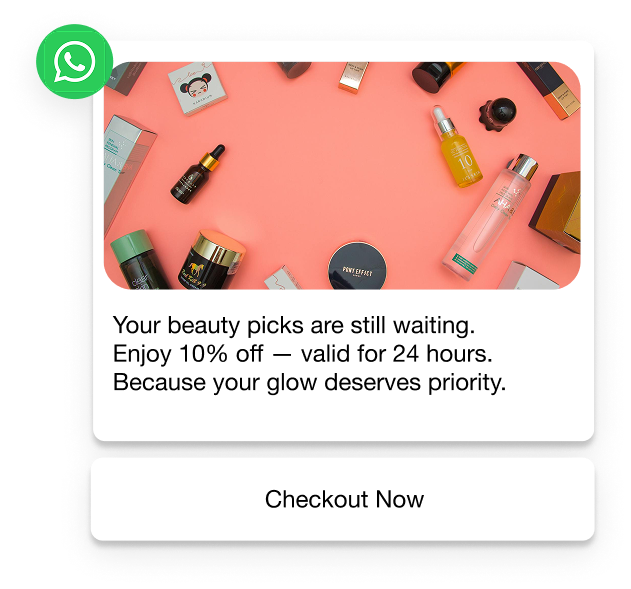
WhatsApp payments work best for assisted buying, repeat orders, high-consideration products, or when customers abandon carts online. They reduce drop-offs and make checkout frictionless.
What is the best Shopify payment gateway in 2026?
Shopify Payments is ideal for built-in simplicity, while regional gateways boost local success rates. PayPal and wallet-based gateways add trust, and BNPL gateways work well for high-AOV orders.
Is Shopify Payments better than third-party gateways?
It’s the easiest for Shopify-native integration and fast settlements, but third-party gateways may offer better local support, higher success rates, or specialized options like BNPL.

.png)





%201.webp)



.png)