.png)
.png)

Key Takeaways
Your WooCommerce store is getting high traffic, and carts are filling up, but most never reach the order confirmation page because customers don’t buy.
Now you need an abandoned cart recovery sequence, and you are looking at familiar names like Mailchimp, Klaviyo, AutomateWoo, ActiveCampaign, and MailerLite.
The obvious question is which one you should use. And if you already use one of them for newsletters, is there any reason to switch just for cart recovery?
In this article, we’ll help you figure out the answers.
One thing is worth keeping in mind before choosing, though. A good email tool can help you bring shoppers back. Actually getting them to finish the purchase is another matter.
The 6 Best Email Tools for WooCommerce Abandoned Cart Recovery
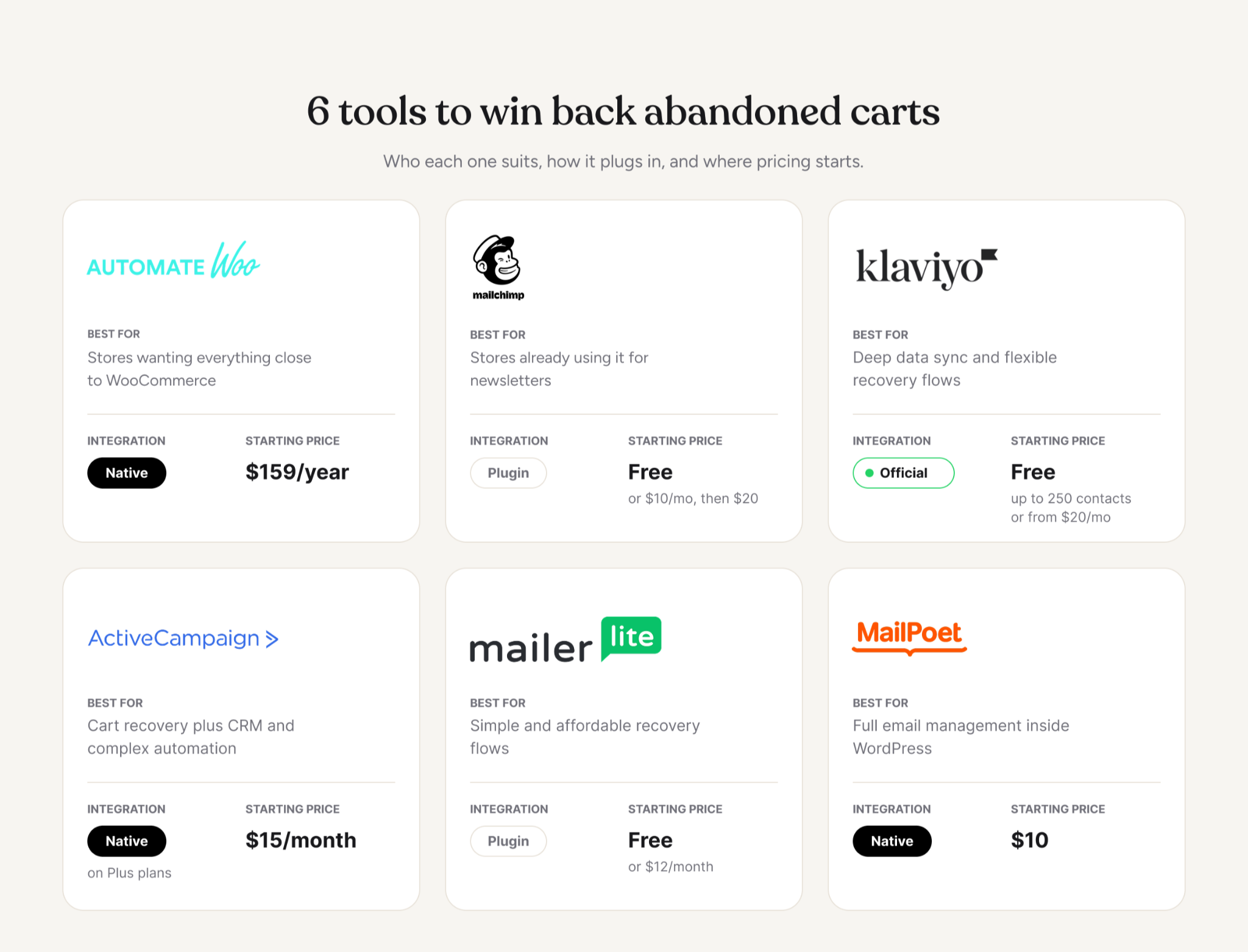
Here’s a quick snapshot to make your choice easier:
- Already using an email platform? Stick with it unless cart recovery is becoming a major revenue channel. There is little reason to move from Mailchimp to another platform just to send a basic abandoned cart sequence.
- Starting from scratch and want the strongest email setup? Go with Klaviyo. It gives you the most control over your recovery flow and customer data, though you will pay more as your list grows.
- Running a small store and watching costs? MailerLite is the easiest place to start. You get the core recovery features without paying for a bigger automation platform you may not need yet.
- Want to keep everything inside WordPress? Choose MailPoet if email marketing is the priority, or AutomateWoo if you mainly want to build automated WooCommerce workflows.
Let’s get to the list.
1. AutomateWoo
Best for: Stores that want to manage cart recovery directly from WordPress without signing up for another email platform.
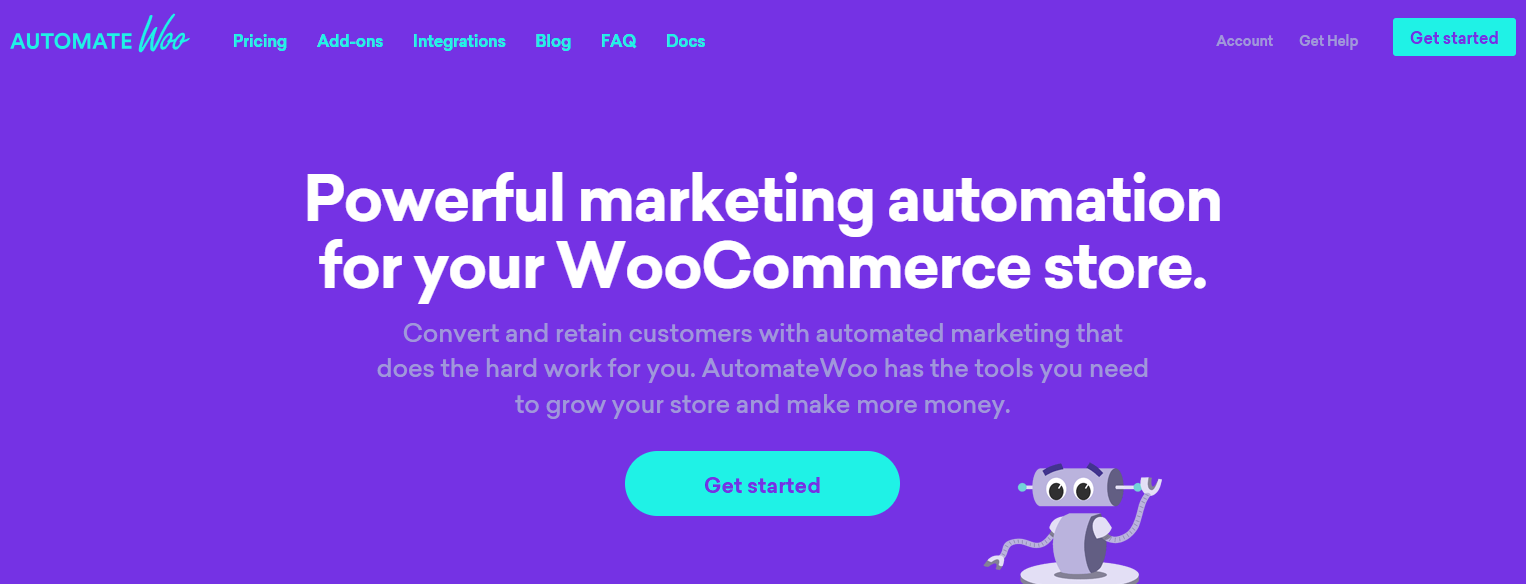
AutomateWoo helps you set up triggers, delays, follow-ups, and abandoned cart sequences directly from your WordPress dashboard.
The email automation platform can also track which workflows bring revenue back to your store, and it supports guest cart recovery, as long as you capture the customer's email before checkout is completed.
The main drawback is email sending. Since AutomateWoo relies on your existing WooCommerce email setup or SMTP provider, deliverability depends heavily on how well either is configured.
Email design and list management are also more limited than with dedicated platforms like Klaviyo.
WooCommerce integration: Native. No connector plugin needed.
Pricing: $159 per year. No free plan.
2. Mailchimp
Best for: Stores already using Mailchimp for newsletters and general email marketing.
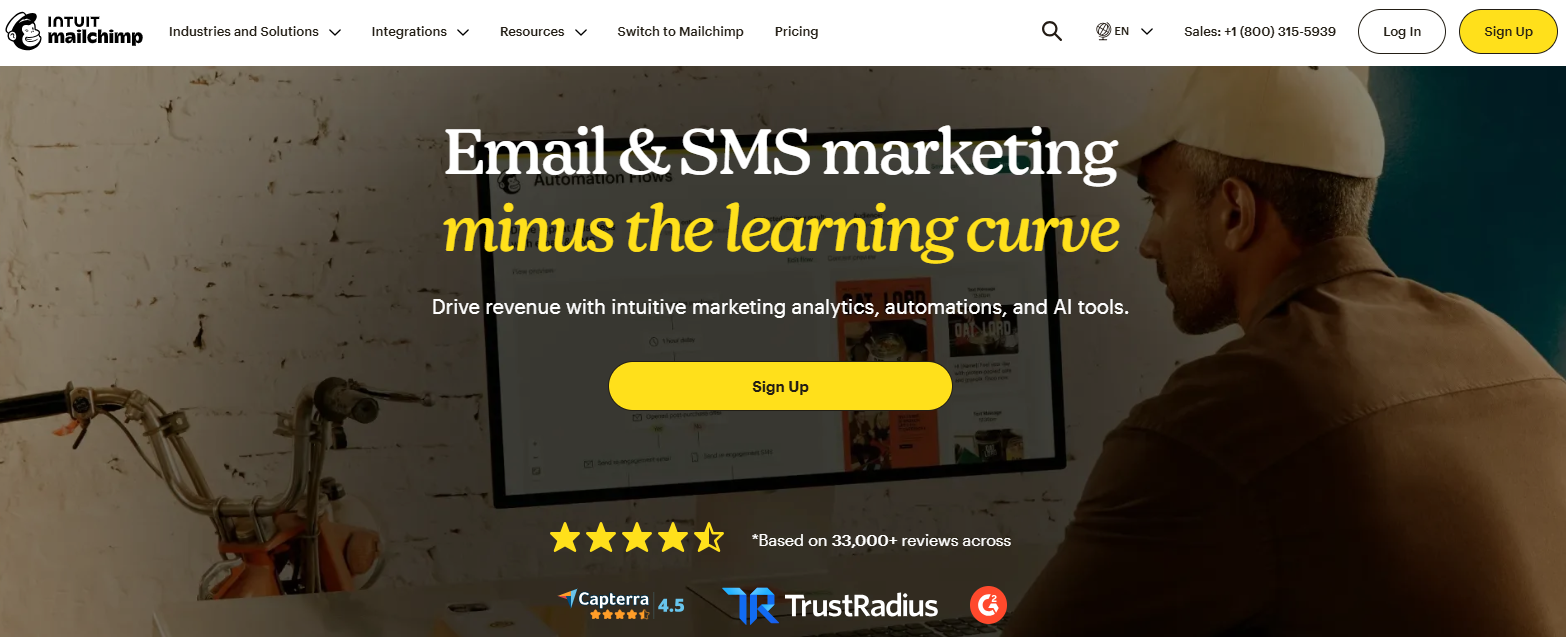
Mailchimp’s WooCommerce integration syncs customer and order data, while its automation tools let you create abandoned cart emails without moving to another platform.
The only caveat here is flexibility. Mailchimp is a general email marketing platform first. Its abandoned cart tools work, but they aren't as deep or e-commerce-focused as Klaviyo's automation features.
So, if you already use Mailchimp, adding cart recovery makes sense. If you are choosing a platform specifically because abandoned cart recovery is your main priority, other options on this list may give you more control.
WooCommerce integration: Through the official WooCommerce Mailchimp plugin.
Pricing: Free for up to 250 contacts with 500 monthly sends, but no automation flows, which means it can’t run abandoned cart emails at all. Paid plans start at $10/month for Essentials (capped at 4 flow steps), then $20/month for Standard.
3. Klaviyo
Best for: Stores that want deeper customer data, stronger segmentation, and more control over multi-step recovery flows.
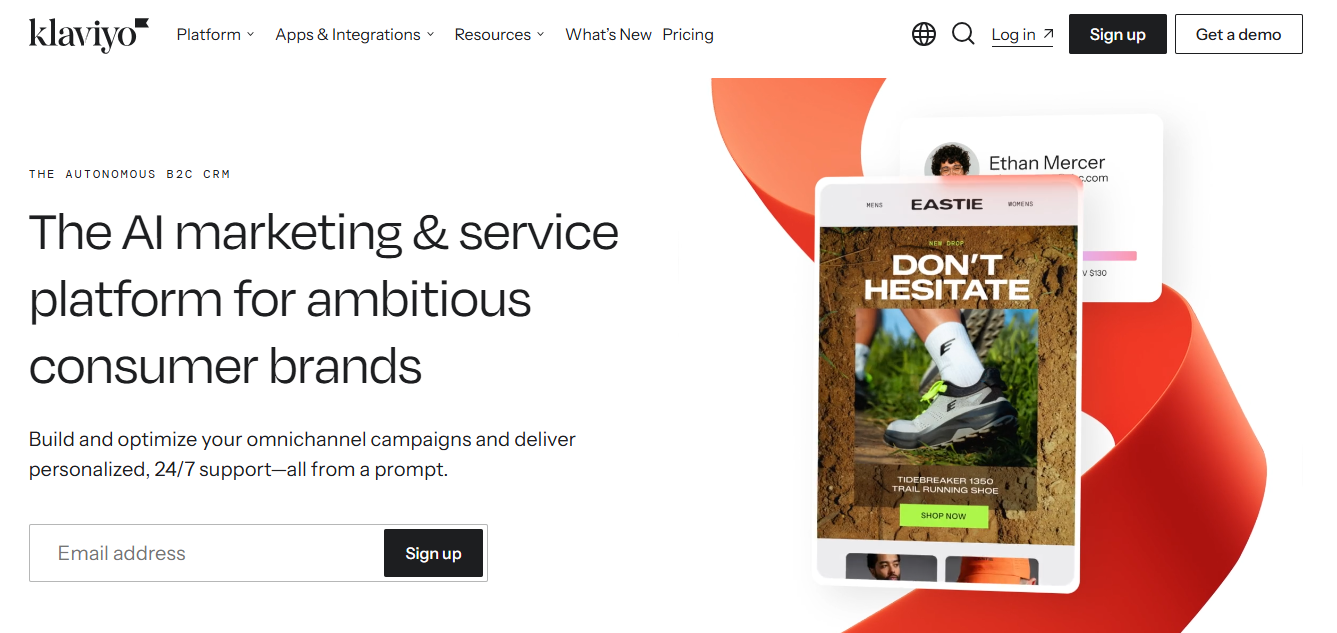
Klaviyo’s WooCommerce integration can pull in customer data, purchase history, browsing behavior, and cart activity. That gives you more information to decide who gets which recovery email and when.
You can also build multi-step sequences, add conditional logic, and change what happens based on customer behavior, or even see which emails actually contributed to recovered revenue.
Tradeoff? The platform takes longer to learn than Mailchimp or MailerLite, and costs rise as your contact list grows.
Still, if abandoned cart recovery is a major priority and you want to build more targeted flows, Klaviyo is probably the strongest email platform on this list.
WooCommerce integration: Official integration with deep customer and store data sync.
Pricing: Free for up to 250 contacts. Paid plans start from $20 per month for up to 500 contacts and increase with list size.
4. ActiveCampaign
Best for: Stores that want abandoned cart recovery connected to broader marketing automation and CRM activity.
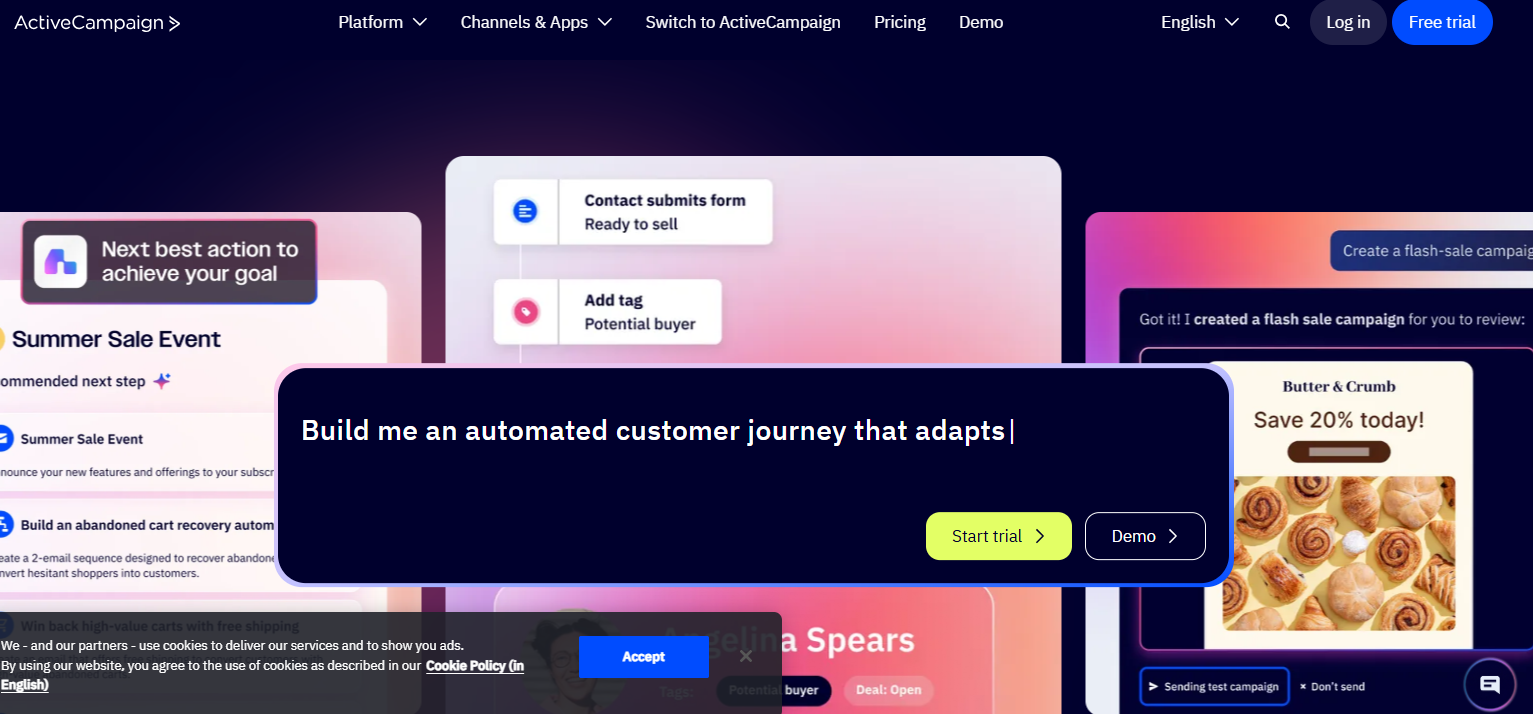
ActiveCampaign lets you connect cart recovery to lead scoring, sales pipelines, customer journeys, and other actions across your marketing and sales process.
That can be useful for stores selling expensive products or products with a longer buying cycle. For example, a customer who abandons a cart could enter a broader follow-up sequence instead of receiving a few recovery emails and nothing else.
The downside is the setup and usage complexity. You need to do the heavy work of integrating your ecommerce store and other tools, deep data sync, and tons of automation triggers before you can start sending recovery emails.
WooCommerce integration: Available natively on Plus plans and above. Lower plans may require a third-party connection.
Pricing: Starts from $15 per month. No free plan, but a trial is available.
5. MailerLite
Best for: Smaller stores looking for an affordable and easy-to-use option.
MailerLite’s interface is easy to get around, the automation builder is beginner-friendly, and its WooCommerce integration covers the basics needed for abandoned cart recovery. You can detect abandoned carts, include products in your emails, and build simple recovery sequences with minimal setup.
However, you will not get the same segmentation depth as Klaviyo or the automation flexibility of ActiveCampaign. Most smaller stores do not need that level of complexity, though.
WooCommerce integration: Through the official MailerLite WooCommerce plugin.
Pricing: Free for up to 250 subscribers and 2,500 monthly sends. Entry paid plans start at $12 per month, but you may get regional discounts at $10/mo (later renews at $12/mo). The Power plan costs $25/mo and goes higher if you choose a custom subscription.
6. MailPoet
Best for: Stores that want to keep email marketing inside WordPress.
MailPoet is more of a complete email marketing tool than AutomateWoo. You can design campaigns, manage subscribers, and set up abandoned cart emails from the same plugin.
The free plan supports smaller lists, while larger stores can use MailPoet's sending service or connect their own SMTP provider.
Of course, its email tools are not as advanced as some dedicated platforms, but they are more than enough for stores that value simplicity and keeping everything close to WooCommerce.
WooCommerce integration: Native.
Pricing: Paid plans start at $10/mo, depending on subscriber count and sending needs.
The Ceiling Every One of These Tools Shares
All six tools can send a good abandoned cart email, remind customers what they left behind, add discounts, personalize the message, and send multiple follow-ups.
The only problem is that when your customers open the email, see the cart, and tap the link, they still go right back to the checkout page they abandoned in the first place.
- Maybe they left because shipping was more expensive than expected
- Maybe the checkout form was too long
- Maybe they did not want to create an account
- Maybe they simply got distracted and never felt motivated enough to finish
Whatever made them leave is still waiting for them.
That is why completed purchase recovery from email-based cart recovery is only around 10.7% on average. The email may do its job perfectly and still lose the customer at the last step.
This is where Flowcart and its in-chat checkout feature come in.
What Changes With In-Chat Checkout
Flowcart handles abandoned cart recovery differently by removing that extra trip back to checkout.
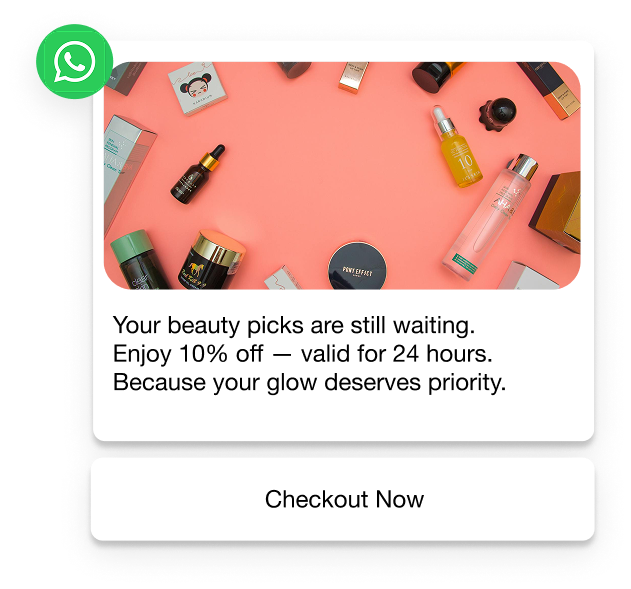
Once a customer abandons a cart on your WooCommerce store, Flowcart's Abandoned Cart Recovery feature detects it and automatically sends a WhatsApp message. The message can show the products they left behind and include a discount code if you choose to offer one.
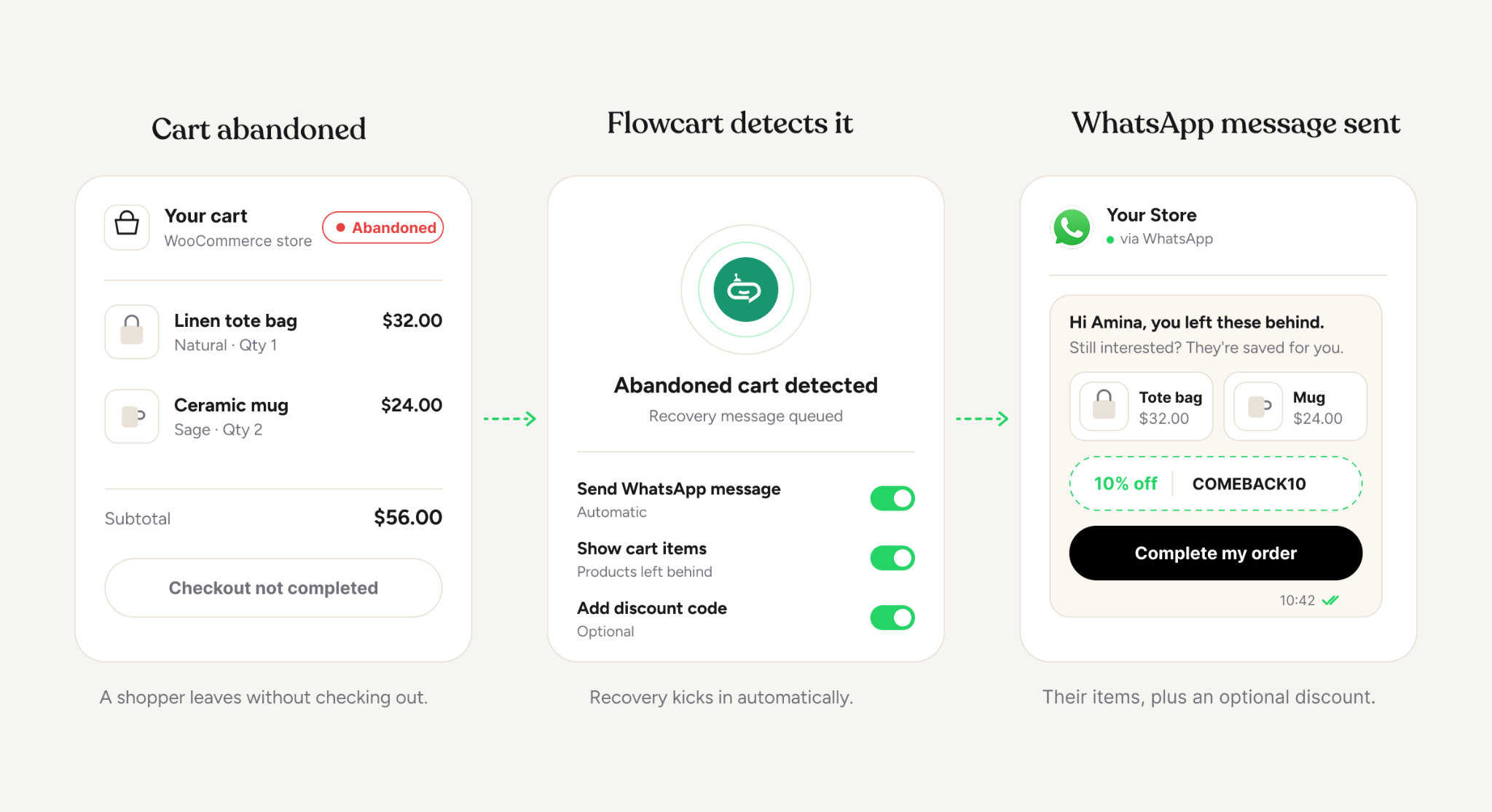
Most importantly, instead of tapping a link and returning to your WooCommerce checkout page, the customer can complete their purchase right in the WhatsApp chat through the In-Chat Checkout feature.
That means no separate checkout page, no second trip through the same flow, and no need to restart a process that already caused the abandonment. Flowcart's WhatsApp recovery typically lands at 20-27% of abandoned carts, versus 8-12% for email.
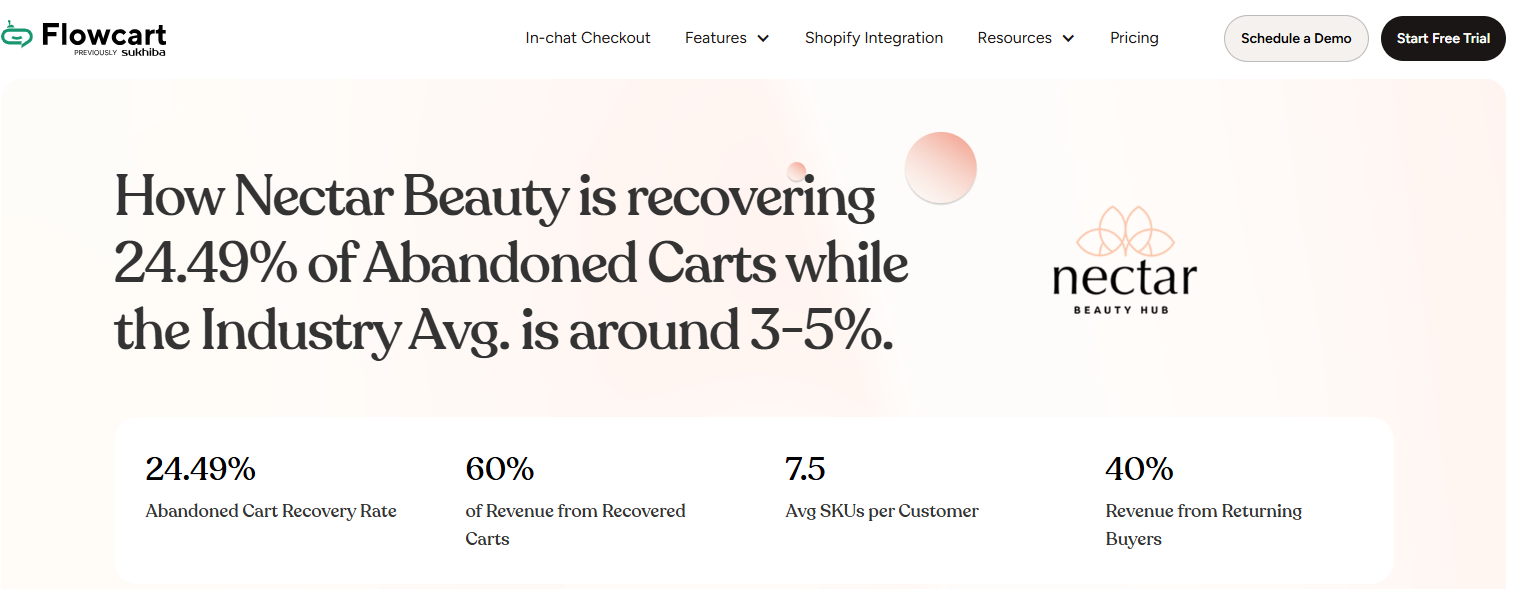
For instance, Nectar Beauty, a Nigerian Beauty wholesaler, recovered 24.49% of their abandoned carts, more than 2x the normal recovery rate with email, and about 60% of their revenue is from recovered carts using Flowcart.
Does WhatsApp Recovery Replace Your Email Tool?
No. For most stores, it works alongside the email tool you choose.
With direct WooCommerce-Flowcart integration, WhatsApp can handle the first recovery attempt for customers who have opted in to receive messages.
And your email platform can still run as a follow-up channel or handle customers who haven't opted into WhatsApp.
One more thing worth noting here is that Klaviyo and ActiveCampaign now offer WhatsApp messaging too. However, checkout still happens on their store, unlike the in-chat checkout Flowcart provides.
Conclusion
Every email tool on this list has a valid use case.
AutomateWoo is a good fit if you want to keep recovery inside WooCommerce. Klaviyo gives you the most control over data and automation. Mailchimp makes sense if you already use it. MailerLite keeps things affordable. ActiveCampaign is useful for broader automation, while MailPoet keeps email management inside WordPress.
Once your email tool is in place, bring in Flowcart to run your off-store revenue recovery for customers who opted in for WhatsApp outreach.
Schedule a demo to see how Flowcart works with your store.

.png)




%201.webp)



.png)