.png)
.png)

Key Takeaways
- WhatsApp marketing delivers unmatched engagement with ~98% open rates, enabling faster, more effective customer interactions than traditional channels.
- Businesses use automation, chatbots, and WhatsApp Business API to capture leads, nurture conversations, and drive conversions in real time.
- Rich media, interactive flows, and in-chat actions (like catalogs and payments) turn conversations into high-converting sales journeys.
- Opt-in messaging ensures higher-quality leads, stronger trust, and better long-term customer relationships.
- With global reach and cost-efficient scaling, WhatsApp is becoming a core channel for modern marketing, sales, and customer retention.
WhatsApp is rewriting the rules of customer engagement.
While emails average a modest 20% open rate, almost everyone reads WhatsApp messages, 98% to be exact. What does this mean for your business?
Customers are more likely to read, click, and respond when you show up where they already spend their time.It’s one of the most whatsapp marketing cost efficient ways to connect with customers, build loyalty, and deliver measurable ROI.
This guide explores 10 powerful benefits of WhatsApp marketing and why businesses of all sizes should make it a core part of their 2026 strategy.
Why Businesses Are Turning to WhatsApp Marketing
Shoppers drop off the moment the buying process feels heavy. For example, 65% of customers say downloading new apps is frustrating, and nearly 40% will abandon a purchase if they’re asked to install one. WhatsApp removes this friction by organizing product discovery, questions, order confirmation, and checkout all in one chat. Customers don’t have to download new apps or create accounts, making the journey seamless and reducing drop-offs.
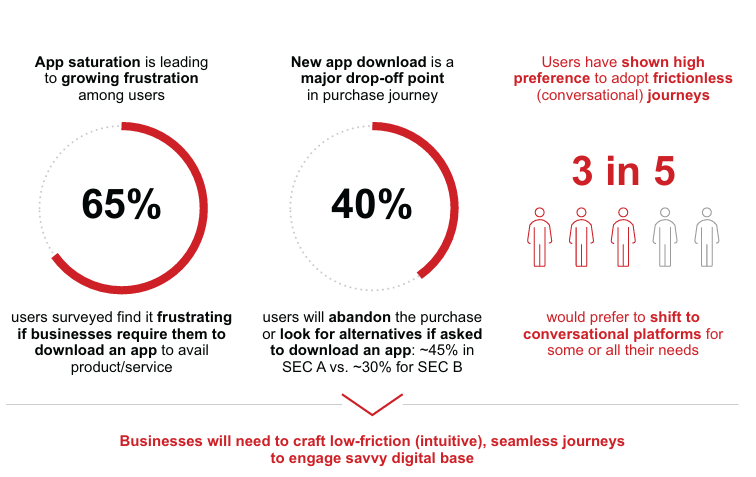
In simpler terms, WhatsApp business benefits multiply when it acts as a:
- Storefront – showcase products directly in chat
- Checkout engine – guide customers to complete purchases quickly
- Support desk – answer questions and resolve issues in real-time
- Loyalty cultivator – share updates, offers, and promotions to retain customers
These capabilities shorten the path from intent to purchase and keep the customer relationship alive long after the first order.
WhatsApp for Ecommerce stores
Ecommerce teams are shifting budgets to conversational commerce, with WhatsApp leading the way. For customers, shopping feels as natural as texting a friend; for brands, it’s a way to meet buyers where they already spend their time.

*CPR = consumer products and retail
Source: Bain & Meta Conversational Commerce Survey; Bain analysis
Benefits include:
- Reduce drop-offs caused by slow-loading websites or unnecessary app installs
- Showcase products and share personalized recommendations instantly
- Build a persistent communication channel for updates, alerts, and loyalty
WhatsApp for Local Businesses
Managing multiple customer conversations across locations can be chaotic. HealthyU, a health and wellness retailer in East Africa, faced this challenge with 30+ stores and separate WhatsApp numbers.

Source: Flowcart’s HealthyU case study
By switching to Flowcart’s unified WhatsApp platform:
- All customer chats are managed under one number
- Orders, catalogs, and payments are consolidated in one place
- Headquarters gains visibility into chats and sales
- Customers enjoy a seamless browsing-to-delivery experience
WhatsApp for Enterprises
More than 60% of enterprises plan to increase spending on conversational platforms over the next 3–4 years.
The reason is that Performance is one of the leading benefits of WhatsApp Business.
High engagement metrics make WhatsApp a performance channel worth investing in:
- Delivery rates of ~100% and click-through rates of 80–90%
- Consolidate marketing, support, and post-purchase updates in one channel
- Automate repetitive tasks without losing a personal touch
- Improve customer retention while reducing operational costs
For many businesses, WhatsApp is where conversations turn into conversions and relationships grow long-term.
Top Benefits of WhatsApp Marketing in 2026
In this section, we’ll break down the core WhatsApp marketing benefits and explain how you can reap the most out of them.
1. Unmatched Engagement & Open Rates
WhatsApp is built for attention. Over 95% of messages are read within three minutes, which makes it less of a notification and more of an instant touchpoint. Your update, offer, or alert shows up where customers are already active, and it’s read almost right away.
Why it works: Timing drives action. The faster someone sees your message, the closer they are to acting on it.
A flash sale reminder lands while they’re still browsing, a cart nudge reaches them before they forget what they added, and a product launch generates more excitement when it appears instantly in a channel they check dozens of times a day. The faster your message is seen, the closer it is to being acted on.
The Flowcart Advantage
- Smart Broadcasts target specific segments, not generic lists
- AI segmentation personalizes offers based on user behavior
- Automated timing ensures messages hit at the right moment
- Real-time analytics track opens, clicks, and conversions
- Drives up to 4× higher engagement compared to email
2. Direct & Personal Customer Communication
WhatsApp feels like a quick and friendly chat box. That’s why customers are more comfortable asking questions, sharing concerns, or making purchase decisions here than through email or social media. The format is naturally two-way, giving businesses space to build trust through conversation instead of one-sided promotions.
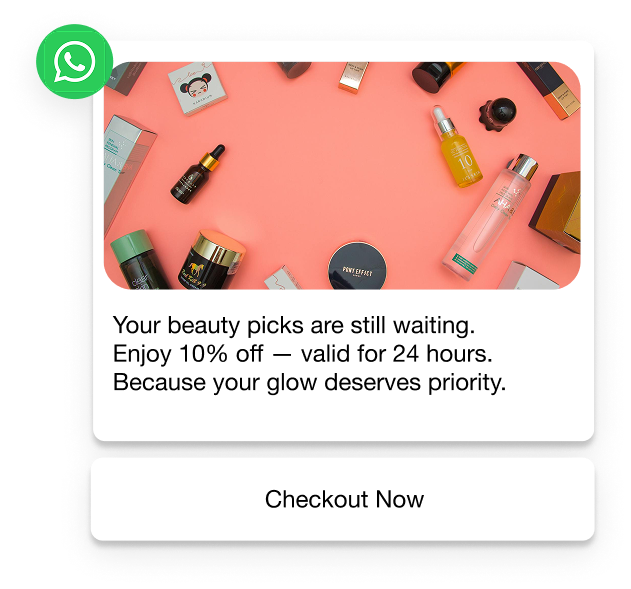
Why it works: When communication feels personal, it changes outcomes. A generic “Your cart is waiting” email is easy to ignore. But in WhatsApp, that same reminder can show the exact items left behind, add a quick-reply checkout button, and let the shopper ask about delivery, all inside one thread.
The Flowcart Advantage
- WhatsApp Flows guide users from first message to checkout
- Different journeys for new vs returning customers
- AI responds instantly to product queries
- Triggers offers or nudges based on user actions
- Smooth handoff to human agents when needed
3. Cost-Effective Marketing Channel
Paid ads rise in cost with every impression, and email campaigns often demand design, software, or even agency fees. WhatsApp, on the other hand, gives businesses a direct, low-cost way to reach customers where they’re already active.
For small businesses, the free Business App is enough to start building connections. Larger teams can scale with the Business API, which runs on a per-message pricing model. Even then, the cost per conversation often comes in far lower than what you’d pay for repeated retargeting or social ads.
Why it works: It’s about replacing expensive reminders with owned conversations. You don’t have to run a new ad campaign to recover carts or pay for multiple rounds of email promotions. Instead, you can drop a quick WhatsApp message with a one-tap checkout link and send a single broadcast to your opted-in customers. Less spend, faster reach, higher ROI.
The Flowcart Advantage
- Automates abandoned cart recovery without ad spend
- Sends prefilled carts directly into chat
- Enables one-tap checkout to reduce drop-offs
- Allows timed follow-ups (30 min, 24 hr, etc.)
- Built-in analytics track ROI across campaigns
4. Global Reach & Accessibility
Borders don’t limit WhatsApp. With over two billion users, WhatsApp allows businesses to reach both local and international customers, made seamless with whatsapp webviews. For businesses, this reach means you can engage local buyers and international customers on the same platform.
Why it works: Global accessibility also comes down to payments. A campaign doesn’t land if your customer can’t complete the purchase easily. That’s why localized payment options matter as much as the message itself. Being able to shop, pay, and confirm orders inside WhatsApp makes the experience universal, no matter where your customer is.
The Flowcart Advantage
- Supports region-specific payment methods (e.g., local wallets, cards)
- Enables in-chat checkout without redirects
- Auto-fills customer details for faster purchases
- Adapts flows based on location and user behavior
- Delivers a consistent buying experience globally
5. Multimedia Messaging for Rich Campaigns
Text alone rarely sells. Customers want to see what they’re buying, compare options, and feel confident before they make a decision. WhatsApp makes this simple by supporting images, videos, catalogs, and even cart previews, turning a plain message into a mini storefront.
For businesses, this means every campaign can do more than inform; it can actually show, guide, and convert.
Why it works: Rich messaging works because discovery happens inside the same chat where purchase happens. Instead of clicking away to a website, customers can browse product catalogs, watch demo videos, or view cart previews without leaving WhatsApp. The fewer steps they take, the less likely they are to drop off.
The Flowcart Advantage
- Send product catalogs directly inside WhatsApp
- Use carousels with images, pricing, and details
- Build prefilled carts based on user selections
- Keep browsing and buying in the same chat
- Reduce drop-offs by eliminating external redirects
6. Faster Sales Support
Customer questions are often the only thing standing between interest and purchase. On most channels, support feels disconnected from sales. Agents answer queries, but the actual buying happens somewhere else. WhatsApp changes this dynamic. Conversations and transactions happen in the same space, so the handoff from support to checkout is instant.
Why it works: Speed matters most here. By collapsing support and sales into one thread, WhatsApp removes that delay. Customers get clarity and a direct path to action in seconds, turning routine queries into revenue moments.
The Flowcart Advantage
- AI suggests products based on customer queries
- Generates ready-to-checkout carts instantly
- Provides real-time inventory-based recommendations
- Adds bundles or discounts during conversations
- Gives agents full context (history + cart) for faster closing
7. Higher Conversion & Click-Through Rates
Getting customers to notice a message is one thing. Getting them to act on it is another. WhatsApp bridges that gap by keeping the call-to-action inside the same conversation. Customers can browse products, confirm details, and check out without leaving chat. That simplicity is what makes WhatsApp CTAs convert better than email or SMS.
Why it works: Fewer steps mean fewer drop-offs. For example, a cart reminder can come with a one-tap checkout button that completes the journey. The less friction you put between intent and action, the higher your conversion rate climbs.
The Flowcart Advantage
- Sends cart recovery messages with exact items
- Includes one-tap checkout links inside chat
- Triggers urgency-based follow-ups automatically
- Uses product carousels with “Add to Cart” actions
- Helps recover up to 30% more abandoned carts
8. Better Customer Retention & Loyalty
Winning a customer once is good. Keeping them coming back is what grows your business. WhatsApp makes retention easier because communication doesn’t stop after a sale. You can keep engaging customers with updates, offers, and rewards right inside the chat they already use every day.
Why it works: Loyalty feels effortless when it’s part of the same conversation as shopping. Instead of logging into a separate app or remembering promo codes, customers can see their points, redeem rewards, and claim seasonal offers right there. That consistency builds trust and keeps your brand top of mind long after the first purchase.
The Flowcart Advantage
- Runs loyalty programs directly inside WhatsApp
- Tracks and updates reward points automatically
- Sends reminders to redeem points or offers
- Personalizes rewards for repeat or high-value users
- Drives up to 3× more repeat purchases
9. Automation & Scalability with WhatsApp API
As businesses grow, manual messaging quickly hits a ceiling. Responding one-on-one might work for the first hundred customers, but not for thousands. That’s where the WhatsApp Business API comes in.Automation at scale, using whatsapp automation tools and whatsapp automation, ensures predictable and personalized customer journeys.
Why it works: Automation saves time and ensures consistency. New leads are always greeted, abandoned carts receive reminders, and repeat buyers see tailored offers. You don’t have to rely on someone to remember the next step; the system does it for you, making customer engagement both scalable and predictable.
The Flowcart Advantage
- Offers 50+ ready-to-use automation flows
- Covers acquisition, conversion, and retention journeys
- Auto-engages leads from ads instantly
- Triggers follow-ups based on behavior
- Scales conversations without increasing manual workload
10. Secure, Verified & Trustworthy Messaging
Trust is everything in digital commerce. Customers won’t share card details or complete a purchase if they aren’t sure the channel is safe. WhatsApp helps solve this with end-to-end encryption and verified business accounts that clearly signal authenticity.
For buyers, that blue checkmark and secure chat environment mean they can shop and pay with confidence.
Why it works: Trust reduces hesitation. A verified sender makes customers more likely to open messages. A secure environment makes them more likely to complete payments. Together, they remove the doubts that usually cause drop-offs at checkout.
The Flowcart Advantage
- Uses verified WhatsApp business accounts
- Sends secure, branded payment links
- Keeps entire journey inside WhatsApp (no redirects)
- Ensures encrypted, safe transactions
Builds trust to reduce checkout drop-offs
WhatsApp Marketing Benefits vs Other Marketing Channels
This section breaks down how WhatsApp marketing advantages stack up against the channels businesses have relied on for years.
WhatsApp vs Email
A Redditor put it simply:

Source: Reddit
Email works like a pull channel. You wait for someone to check their inbox, sift through promotions, and find you.
On the other hand, WhatsApp is a push conversation. Your message is where the people stay active all day. It gets your brand faster visibility, prompt replies, and fewer “I’ll get to this later” moments that quietly become never.
Let’s compare WhatsApp vs Email next to each other:
WhatsApp vs SMS
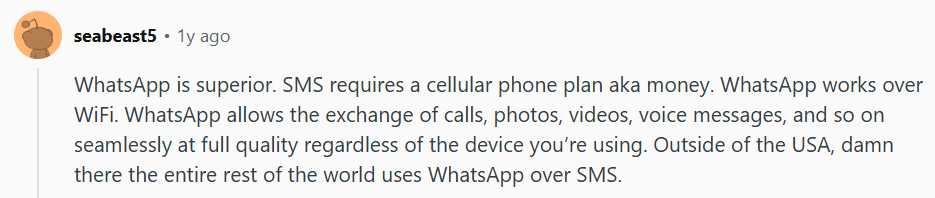
SMS is basic and billable per message; WhatsApp works on Wi-Fi, travels across borders, and supports rich media and quick replies in the same thread. One is a ping; the other is a conversation.
This is what a Reddit user thinks when it comes to SMS vs WhatsApp:
Source: Reddit
Refer to this comparison of WhatsApp vs SMS to understand the difference:
WhatsApp vs Social Media Ads
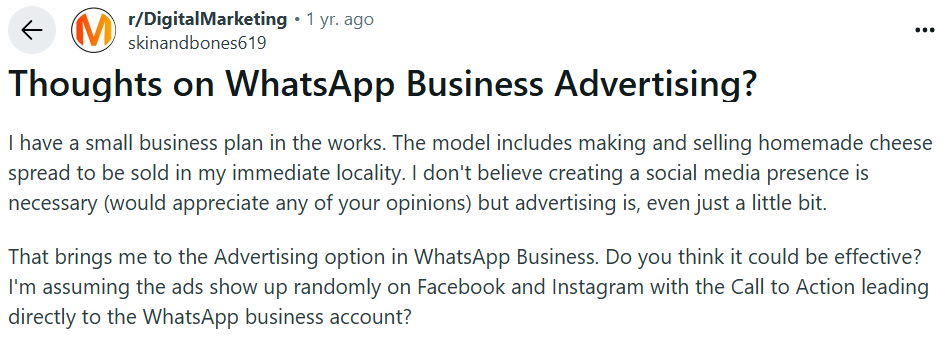
A Redditor was weighing their advertising options:
Source: Reddit
If we were to answer this question, here’s what we would say:
Click-to-WhatsApp ads are perfect for a hyper-local food business because a feed impression is easy to scroll past, but a WhatsApp ad turns that fleeting glance into a conversation.
WhatsApp vs Social Media Ads comparison might help you understand this better:
What are the Best Practices to Maximize WhatsApp Marketing Benefits?
Done right, WhatsApp can lower acquisition costs, boost engagement, and drive retention. Here are the practices that separate high-performing campaigns from those that get ignored.
Get Clear Opt-Ins
WhatsApp is personal, so permission matters. Always include opt-ins via checkout checkboxes, website prompts, or click-to-chat ads. Flowcart makes this easy with scannable QR codes that bring customers directly into chat and capture consent instantly.
Balance Promotions with Value
Don’t just send discount codes mixed in useful updates like order confirmations, back-in-stock alerts, or quick product tips. These touchpoints keep engagement high and show your brand cares beyond the next sale.
Use Automation Wisely
Automate predictable interactions like cart recovery, payment confirmations, and reminders, while leaving nuanced queries to live agents. Flowcart’s AI-powered flows guide customers from browsing to checkout seamlessly, without losing the personal touch.
Choose the Right Tool
Execution matters as much as strategy. Flowcart turns WhatsApp into a scalable sales and retention engine with AI segmentation, Smart Broadcasts, in-chat catalogs, prefilled carts, one-tap payments, and loyalty tracking all in a no-code platform for real-time results.
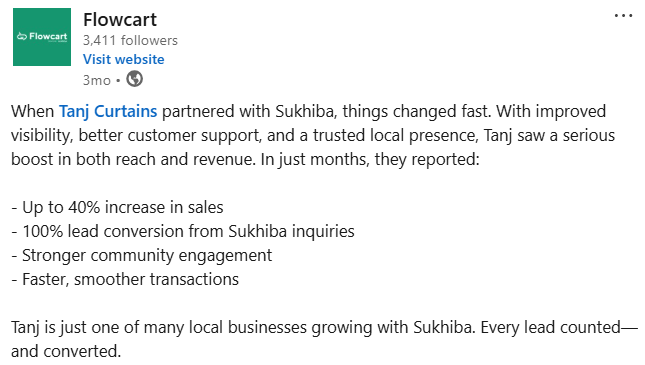
Its AI-powered segmentation sends the right offer to the right customer at the right time. Smart Broadcasts can run campaigns that feel one-to-one, even when they reach thousands.
AI-driven flows turn conversations into guided journeys from hello to checkout, complete with catalogs, prefilled carts, and one-tap payments. And with loyalty tools, in-chat checkout, and secure payment links, you can keep customers coming back.
All of this happens in a no-code platform your team can launch and refine quickly, with real-time tracking to see opens, clicks, and revenue impact as it happens.
In practice, Flowcart helps businesses do what WhatsApp promises: capture demand, reduce drop-offs, and build retention inside the same chat.
If you’re ready to see how WhatsApp can become a revenue engine for your business, book a demo with Flowcart today.
Frequently Asked Questions
Is WhatsApp marketing effective for small businesses?
Yes, there are many WhatsApp advantages for small businesses. Its low cost and high engagement give them a direct line to customers without needing heavy ad spend or complex tools.
How does WhatsApp compare to email/SMS marketing?
One of the key WhatsApp business benefits is its higher level of engagement compared to traditional channels. Messages see far higher open and click-through rates than email or SMS, and instead of one-way blasts, WhatsApp supports real conversations. That makes marketing feel more personal, timely, and responsive.
Do customers prefer WhatsApp messages?
Most customers do. WhatsApp feels more immediate and convenient than email, and it’s where people already spend their time. One of the major benefits of WhatsApp Business is that messages are read quickly, and replies happen faster.
Is WhatsApp marketing secure and GDPR-compliant?
Yes. WhatsApp uses end-to-end encryption, and businesses can only message users who opt in. As long as consent is collected and data handled properly, campaigns remain GDPR-compliant.
What’s the biggest benefit for ecommerce stores?
Ecommerce brands use WhatsApp to reduce drop-offs by keeping the entire customer journey in one chat. This shortens the path to purchase and builds repeat loyalty.

.png)





%201.webp)



.png)