

Key Takeaways
- Relying solely on new traffic to grow your Shopify store is a strategy with diminishing returns.
- As ad costs rise, the most sustainable way to scale is to maximize the value of customers already on your site.
- Increase AOV for your Shopify store by going beyond adding more items to a cart; start providing relevant value at the exact moment a customer is ready to buy.
- Using Flowcart to send personalized post-purchase offers via WhatsApp delivers higher margins and better ROAS.
- By moving your Shopify upsell strategy to a high-engagement channel like WhatsApp, you eliminate checkout friction and capture revenue that would otherwise be lost the moment a customer closes their browser tab.
You’ve likely felt the squeeze of rising acquisition costs. Whether it’s Meta ads getting pricier or organic reach becoming harder to maintain, the just-get-more-traffic playbook is becoming an expensive uphill battle.
If your Shopify store has steady traffic but your revenue is flatlining, you don't necessarily need more visitors. You need more from the customers you already have.
Increasing your Average Order Value (AOV) is the most direct lever you have to improve your Return on Ad Spend (ROAS) and overall profitability. When you earn $85 per order instead of $65 from the same number of customers, that extra $20 is almost pure margin.
Let’s understand how to increase AOV on Shopify!
What is AOV and Why It’s Your Fastest Revenue Lever
Average Order Value is the average dollar amount a customer spends per order on your website. It tells you how much each transaction is worth to your business. Unlike total revenue, which looks at the big picture, AOV helps you understand individual buyer behavior.
To find yours, use this formula:
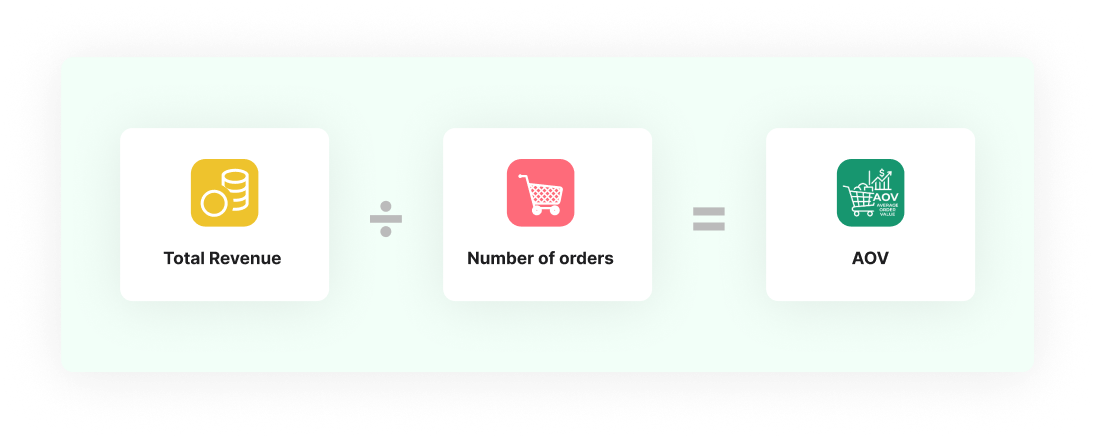
For example, if your store made $1,000 from 10 orders yesterday, your AOV is $100.
Why focus on AOV over traffic?
If you want to grow your revenue by 20%, you could try to find 20% more customers, which requires more ad spend, more content, and more top-of-funnel effort. Or, you could encourage your current customers to spend 20% more during their visit.
The latter is significantly cheaper. You’ve already paid to get them to your site; increasing AOV is simply about making the most of that initial investment. It’s the difference between constantly hunting for new leads and building a workflow that maximizes every single checkout.
📖Read More: Shopify WhatsApp Integration: Complete Guide
4 High-Impact Ways to Increase AOV on Shopify
The goal is to offer value that makes sense for the customer at the exact moment they are ready to buy. Here are four strategic ways to structure those offers.
- Increase Basket Size Before Checkout
The best time to increase order value is while the customer is still browsing or adding items to their cart. You want to nudge them toward a higher total before they click ‘Pay Now’.
Do this using:
- Product Bundles: Group complementary items together at a slight discount.
For example, if you sell skincare, bundle a cleanser, toner, and moisturizer as a ‘Daily Routine Kit.’ It’s a higher price point than a single item, but it provides a complete solution for the user.
- Volume Discounts: Encourage bulk buying with offers like ‘Buy 2, Get 10% Off’ or ‘Buy 3, Get 20% Off.’
This works exceptionally well for consumable goods like supplements, coffee, or apparel basics.
- Free Shipping Thresholds: Use a progress bar in the cart to show customers exactly how much more they need to spend to ‘unlock’ free shipping.
For example, if your AOV is $60, set your free shipping threshold at $75.
- Increase Value During Checkout
Once a customer is in the Shopify checkout flow, they have high intent to purchase. The key here is to offer low-friction additions that don't make them second-guess their primary purchase.
Consider implementing these practices:
- Order Sidekicks (Add-ons): Offer small, relevant items on the cart page or during checkout.
If someone is buying a pair of leather boots, a $10 tin of boot wax is an easy ‘yes.’
- Tiered Pricing Nudges: Show customers that buying in larger quantities offers better value per unit.
If a shopper adds a 250g bag of coffee to their cart, a quick nudge can show them that upgrading to a 1kg bag saves them 15% per gram.
- One-Click Upsells: Allow users to add recommended items to their order with a single tap without leaving the page.
If a customer is buying a wireless keyboard, a single-click prompt to add the matching palm rest ensures they get the full experience without complicating the checkout flow.
📖Read More: How to Add WhatsApp Payments to Shopify (Step-by-Step Guide)
- Increase Order Value Immediately After Purchase
The ‘Thank You’ page is often the most underutilized real estate in ecommerce. The customer has already trusted you with their credit card, so the psychological barrier to buying has been lowered.
- Post-Purchase Upsells: Present a relevant offer immediately after the WhatsApp payment confirmation, before the customer reaches the thank-you page.
Since you already have their shipping and billing info, you can add it to the existing order with a single click.
- Limited-Time Add-on Offers: Give customers a short window, such as 15 minutes, to add a specific item to their order with the incentive of no additional shipping cost.
If a shopper just bought a set of ceramic plates, offering them the matching pasta bowls for the next 10 minutes creates a sense of urgency that turns a standard order into a full set.
- Complementary Recommendations: Suggest items essential to the primary product's function or protection.
If someone just purchased a professional DSLR camera, offering a compatible high-speed memory card or a padded carrying case ensures they have everything they need to start shooting the moment the box arrives.
- Personalize Offers to Increase Relevance
Generic offers often get ignored. Personalization ensures that the upsell feels like a helpful suggestion rather than a sales pitch.
- Behavioral Targeting: Show offers based on a customer’s past browsing history rather than just the items currently in their cart.
If a visitor has repeatedly viewed a specific pair of sunglasses over the last week but finally decides to buy a sun hat today, a targeted nudge for those sunglasses can turn a single-item purchase into a high-value bundle.
- Segmentation: Tailor your offers based on the shopper's relationship with your brand to ensure the deal feels appropriate.
A high-spending VIP customer could be offered an exclusive, limited-edition accessory. At the same time, a first-time discount shopper might respond better to a ‘buy more, save more’ deal on best-selling essentials.
- AI-Driven Recommendations: Use historical purchase data to anticipate what a customer will need next in their journey.
If a customer bought a heavy winter parka from your store last month, the system can automatically suggest matching thermal gloves or a wool scarf just as the local temperature is forecasted to drop.
📌91% of consumers are more likely to shop with brands that recognize, remember, and provide relevant offers and recommendations.
Which AOV Strategy Should You Try First?
Not every store should start with the same tactic. Use this framework to decide where to focus your energy:
📌48% of shoppers will abandon their cart if they see unexpected shipping costs at checkout.
Key Metrics to Track While Improving AOV
As you implement these strategies, keep an eye on these four metrics to ensure your efforts drive revenue and reduce abandoned carts:
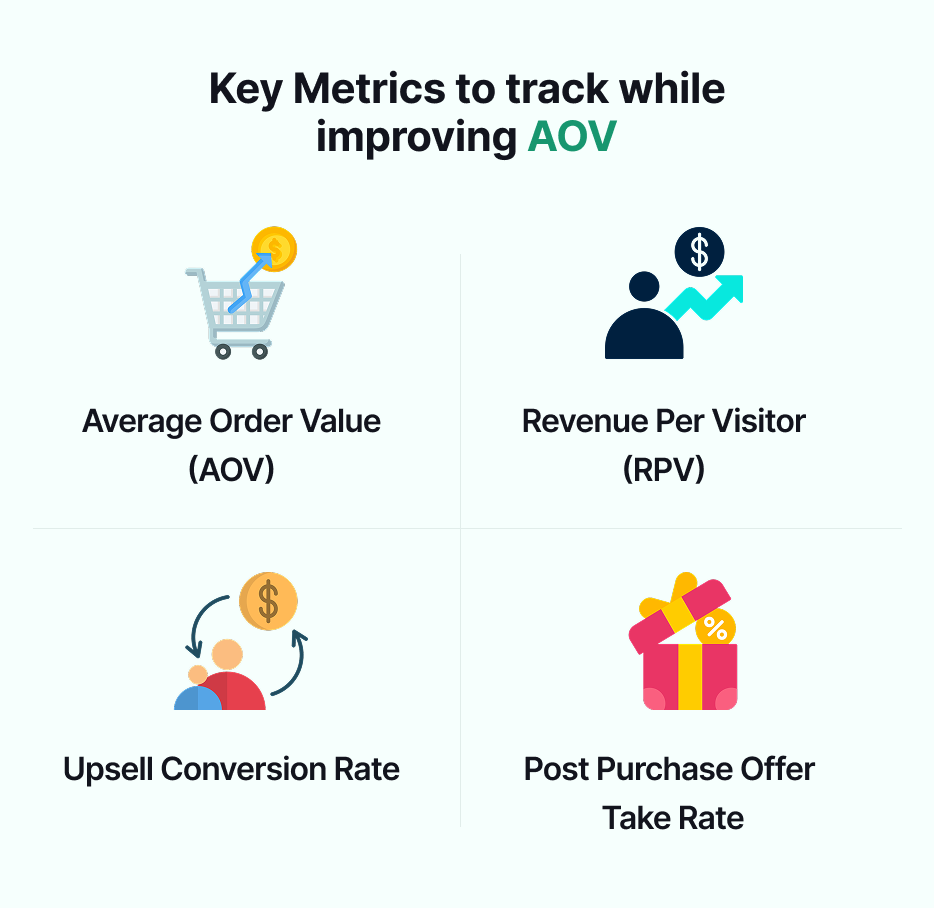
Key metrics to track for improving AOV
- AOV (Average Order Value): Is the average dollar amount per transaction increasing over time?
- Revenue per Visitor (RPV): Are your upsells actually driving growth or just distracting people from checking out?
- Upsell Conversion Rate: What percentage of customers accept your additional offers?
- Post-Purchase Offer Take Rate: How many people add to their order after the initial purchase is locked in?
Because these offers (like those sent via WhatsApp) don't disrupt the initial checkout, a high take rate here represents pure revenue expansion with zero risk to your baseline conversion.
📖Read More: How to Increase Engagement & Make Your Brand Stand Out on WhatsApp
How Flowcart Helps Increase AOV on Shopify
Most upsell tools live only on your website. Flowcart moves the conversation to WhatsApp, a platform where customers are far more likely to see and engage with your messages than in a crowded email inbox.
By moving the AOV expansion strategy to this mobile-first, high-engagement channel, you can reach customers when their buying intent is still at its peak.
Here’s how:
1. AI-Based Post-Purchase Upsells on WhatsApp
The ‘Thank You’ page has a shelf life of about five seconds. Once a customer sees it, they leave.
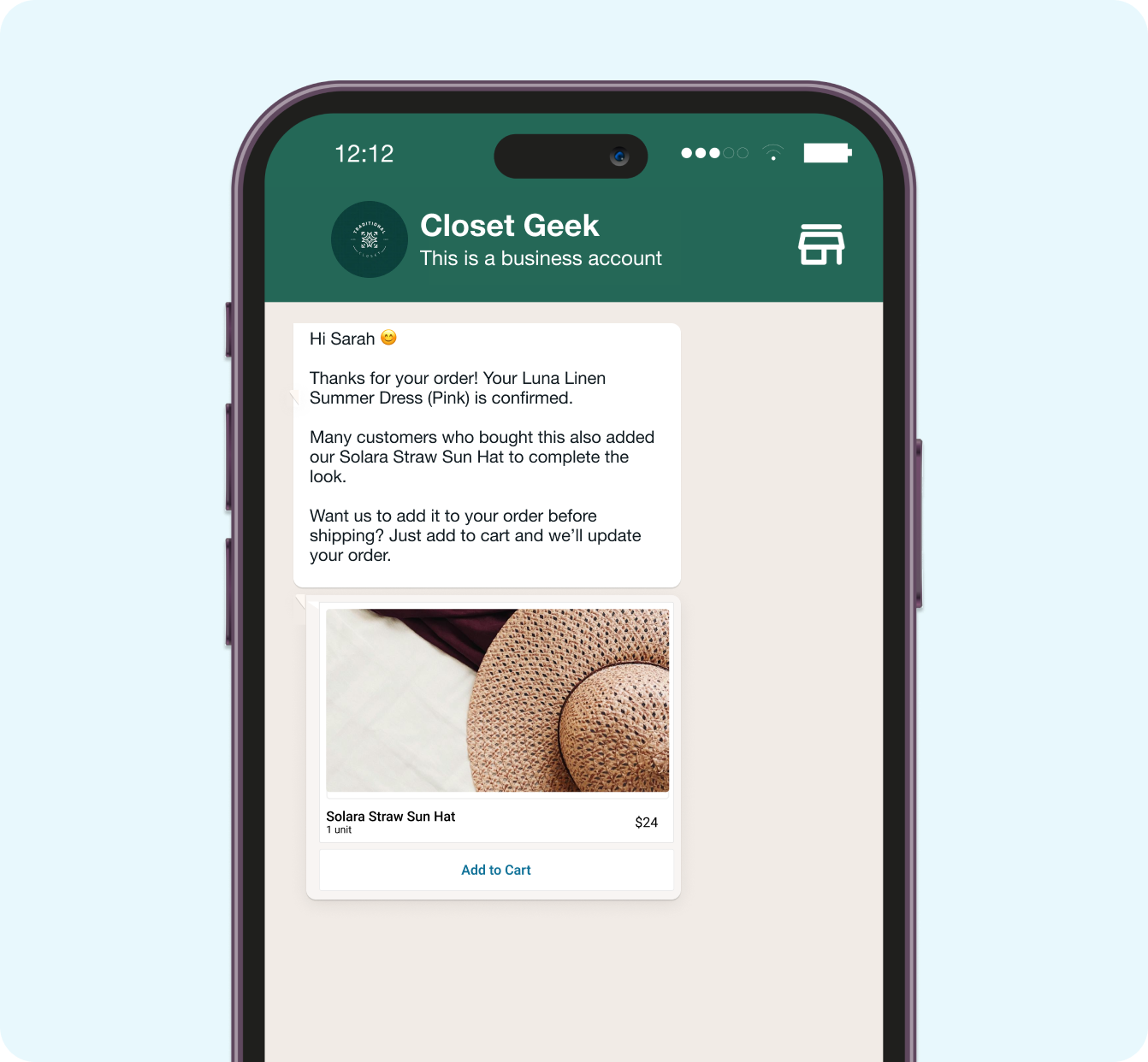
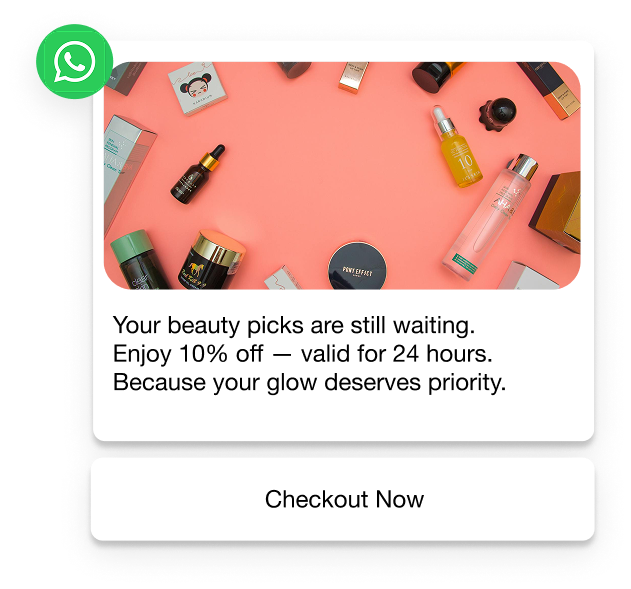
Flowcart captures that intent by moving the offer to WhatsApp. If a customer buys a premium skincare set, Flowcart’s AI can automatically trigger a message suggesting a specific SPF cream that completes the regimen. Because the open rate on WhatsApp is nearly 5x higher than email, the offer actually gets seen before the order is even packed.
2. Automated Triggered Upsell Flows
Scaling AOV manually is impossible for high-volume stores. Flowcart uses event-based triggers synced to your Shopify store to handle this:
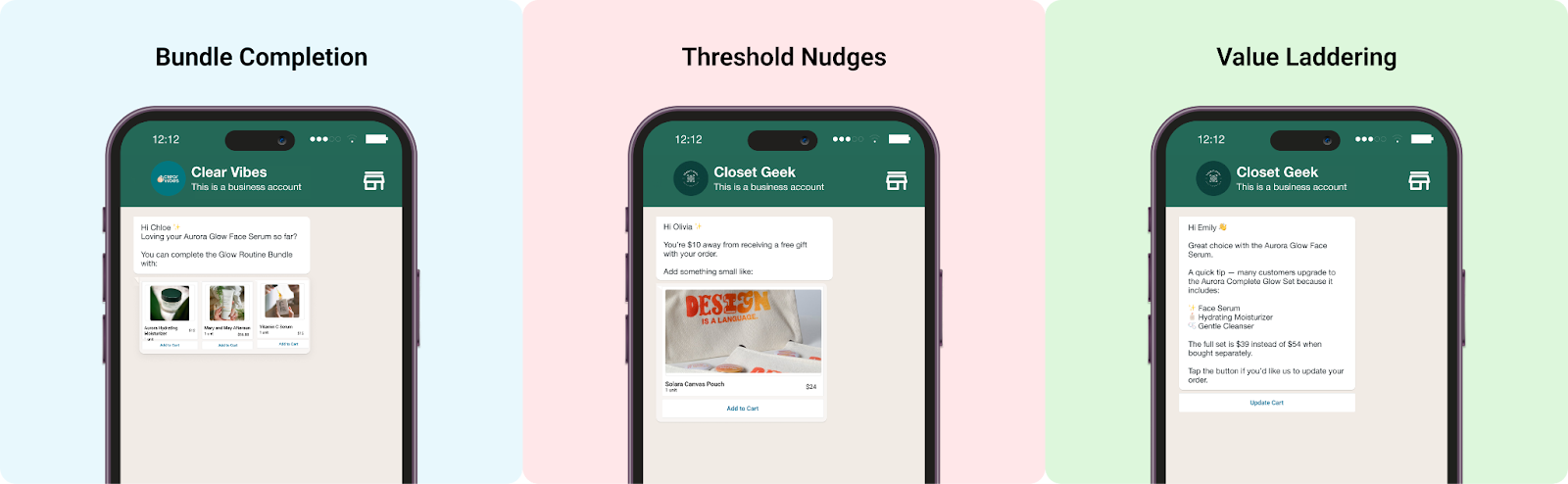
- Bundle completion: Automatically suggests the missing piece of a set (e.g., matching bottoms for a purchased bikini top)
- Threshold nudges: If an order is just under a specific value, a WhatsApp flow can offer a small add-on to qualify the customer for a future reward or discount
- Value-laddering: Triggers an offer for a ‘Pro’ version of a product if the customer has purchased the entry-level version multiple times
Gamifying the Repeat Purchase
You can enhance your customers’ shopping experience by moving beyond basic triggers and adopting interactive consultations. For example, a repeat buyer can receive a WhatsApp message inviting them to a quick skincare quiz to level up their routine.
One of our customers, Uncover Skincare, used this exact strategy to bridge the gap between education and sales. In the beauty industry, customers often hesitate to buy a full bundle if they aren’t sure which ingredients suit their skin type.
It launched an interactive quiz within WhatsApp using the Flowcart Loyalty Program. In turn, that allowed customers to identify their skin concerns and receive real-time product recommendations in the same chat.
The result was a frictionless funnel where advice and commerce lived together. It combined these personalized consultations with targeted broadcasts and tripled the revenue they were seeing from email.
Now Uncover drives 80% of its D2C sales through the WhatsApp channel. It turns a standard upsell into a helpful service, ensuring customers feel confident in their purchase before they even hit the checkout button.
Try Flowcart’s Loyalty Program for free
3. Personalized Product Recommendations
Generic recommendations like ‘Customers also bought’ are often too broad to be effective. Flowcart pulls data directly from your Shopify catalog and the customer’s specific order history to ensure the suggestion is logical.
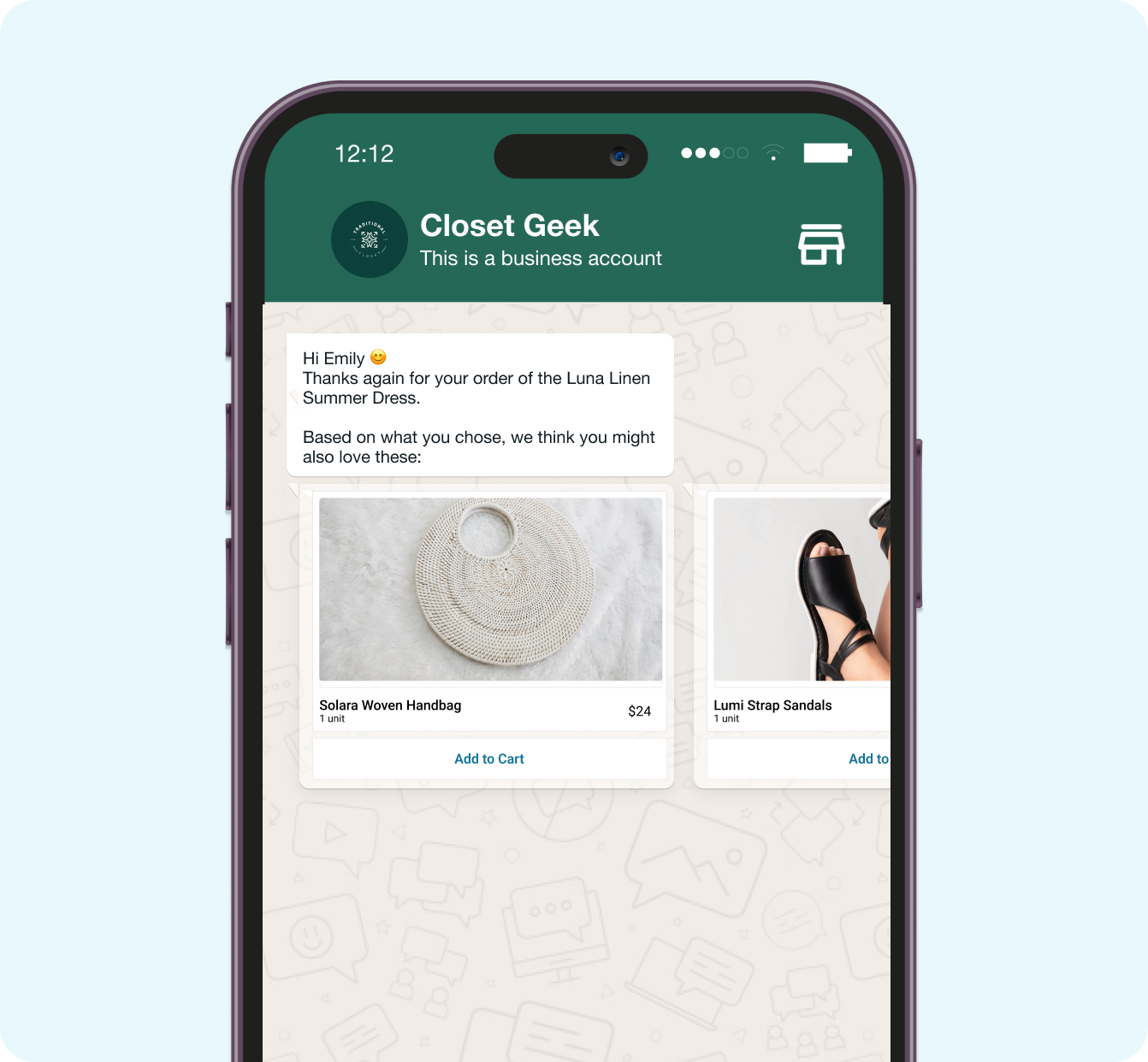
If a shopper buys a set of weights, the recommendation engine won't suggest more weights; it will suggest a foam roller or a grip strengthener. It turns a ‘sales nudge’ into a helpful service.
4. Friction-Reduced Repeat Checkout (Light Checkout)
The biggest downer of a second purchase is the requirement to re-enter shipping and billing info. Flowcart’s Light Checkout lets customers browse, select, and pay for an upsell entirely within the WhatsApp chat.
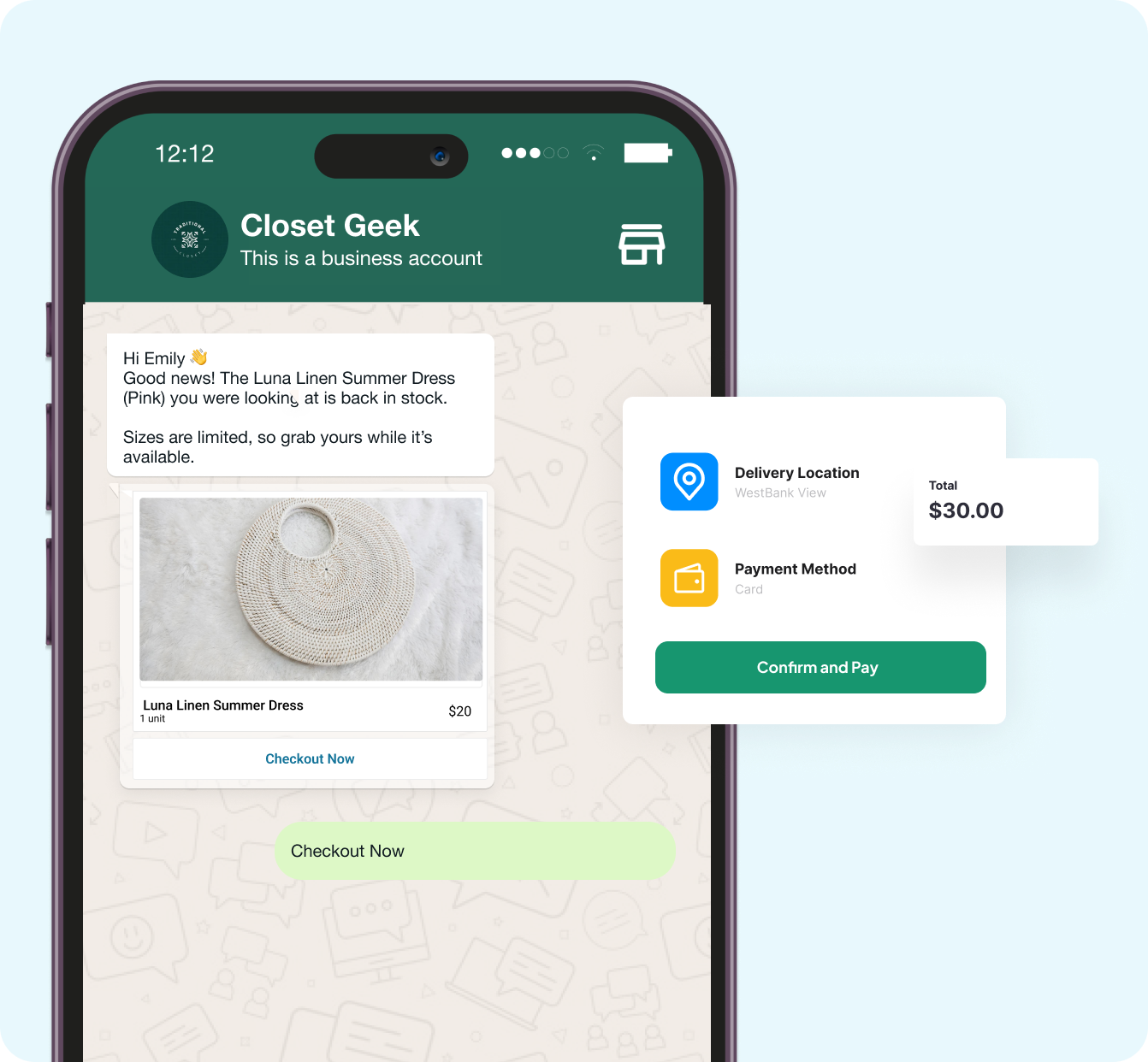
It uses their existing Shopify profile to process the transaction in two taps. By removing the need to navigate back to a website or find a credit card, you eliminate the friction that usually stops an impulse add-on in its tracks.
The easiest way to see the impact on your margins is to run a small test with your post-purchase offers. You can install the Flowcart Shopify plugin to begin setting up your first WhatsApp upsell flow and see how a friction-free checkout affects your take rate in real-time.
Final Takeaway: More Revenue Without More Ad Spend
Acquiring new customers will always be part of the game, but it shouldn't be your only move. In an environment where ad costs keep rising, your ability to scale depends on how well you monetize the traffic you already have.
By focusing on AOV, especially through high-engagement channels like WhatsApp, you turn a one-time transaction into a larger, more profitable relationship. It helps you build a more sustainable business.
Ready to see how automated WhatsApp flows can grow your revenue per customer? Book a Flowcart demo today to see these AOV strategies in action.




%201.webp)



.png)