.png)
.png)

.png)
Key Takeaways
When a customer reaches your checkout page, it means they have decided to buy. What is still undecided is whether they leave with just what they came for or with more.
That is the highest-intent moment you will ever get with that customer. But most Shopify stores do nothing with it. No suggestion, no add-on, no bundle. The order closes at whatever the customer initially planned to get.
Cross-selling apps helps you change that.
They simply recommend something that pairs with what the customer is already buying, at the point where adding one more item feels easy rather than pushy. This results in a higher average order value (AOV) without you spending another cent on ads or traffic.
In this article, we’ll walk you through a list of these apps, and then the channel that takes over when your customer closes their tab.
What Is Cross-Selling on Shopify, and How Is It Different From Upselling?
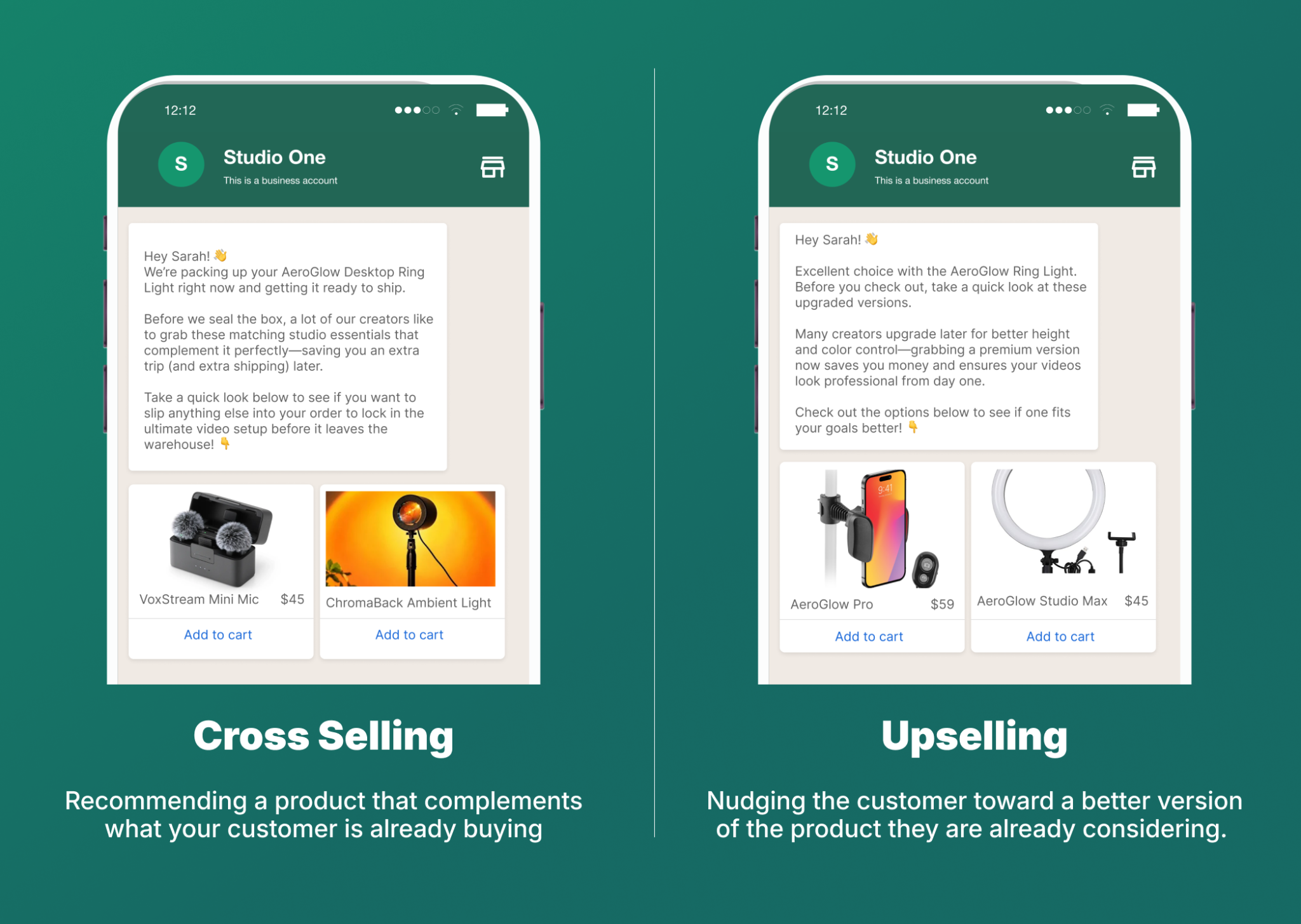
Cross-selling means recommending a product that complements what your customer already bought. For instance:
- They paid for running shoes, and you suggested compression socks
- They got a camera in the cart, and you offer a carrying case
What’s worth noting here is that their original choice stays exactly as it was. You are just introducing something helpful after a purchase.
Upselling is often used interchangeably with cross-selling, and both increase AOV either by adding an extra complementary product or by nudging customers toward a better version of the product they are already considering.
Why Cross-Sells Are a Retention Play, Not Just an AOV Play
McKinsey found that cross-selling done well can lift sales by 20% and profits by 30%. Amazon also credited 35% of its revenue to the recommendation engine behind its cross-sell and upsell prompts.
But increasing AOVs is not the only benefit cross-sells bring. It also boosts retention.
When a customer buys two products instead of one, they have seen more of your catalog and tried more of what you make. They have almost the same purchase experience as repeat customers, which makes them harder for a competitor to peel away later.
Loyal customers are more likely to repeat purchases. And according to BIA Advisory, repeat customers spend 67% more than new ones. So, cross-sell increases AOV while also boosting your retention rates.
Here is the gap, though
The best moment to turn a one-time buyer into a repeat customer is post-purchase. Two reasons contribute to this:
- Pre-purchase cross-selling can backfire. When you push too many add-ons before the customer has even committed financially, you risk creating doubt about the original purchase. In high AOV or luxury markets especially, this kills the sale altogether.
- Post-purchase comes with trust already built. The customer has bought from you, the transaction went smoothly, and they are likely happy with their purchase. A nudge in that window feels less like marketing. It feels like you are helping them to get value out of what they just bought.
The problem is, most customers close their tab post-purchase and existing cross-sell apps cannot reach them at that moment.
The Channel That Picks Up Where Every Cross-Sell App Stops
On-site cross-sell apps are built for the session. That means they can only recommend complementary products while the customer is still in your store. Once they leave, the cross-sell app stops working and has no way to follow up with them.
However, WhatsApp does. It has a 98% open rate, with most messages read within three minutes, making it the channel that can actually reach a customer in that post-purchase window with something they will see.
And Flowcart is the WhatsApp commerce platform built around this. It is worth being clear that Flowcart is not a cross-sell app, and it does not belong in the comparison below. Instead, it is the layer that takes over once those apps have done all they can.
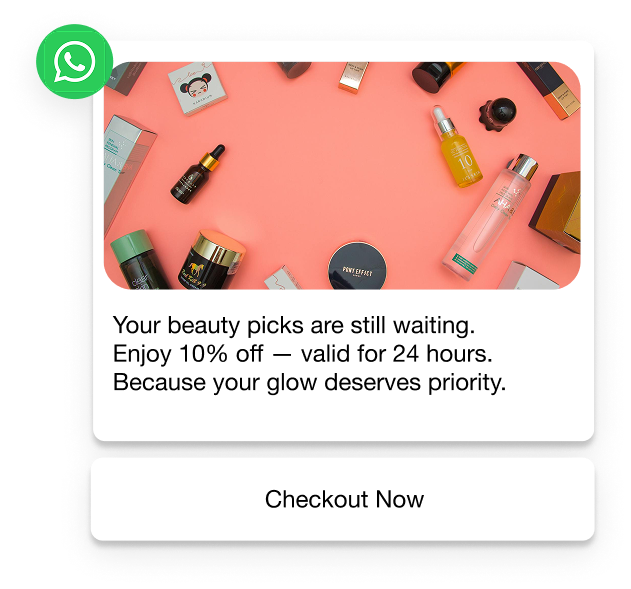
Once a customer confirms a purchase and they close their tab, Flowcart takes over on WhatsApp with three things working together:
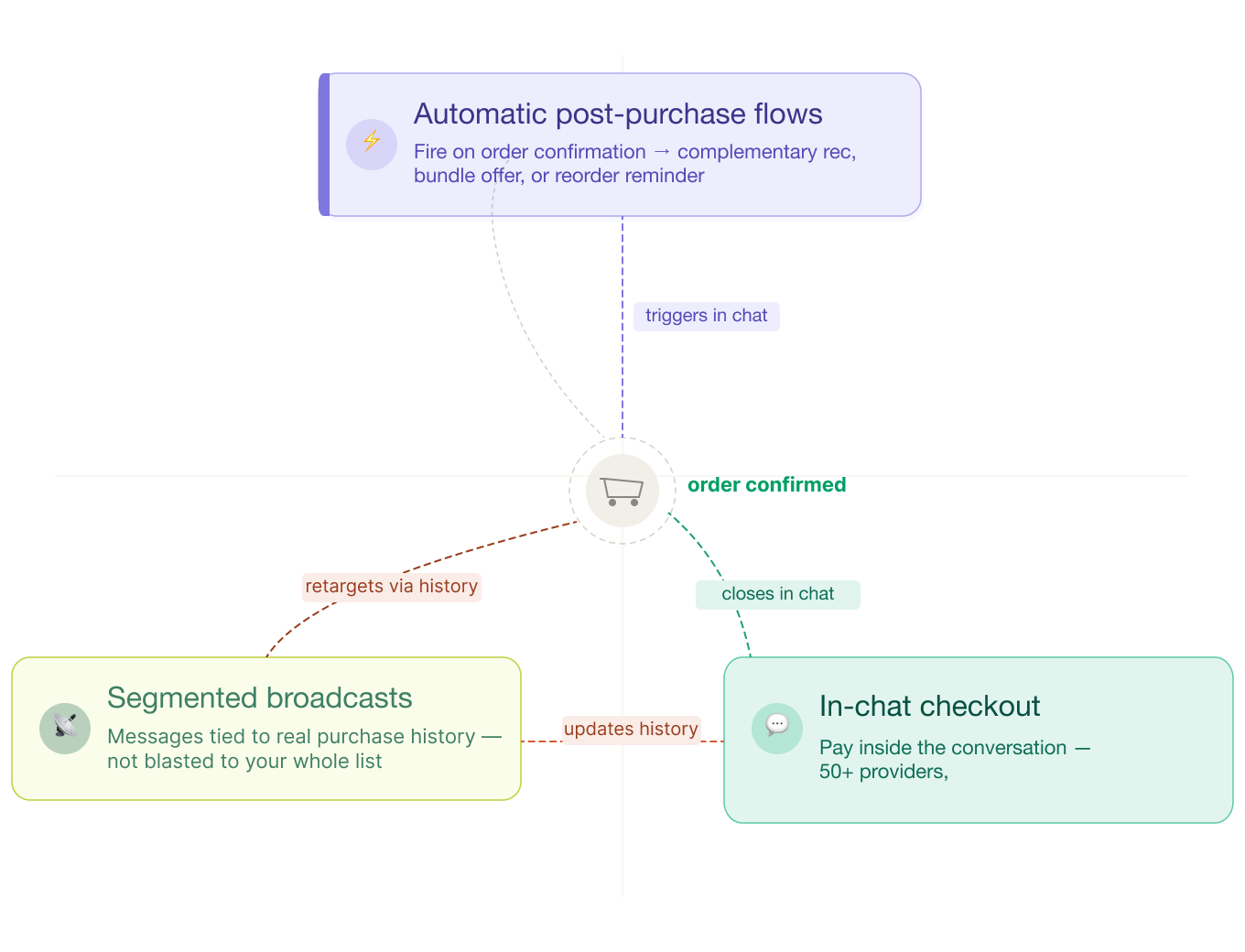
- Automatic post-purchase flows fire the moment an order is confirmed, sending a complementary product recommendation, a bundle offer, or a reorder reminder timed to when the customer is likely to run low
- In-chat checkout lets the customer pay right inside the conversation across 50+ payment providers, including Stripe, Paystack, and Razorpay, so there is no redirect and nothing to abandon between the recommendation and the sale
- Segmented broadcasts go out based on what each customer has actually bought before, which means your messages are tied to real purchase history rather than blasted to your whole list
Uncover Skincare is a good example of how these work to boost AOV plus retention. Using Flowcart's broadcast and recommendation flows, they grew WhatsApp into their strongest revenue channel, tripling their revenue from email and now pulling a third of their total ecommerce sales through it.
Healthy U, a wellness retailer running 30+ outlets across Kenya, tells a similar story on the retention side. After consolidating its scattered store-by-store WhatsApp setup into Flowcart, the brand now does over KES 1M in monthly revenue through the channel, with half of all orders coming from returning customers.
So the practical takeaway is this. Pick a cross-sell app from the list below for the on-site work. Then add Flowcart for everything that happens after the customer leaves.
Top 6 Best Shopify Cross-Sell Apps
Here are the six on-site cross-sell apps worth your shortlist, what each one does best, and where it falls short.
1. Selleasy
Best for: Stores that want Amazon-style placement
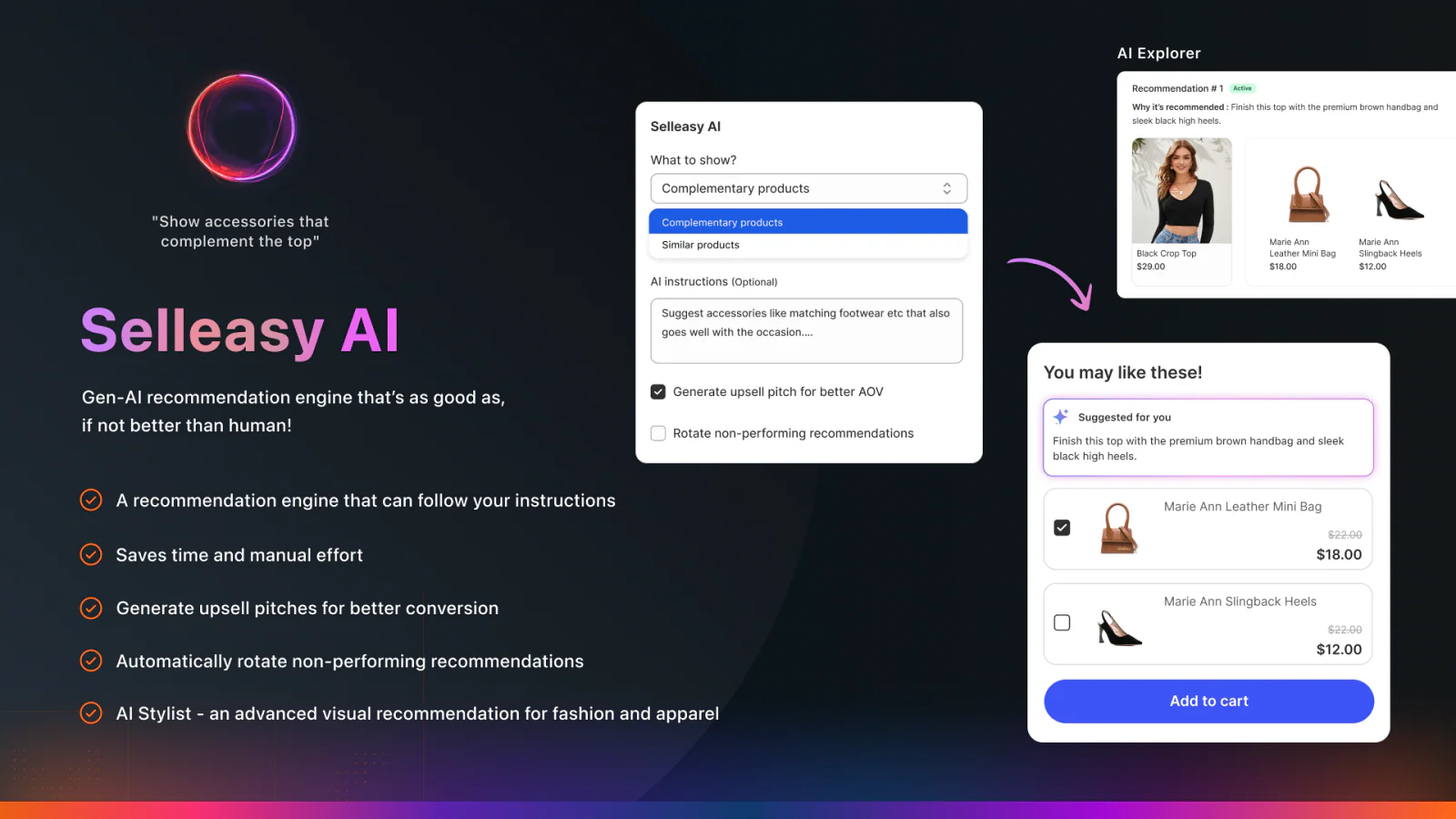
Selleasy is the easiest app on this list to get running. It adds three things to your store: a "frequently bought together" box on the product page, add-on offers in the cart, and follow-up offers after checkout.
You can choose the recommended products yourself, which works well if you know your catalog has natural pairs like a phone and a phone case. Or you can let the app choose for you, which is more useful if you have a large catalog and do not want to set up every pairing by hand. Setup takes minutes and needs no developer.
Where cross-sells appear: Product page, cart, thank you page
Key features
- Frequently bought together bundles on the product page
- Cart add-ons and pop-ups before checkout
- Manual and automatic recommendation options
- Bundle discounts to incentivize add-ons
- Multi-language support
Strengths
- Free plan with core cross-sell features and no credit card required
- Fast load time and placement that does not get in the customer's way
- Free setup help over Zoom, chat, or email
Limitations
- Doesn’t cover post-purchase sessions
- Free plan caps out at 50 orders a month
- Lacks a strong, dedicated thank-you page app like ReConvert
- Automatic recommendations can surface loosely related products if your catalog is broad
Pricing: Freemium Tier I plan up to 50 orders/month. Freemium Tier II at $9/month up to 500 orders. Freemium Tier III at $19/month up to 1000 orders. Freemium Tier IV at $29/month unlimited.
2. Honeycomb Upsell and Cross-Sell
Best for: Stores that want offers running across the whole purchase journey
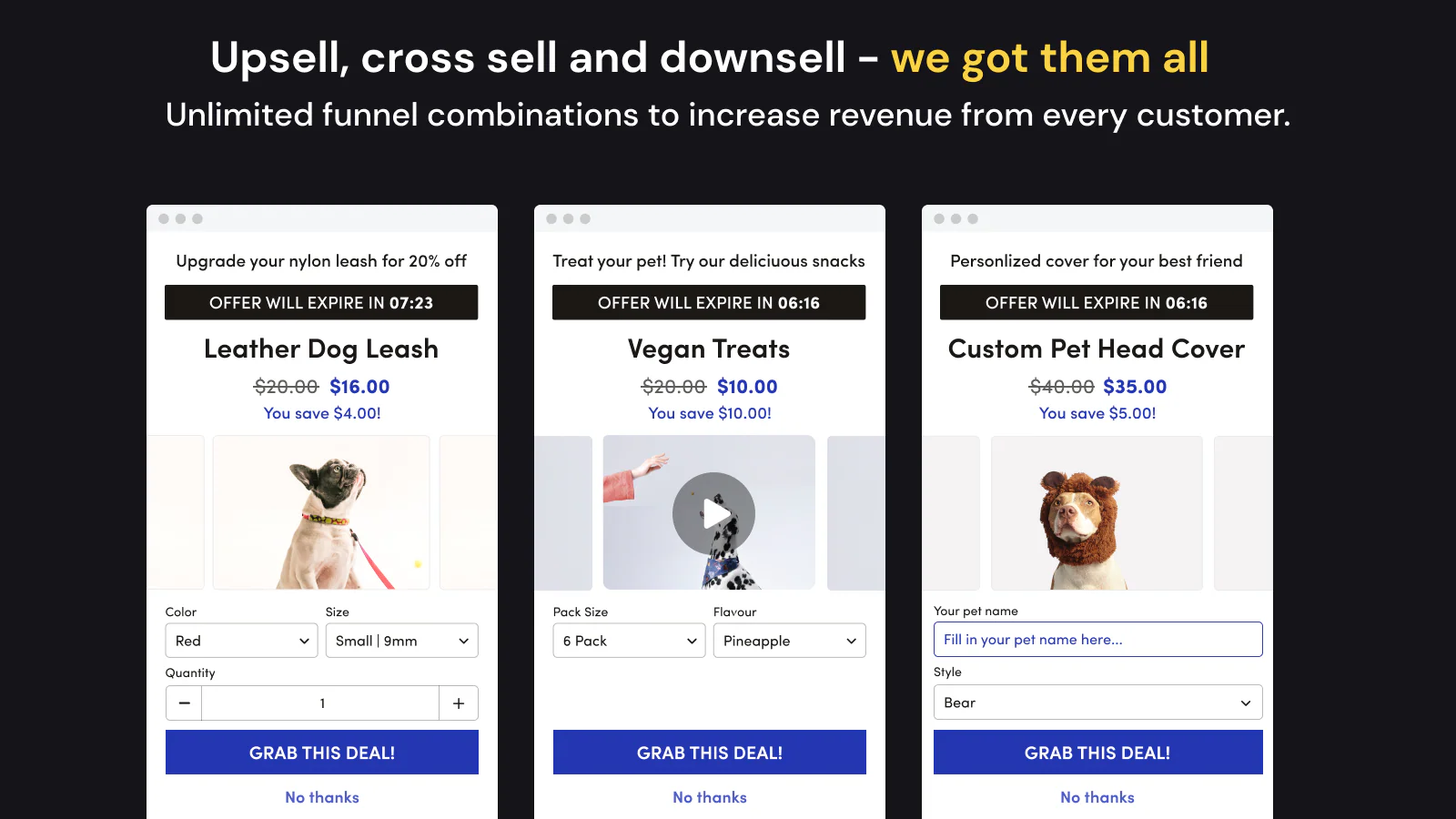
Honeycomb places offers at every stage of the buying journey. If a customer says no to one offer, Honeycomb shows them a different offer at the next stage instead of giving up. It is one of the few apps that does the thank-you page well, showing a one-click offer right after payment so the customer does not have to enter their card again.
Where cross-sells appear: Product page, cart, checkout, thank-you page
Key features
- Multi-step upsell funnels across the full journey
- Drag-and-drop builder with A/B testing
- In-checkout placement on higher plans
- Autopilot mode for automatic campaign creation
- Detailed analytics per funnel step
Strengths
- One of the few apps with a genuinely polished in-checkout and thank-you page offer
- A/B testing is built in, so you can see which offer actually converts
- Post-purchase offers do not make the customer re-enter payment details
Limitations
- The entry paid plan is $54.99/month, the steepest on this list
- The free plan only covers 100 monthly views, which most stores burn through fast
- The funnel builder takes a little time to learn
- Doesn’t cover post-purchase sessions
Pricing: Free plan up to 100 views/month. From $54.99/month. 7-day free trial.
3. Zoorix Cross Sell and Bundles
Best for: Stores selling bundle-friendly products
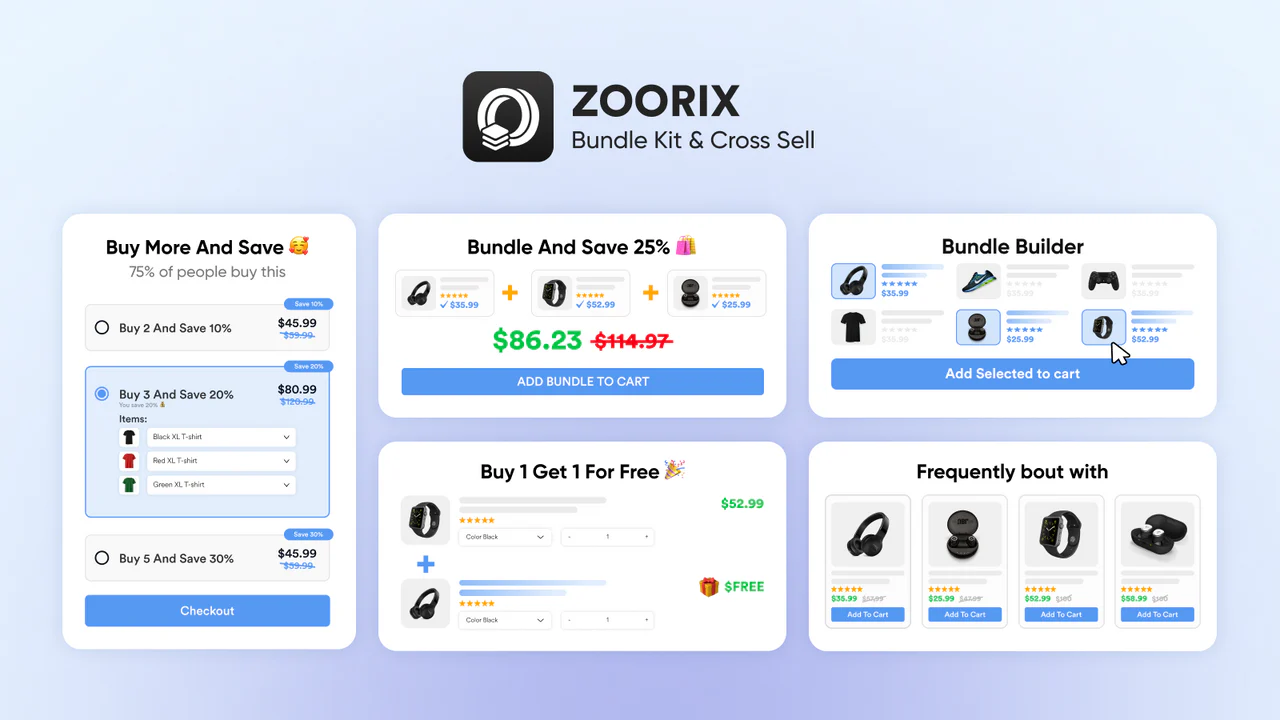
Zoorix is built for selling products in groups rather than one at a time. Instead of showing a single suggested item, it lets you create bundles, "buy more, save more" volume discounts, and mix-and-match deals where the customer picks several items from a collection. The offer appears in the cart drawer, so the customer sees it without being pulled away from checkout. This app suits stores that sell items people often buy in multiples, such as skincare, supplements, kitchenware, or pet supplies.
Where cross-sells appear: Product page, cart, cart drawer, thank-you page
Key features
- Mix-and-match bundles built from a collection
- AI-based product recommendations
- Volume discounts and quantity breaks
- Cart drawer integration
- Built-in analytics
Strengths
- Permanently free plan covering core cross-sell, bundle, and volume discount features
- A strong fit for stores whose products naturally sell as bundles
- Setup stays simple, even on the higher plans
Limitations
- Not the best fit if individual recommendations work better for you than bundles
- The thank-you page placement is thinner than Honeycomb's
- Some users hit display glitches on products with complex variants
- Doesn’t cover post-purchase sessions
Pricing: Free plan. Basic $7.99/month. Growth $14.99/month. Premium $29.99/month.
4. Candy Rack
Best for: Fashion and accessory stores
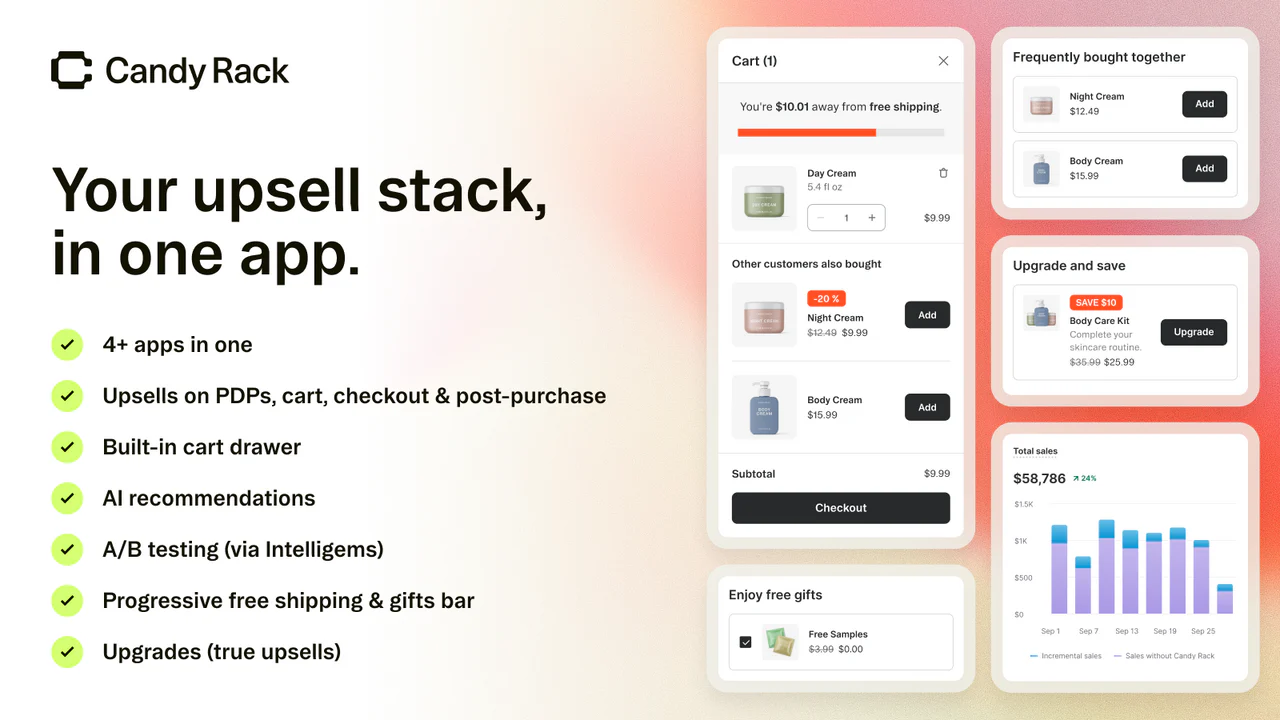
Candy Rack shows its offer the second a customer clicks "Add to Cart." A small window appears with a suggested product, the customer adds it with one click, and they proceed to checkout without interruption. The offer can be styled to match your store, so it looks built-in rather than tacked on. It works best for stores with clear pairs, such as a handbag and a matching wallet.
Where cross-sells appear: Post add-to-cart, checkout, thank-you page
Key features
- One-click cross-sell trigger at add-to-cart
- Smart Auto-Upsell powered by AI
- A widget that can be styled to match the store
- Pre-purchase and post-purchase placements
- Revenue analytics per offer
Strengths
- The add-to-cart trigger catches customers mid-decision, not mid-browse
- Presentation feels native to the store rather than bolted on
- No code needed, and setup is quick
Limitations
- More expensive plans for high-end features
- Less effective if your products do not have obvious pairings
- Bundle logic is thinner than Zoorix
- Doesn’t cover post-purchase sessions
Pricing: Each paid plan has an 8-day free trial. From $19.99/month.
5. UFE Cross-Sell and Upsell Bundle
Best for: Stores on a tight budget
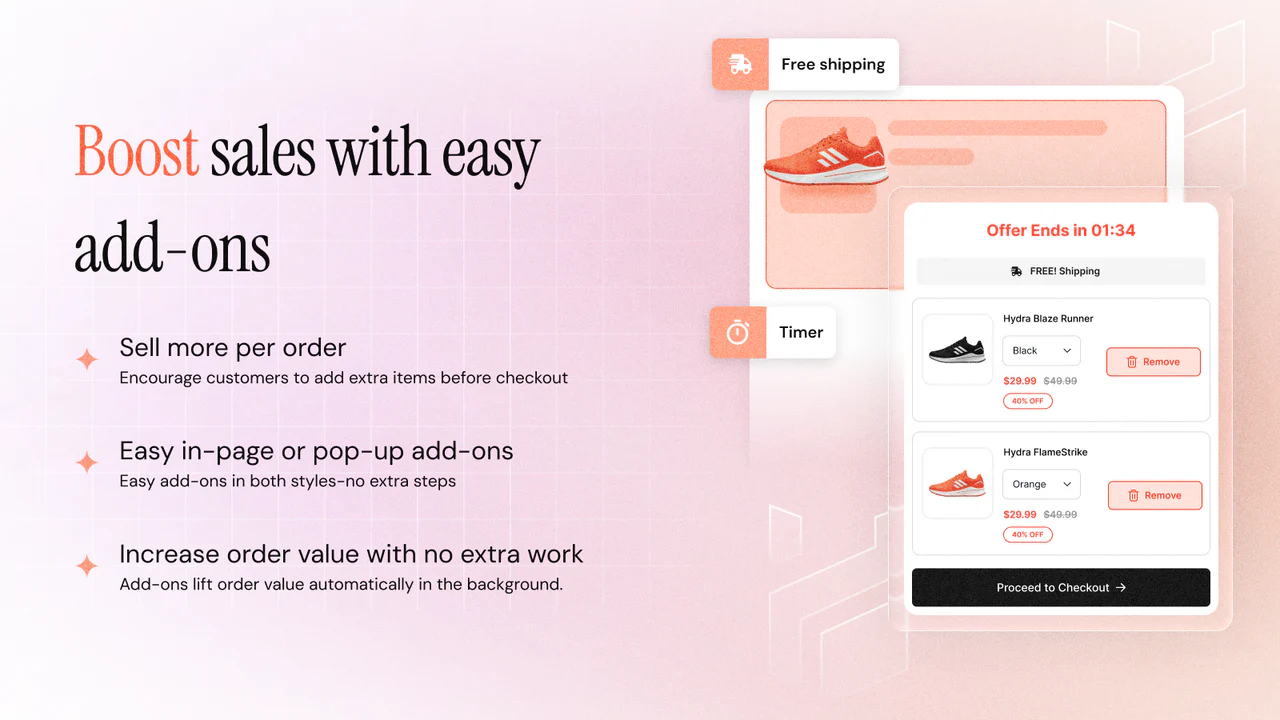
UFE gives you the most for the least money. It places cross-sell offers on the product page, the cart, the checkout, and the thank-you page, and all of that is included in the free plan if you process fewer than 50 orders a month.
When you grow past the free plan, UFE charges a flat monthly price instead of taking a percentage of the sales it generates, so your costs stay predictable as you scale. It also includes A/B testing, which most budget apps leave out.
Where cross-sells appear: Product page, cart, checkout, thank-you page
Key features
- Frequently bought together, bundle, and volume discount types
- A/B testing is built into the dashboard
- Mix-and-match bundle support
- Flat monthly pricing with no revenue commission
- Facebook Pixel and Google Analytics integration
Strengths
- The free plan gives you core features across every placement
- No commission is skimmed off your revenue on paid plans
- A/B testing without paying for a separate tool
Limitations
- The interface is less user-friendly than Candy Rack or Honeycomb
- The free plan gets outgrown quickly once traffic picks up
- Cheaper starting point, but if you need advanced customization and priority support, your expenses rise sharply
- Doesn’t cover post-purchase sessions
Pricing: Free plan up to 50 orders/month. From $9.99/month. No revenue commission.
6. ReConvert Upsell and Cross Sell
Best for: Stores that want to squeeze the most out of the thank-you page, specifically
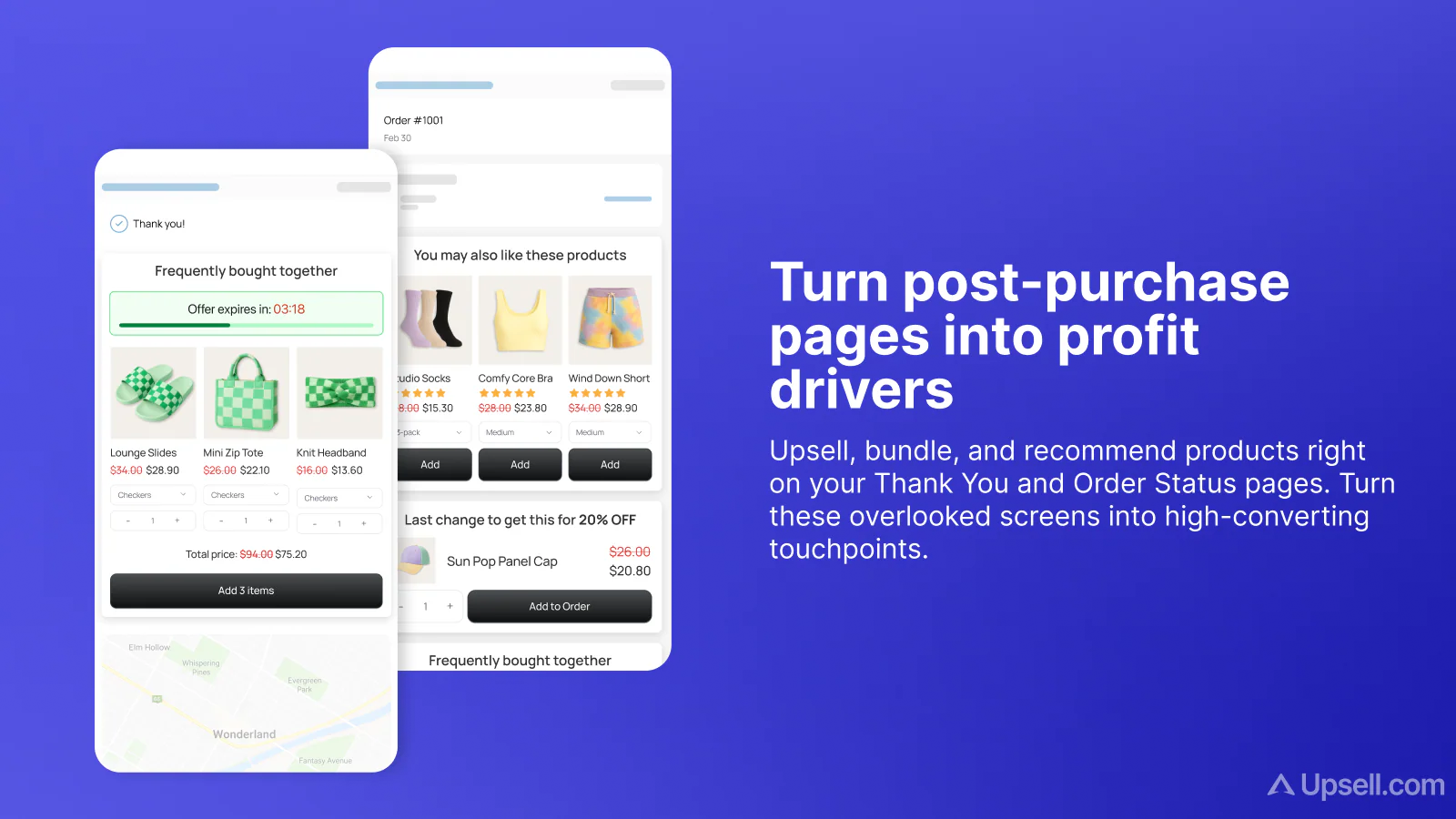
ReConvert focuses almost entirely on the thank-you page, the screen a customer sees right after they pay. Its drag-and-drop builder lets you design that page with cross-sell offers, countdown-timer discounts, a birthday field for collecting customer data, short surveys, and product recommendation carousels.
If your store already handles product-page and cart cross-sells well but does nothing after checkout, ReConvert is the most direct way to fill that gap.
Where cross-sells appear: Checkout, thank-you page, post-purchase flow
Key features
- Drag-and-drop thank-you page builder
- One-click cross-sell offers on the confirmation page
- Countdown timer discounts on post-purchase offers
- Birthday collection and survey widgets
- Bundle-style cross-sells at checkout
Strengths
- The most developed thank-you page experience on this list
- One-click post-purchase upsell with no payment re-entry
- The entry plan is affordable for what you get
Limitations
- Less useful if your gap is on the product page or cart rather than post-purchase
- The free plan only works on development stores, not live ones
- Some plans take a revenue commission, which makes scaling costs harder to predict
- Features highly focus on Upsells than cross-sells
- Doesn’t cover post-purchase sessions
Pricing: Free up to 50 orders/month on live stores. From $4.99/month.
Which Cross-Sell App Is Right for Your Store?
It comes down to where you are losing the cross-sell and what your budget allows.
If your catalog has clear complementary products and you want something affordable to start with, Selleasy comfortably covers most stores. If your products work better sold as bundles or volume deals, Zoorix is the stronger pick.
When the priority is the thank-you page, it is really a choice between Honeycomb and ReConvert. Honeycomb gives you more funnel flexibility and proper A/B testing. ReConvert's thank-you page builder is the more developed experience if that is the only placement you care about.
For fashion and accessories, where how the offer looks matters, Candy Rack's add-to-cart trigger is the most brand-friendly option here. And if budget is holding you back, UFE's free plan goes further than any other, with no commission once you upgrade.
One last thing worth doing, no matter which app you land on. Product page placement and cart placement behave differently depending on what you sell. High-margin accessories tend to convert better on the product page, while consumables and replenishables usually do better in the cart and after purchase. Run both for a couple of weeks and use the results to decide what to do next.
Flowcart Continues Cross-Sell Even After Checkout
Every app above does solid work while the customer is still in your store. But the tab always closes eventually. And those first 24 to 48 hours after a confirmed order, when trust is highest, and the customer is still warm, go completely dark for every cross-sell app in the Shopify App Store.
That is the gap Flowcart's WhatsApp post-purchase flows close. Set up your on-site cross-sells with any of the apps above, then let Flowcart reach the customer after they leave, with a recommendation that fits what they bought and a checkout that requires no redirect to finish.
Start your free trial with Flowcart or book a demo to see how post-purchase WhatsApp flows fit what you are already selling.

.png)




%201.webp)



.png)