
.png)
Key Takeaways
10 Best Shopify Popup Apps you can consider:
- Flowcart: Best for high-intent WhatsApp conversions
- Wisepops: Best for premium brands prioritizing email and web push capture
- Privy: Best for small stores needing an all-in-one email and SMS marketing suite
- OptiMonk: Best for personalizing email and SMS popups with AI-driven behavior data
- Alia: Best for modern brands capturing email and phone numbers
- WooHoo: Best for increasing SMS engagement through gamification
- Poptin: Best for budget-conscious stores needing exit-intent tech
- Justuno: Best for enterprise-level scaling and complex audience segmentation
- Pop Convert: Best for unobtrusive announcements and persistent Smart Bars
- Rivo: Best for building long-term loyalty and retention
The fundamental goal of a pop-up app is to convert unknown first-time visitors into known owned audiences. But choosing the right Shopify pop-up apps can be confusing, especially when dozens of tools promise similar features but only a few actually deliver results.
In this guide, we’ve researched, compared, and reviewed the best Shopify pop-up apps software available today. Whether you’re a Shopify store owner, D2C founder, or looking to reduce cart abandonment through high-intent conversions, this article will help you confidently choose the right solution.
What you’ll find in this Shopify pop-up apps guide:
- A quick comparison of top tools
- In‑depth reviews with pros, cons, and pricing
- A buyer’s guide to help you choose
- FAQs based on real search intent
What features must your Shopify pop-up app software have?
The difference between an app that converts and one that just annoys your customers comes down to how it handles intent.
If your software is missing these core features, you're losing leads and likely pushing away high-intent shoppers who were seconds away from buying.
1. CRM and Shopify deep integration
A high-performing app must integrate seamlessly with your Shopify store and CRM to distinguish between first-time visitors and existing customers. Without this intelligence, you risk offering unnecessary discounts to loyal shoppers who were already going to buy, effectively cannibalizing your margins. Your pop-up strategy should be reserved for de-anonymizing new traffic, not subsidizing existing ones.
2. Intent-based behavioral triggers
While traditional triggers like exit-intent are helpful for capturing users as they are about to leave, they are less effective in a mobile-first world. Modern intent-based triggers monitor signals such as scroll depth and time spent on specific product specs.
This allows you to identify the hesitation window for first-time visitors and serve a contextual banner while they are still engaged. By targeting only these hesitant new visitors, you avoid the trap of offering discounts to existing customers or shoppers already prepared to pay full price.
3. Mobile-first contextual banners
Full-screen pop-ups on mobile screens are often a major source of friction, and data show that online cart abandonment rates have climbed to as high as 70.22%. To counter this, look for software that uses native-feeling micro-nudges or slide-in banners that don't block the product view.
These contextual banners address banner blindness by displaying messages relevant only to the category or SKU the user is viewing.
4. WhatsApp-first conversion routing
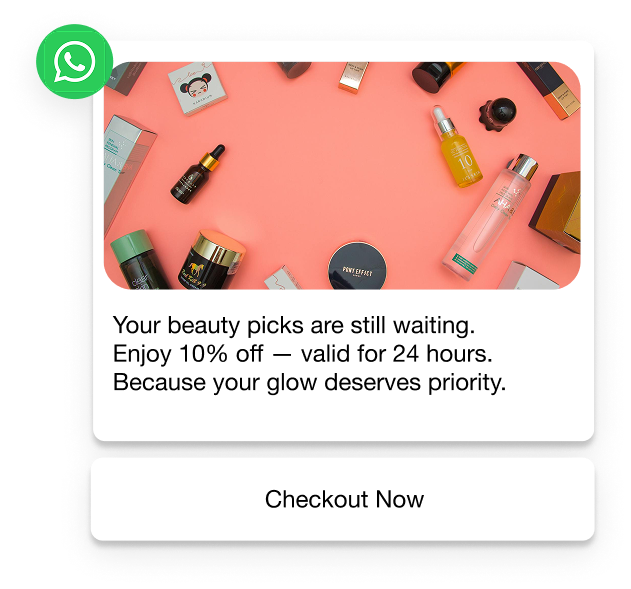
The standard trade of an email for a 10% discount is losing its effectiveness as inboxes become crowded. In contrast, WhatsApp maintains an open rate of nearly 98%. Crucially, your app must be able to act on this data immediately by sending a coupon code the moment the user opts in. Many players fail to send codes instantly, leaving the validity of the collected data unknown and the lead cold.
Flowcart has a WhatsApp-first approach, which is superior because it ensures immediate actionability and data validation. It routes high-intent users to a real-time conversation and delivers incentives instantly. You can verify the contact method while providing a digital in-store assistant to answer questions about sizing or shipping and close the sale.
5. Anonymized behavior intelligence
With the phasing out of traditional tracking, your app must be smart enough to recognize a returning high-intent user without relying on intrusive personal data. Behavioral intelligence identifies patterns, such as a visitor viewing the same SKU multiple times in 48 hours, and serves a specific, high-value offer tailored to that interest.
Personalized recommendations drive a 10-15 percent increase in revenue, often leading to impulse purchases. This approach builds trust by providing a relevant experience without excessive tracking.
Top Shopify pop-up app software: A quick overview
Top 10 Shopify pop-up app software
The following apps offer the best balance of high-converting technology and a non-intrusive user experience on Shopify today.
1. Flowcart (Best for high-intent WhatsApp conversions)
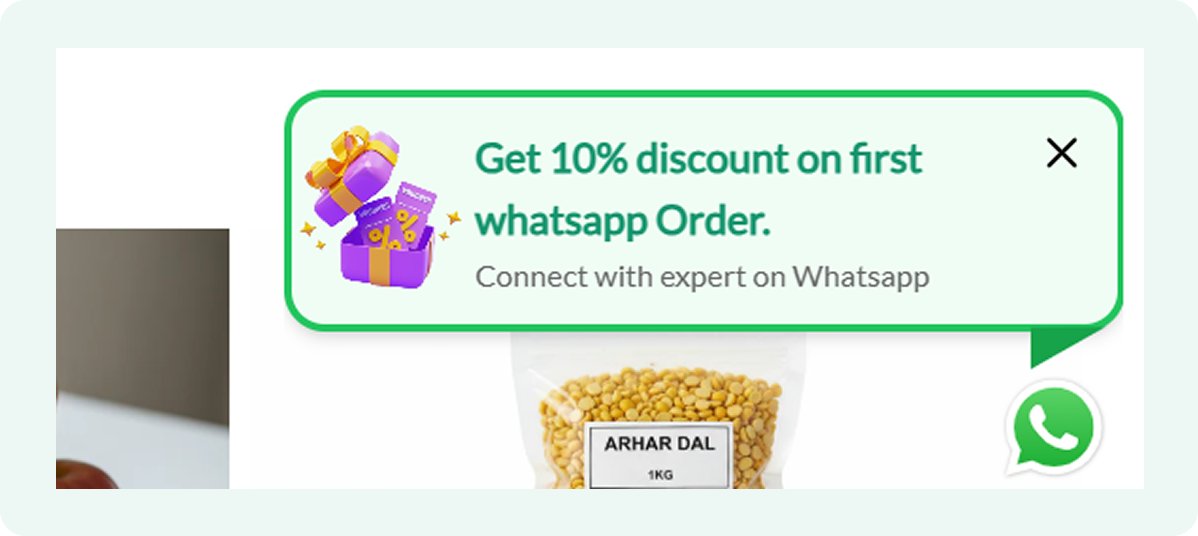
via Flowcart
Most Shopify pop-up apps are built to collect email addresses that sit dormant in a database. Flowcart shifts the focus from passive lead capture to active commerce by routing your highest-intent website visitors directly into WhatsApp conversations.
It works by de-anonymizing your traffic. Flowcart uses on-site behavioral signals to understand what visitors are doing. If someone lingers on a specific product page or scrolls through shipping details, Flowcart recognizes the hesitation window and triggers a contextual banner.
Instead of a static form, the visitor is invited to chat, allowing your team or an AI agent to answer questions and close the sale in real-time.
Ideal for: For D2C brands looking to grow a reachable WhatsApp list by offering immediate, auto-applied incentives.
Flowcart Features
- Trigger popovers based on scroll depth, time on page, or specific SKU engagement to ensure the message is relevant
- Capture phone numbers through a low-friction consent form that automatically initiates a chat
- Process secure in-chat payments to allow customers to complete their purchase without ever leaving the WhatsApp conversation
- Apply discount codes automatically to the Shopify cart when a user joins the chat, removing the need for manual copy-pasting
- Automate abandoned cart recovery flows that nudge hesitant shoppers back to their checkout
- Send targeted WhatsApp broadcasts to segmented audience lists for high-energy promotions and product launches
Flowcart Pros and Cons
- Pros: Exceptionally high customer engagement rates compared to email; reduces friction for mobile shoppers; de-anonymizes visitor behavior to save marketing spend
- Cons: Requires a WhatsApp Business API setup (which Flowcart assists with)
Flowcart Ratings
- Shopify app store: 5/5
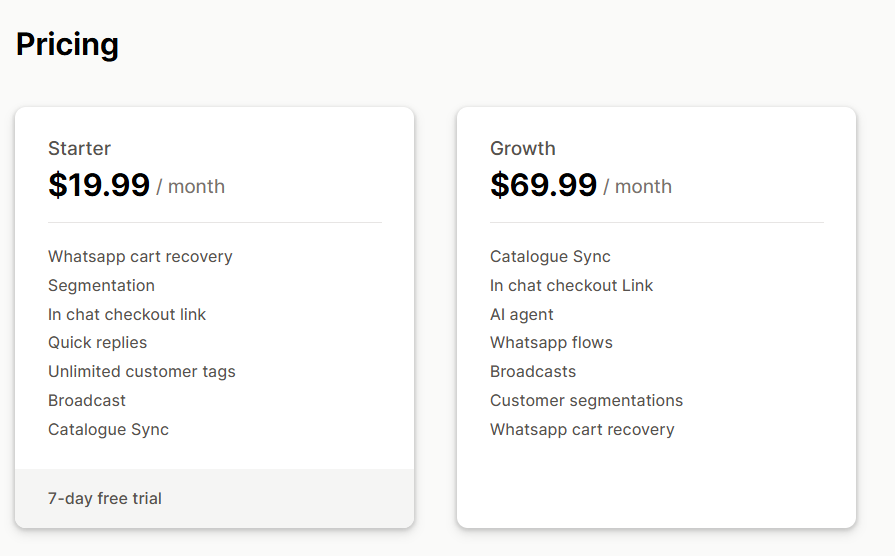
Flowcart Pricing
2. Wisepops (Best for premium brands prioritizing design and non-intrusive UX)
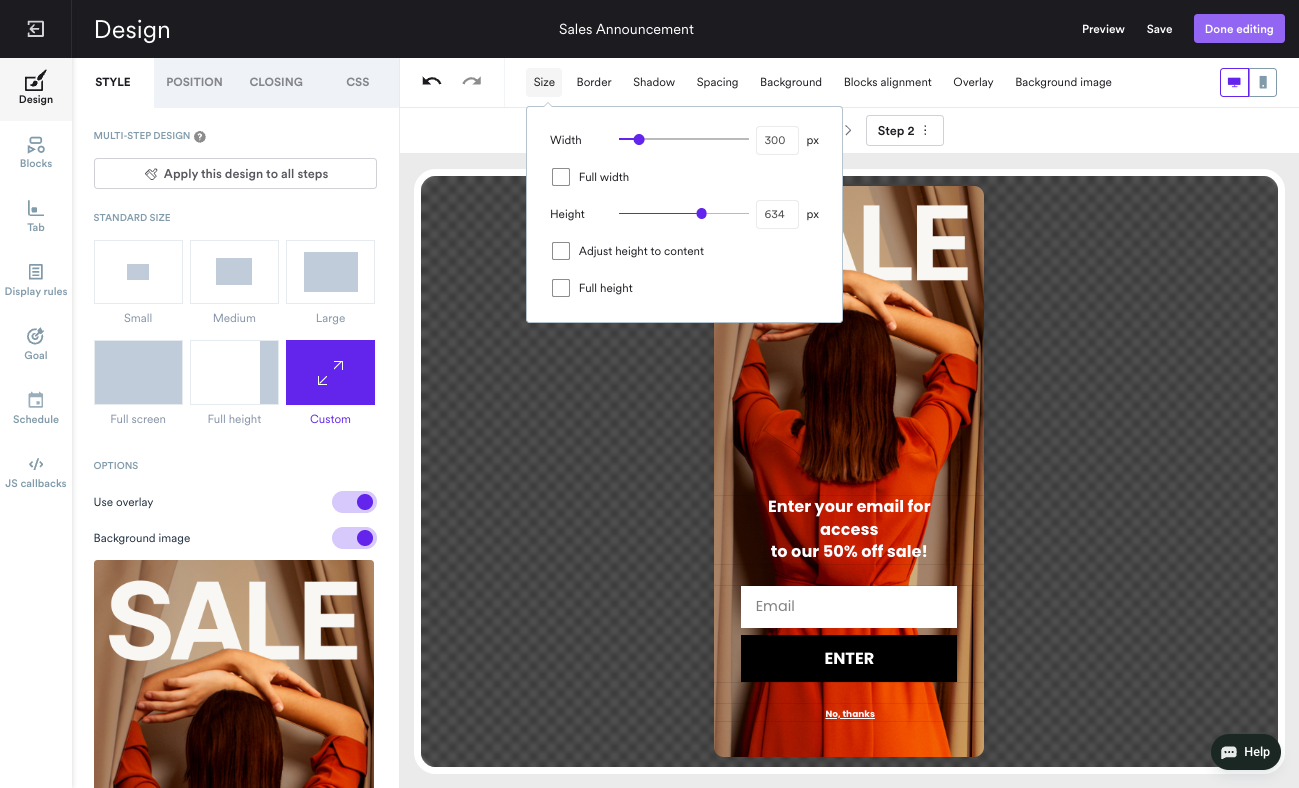
via Wisepops
If you’ve ever felt that traditional pop-ups make your website look like a discount warehouse, Wisepops is the antidote. It’s built for brands that want to maintain a high-end feel while still capturing leads.
Their notification feed feature is a social-media-style bell icon that lets visitors browse your latest offers or product drops at their own pace. It replaces the aggressive close-button hunt with a subtle, always-available engagement channel.
Ideal for: Mid-market and enterprise D2C brands seeking tools that offer deep customization, ensuring every element looks custom-coded for their specific theme.
Wisepops Features
- Native on-site notification feed to house multiple offers without cluttering the screen
- AI-driven cart abandonment triggers that act before the user initiates an exit
- Advanced CSS customization for total brand alignment
- Detailed revenue attribution to see exactly which campaign drove the sale
Wisepops Pros and Cons
- Pros: Highly polished templates; non-intrusive engagement options; exceptional analytics
- Cons: Higher starting price point than basic apps; may be overkill for very small stores
Wisepops Ratings
- Shopify app store: 4.8/5
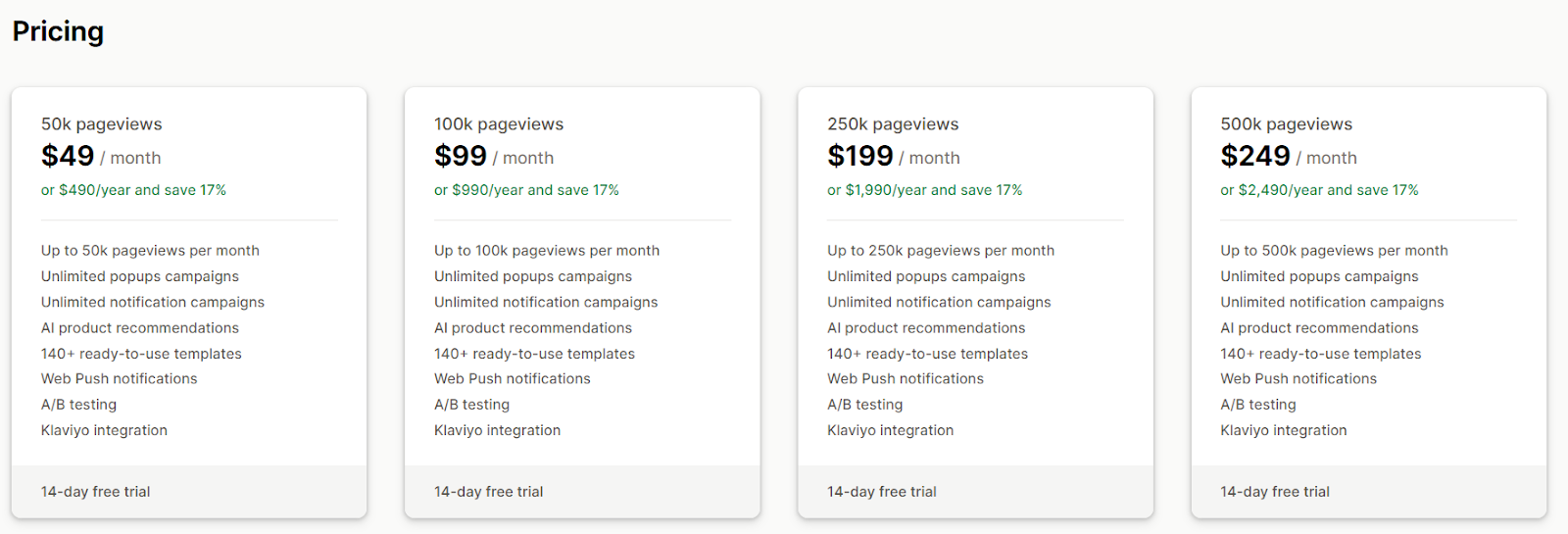
Wisepops Pricing
3. Privy (Best for small-to-mid-sized stores seeking an all-in-one growth suite)
via Privy
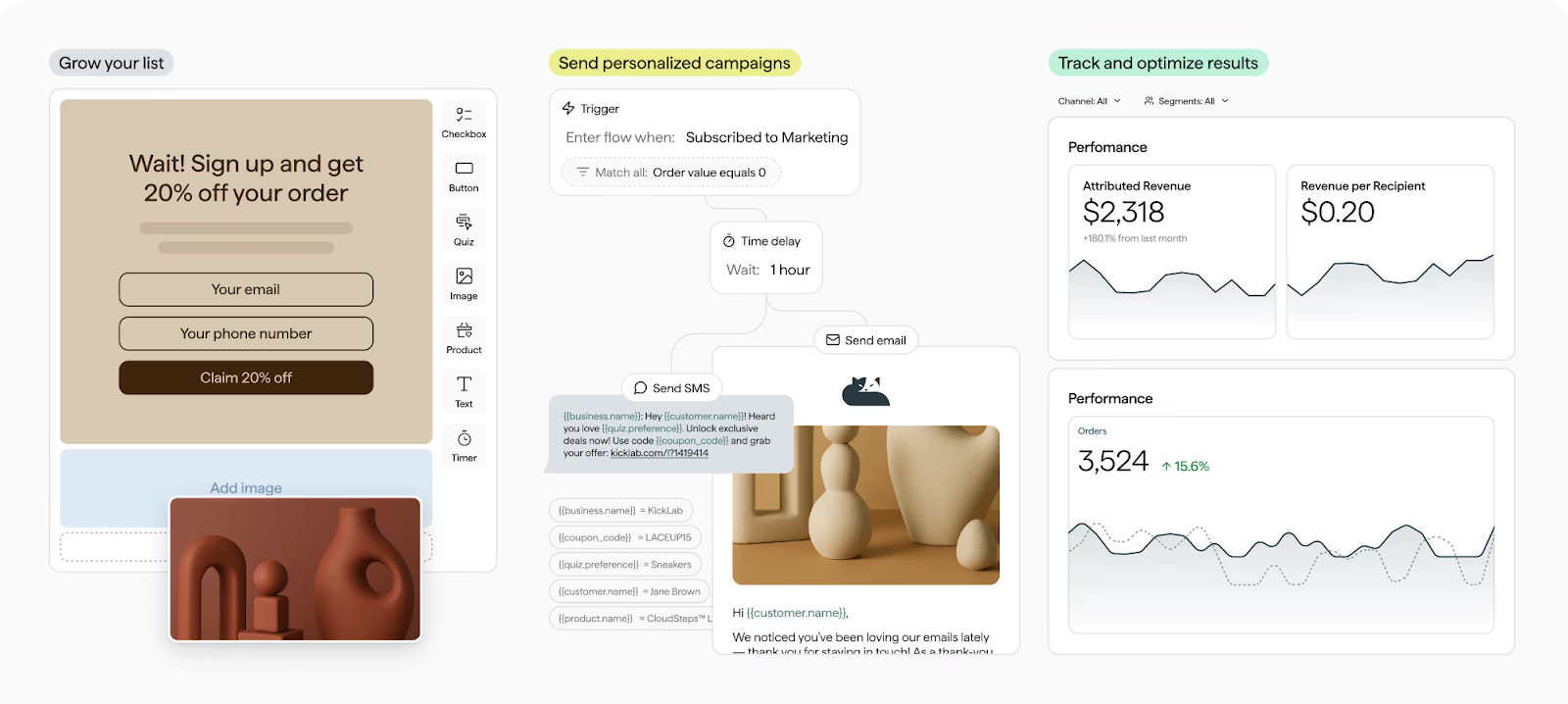
Privy often beats tool sprawl. It manages the entire lead lifecycle through integrated email and SMS marketing. You can go from installation to a live welcome discount in under five minutes using their pre-built playbooks.
Ideal for: Stores that need a reliable way to sync customer data across their entire stack without technical friction.
Privy Features
- Drag-and-drop campaign builder with hundreds of high-converting templates
- Integrated SMS and email automation to follow up on captured leads immediately
- Cross-sell and upsell displays to increase average order value (AOV) during the checkout flow
- Automated A/B testing to refine headlines and offers over time
Privy Pros and Cons
- Pros: Extremely user-friendly; replaces multiple apps; great customer support for beginners
- Cons: Advanced features require higher-tier plans; reporting can feel limited for enterprise needs
Privy Ratings
- Shopify app store: 4.5/5
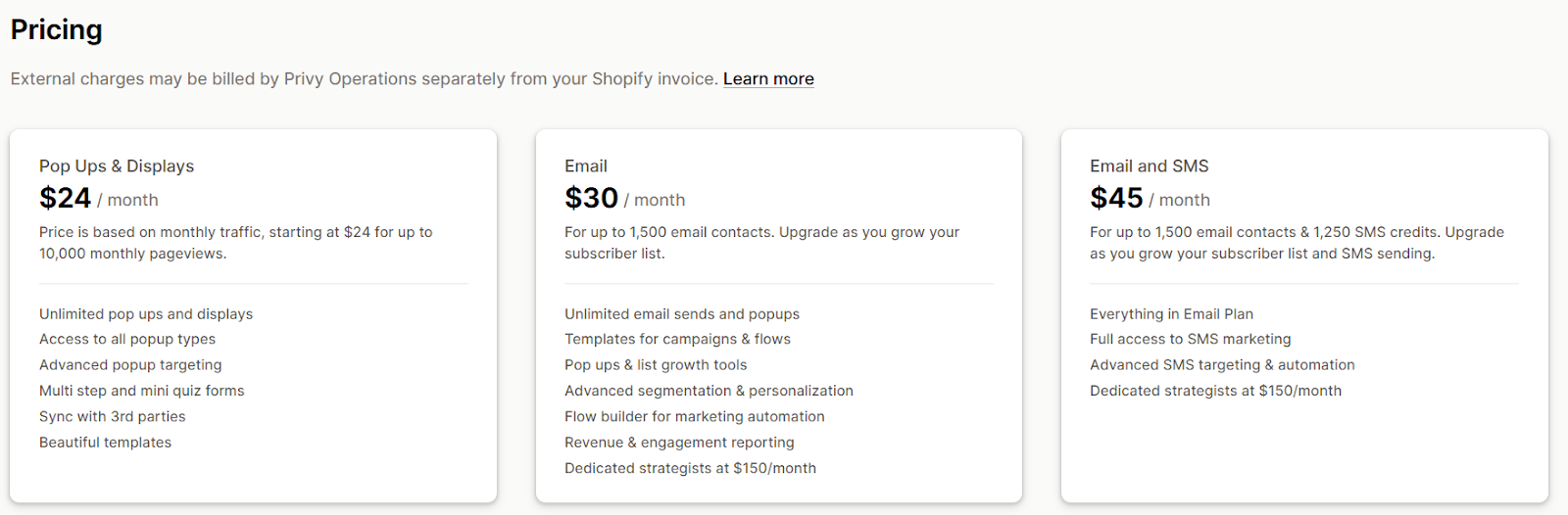
Privy Pricing
4. OptiMonk (Best for data-driven marketers focused on deep personalization)
via OptiMonk
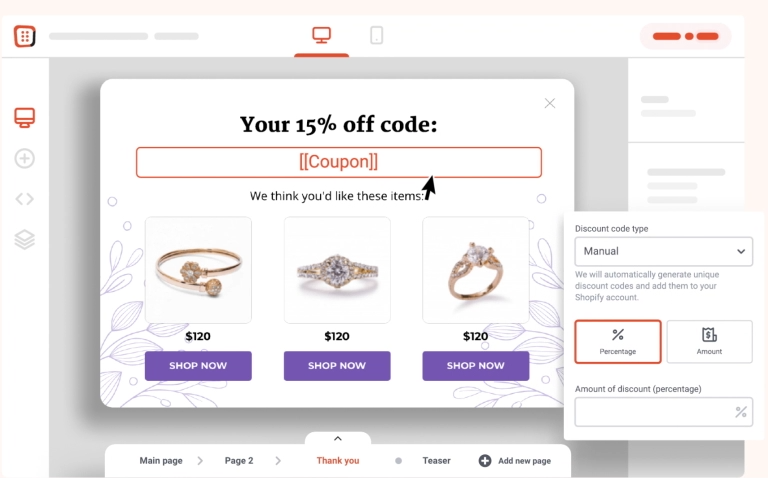
Optimonk moves beyond one-size-fits-all pop-ups by using real-time behavioural data to tailor what a visitor sees. If your customer arrives from a specific TikTok ad, Optimonk can show them a banner that matches the ad’s creative. If they’re viewing a high-ticket item, it may trigger a different offer than if they were in the clearance section.
Ideal for: Marketers seeking to reduce pop-up fatigue across a diverse audience. It enables granular segmentation, ensuring messaging feels personal and relevant to every visitor’s unique journey.
OptiMonk Features
- AI-driven personalization that adapts content based on traffic source and browsing history
- Dynamic product recommendations embedded directly into pop-ups
- Smart sticky bars for unobtrusive announcements
- Advanced A/B testing that goes beyond button colors to test entire offer structures
OptiMonk Pros and Cons
- Pros: Top-tier behavioral targeting; massive template library; very strong free tier
- Cons: The interface has a learning curve due to the sheer number of features; can get expensive as you scale
OptiMonk Ratings
- Shopify app store: 4.7/5
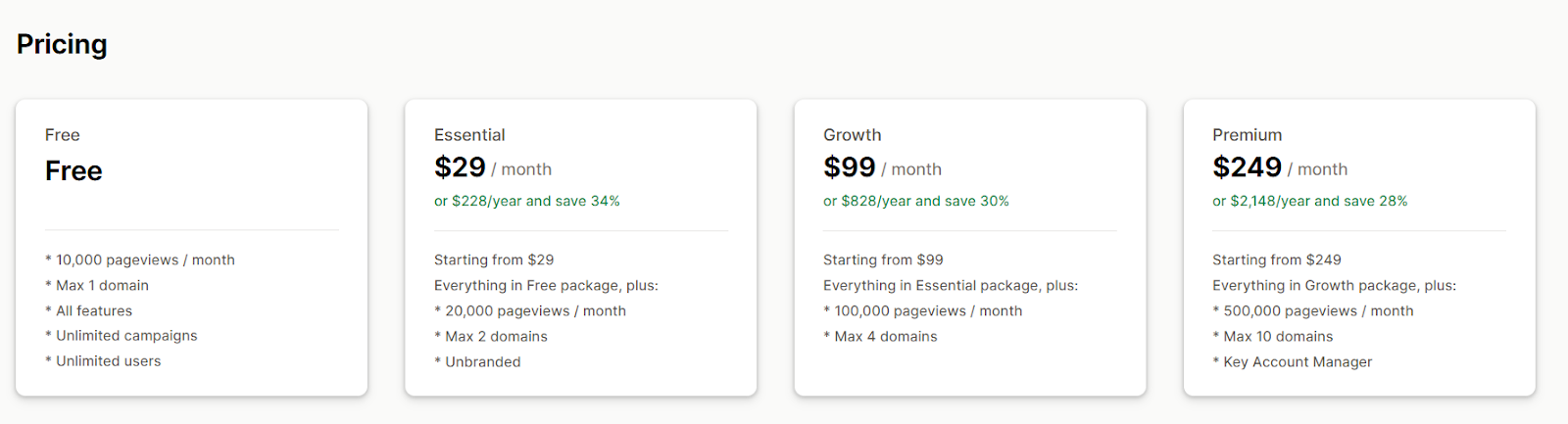
OptiMonk Pricing
5. Alia (Best for modern brands looking for AI optimization)
via Alia
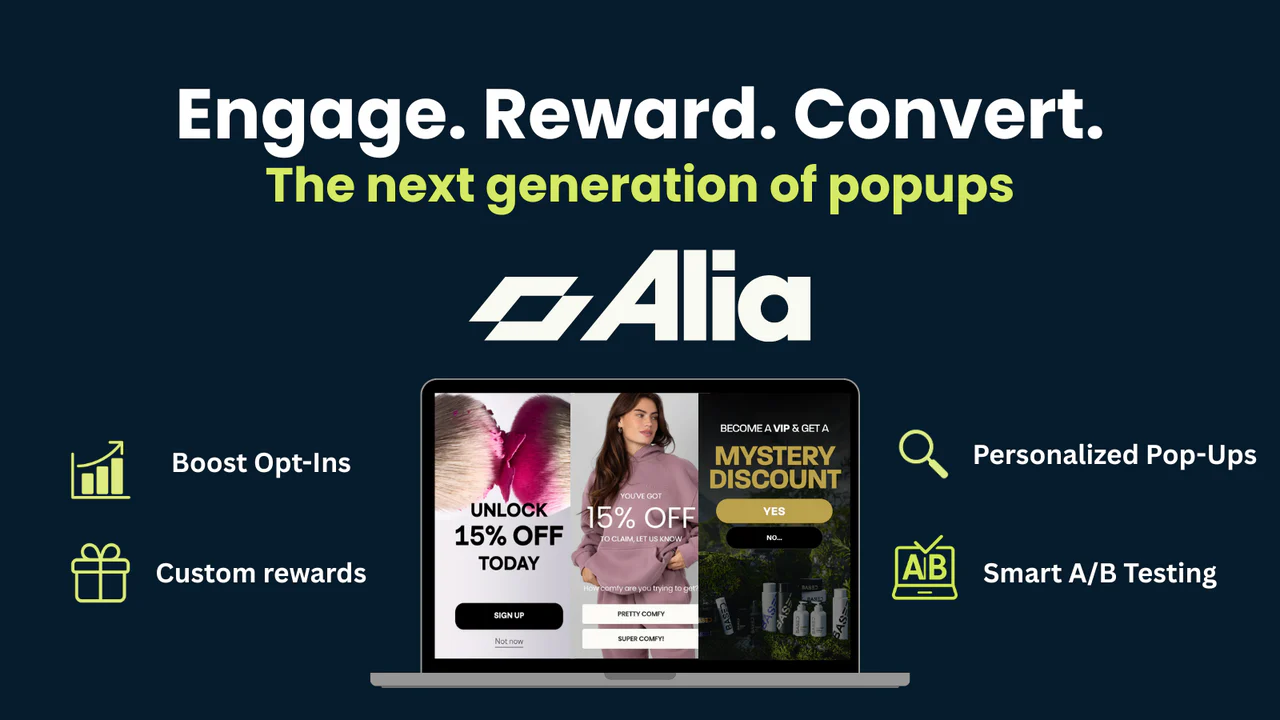
Alia is the newcomer disrupting the space by eliminating manual conversion-optimization work. It uses AI to set up A/B tests and run weekly data checks. This Shopify pop-up app also continuously tests different headlines, images, and timing triggers, automatically funneling your traffic to the highest-performing variation without you ever touching a spreadsheet.
Ideal for: Founders seeking a ‘set it and forget it’ approach because they don’t have time to be a full-time conversion rate expert.
Alia Features
- Fully automated AI A/B testing and traffic allocation
- Smart timing triggers that adapt to individual visitor behavior
- High-fidelity, brand-aligned templates that prioritize mobile UX
- Seamless integration with major SMS and email platforms like Klaviyo and Postscript
Alia Pros and Cons
- Pros: Minimal manual management required; high opt-in rates; clean, modern interface
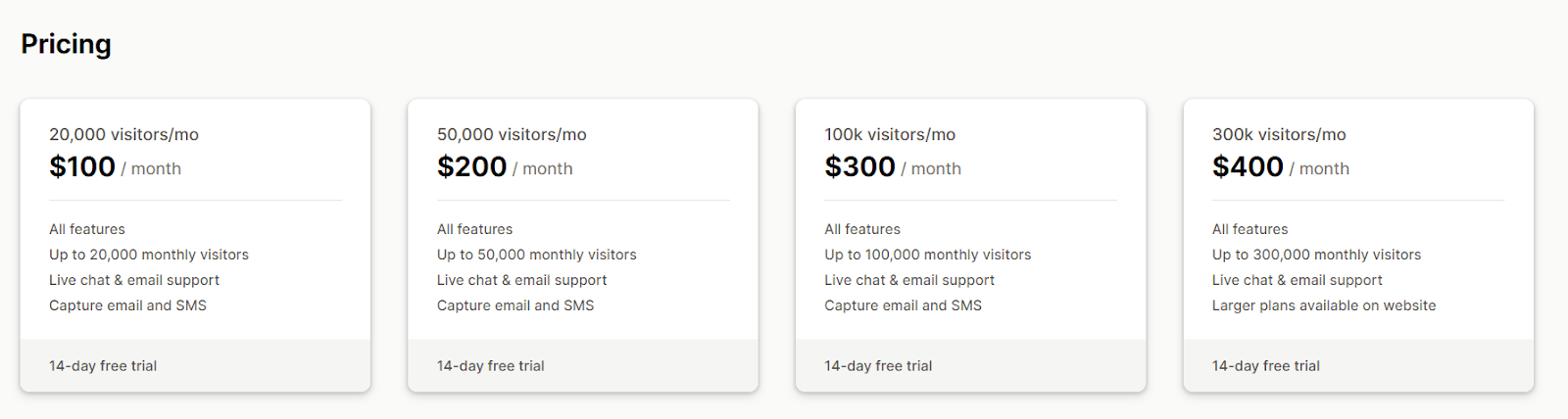
- Cons: Relatively new to the market with fewer legacy reviews; starting price is higher than most apps
Alia Ratings
- Shopify app store: 4.7/5
Alia Pricing
6. WooHoo (Best for increasing engagement through gamification)
via WooHoo
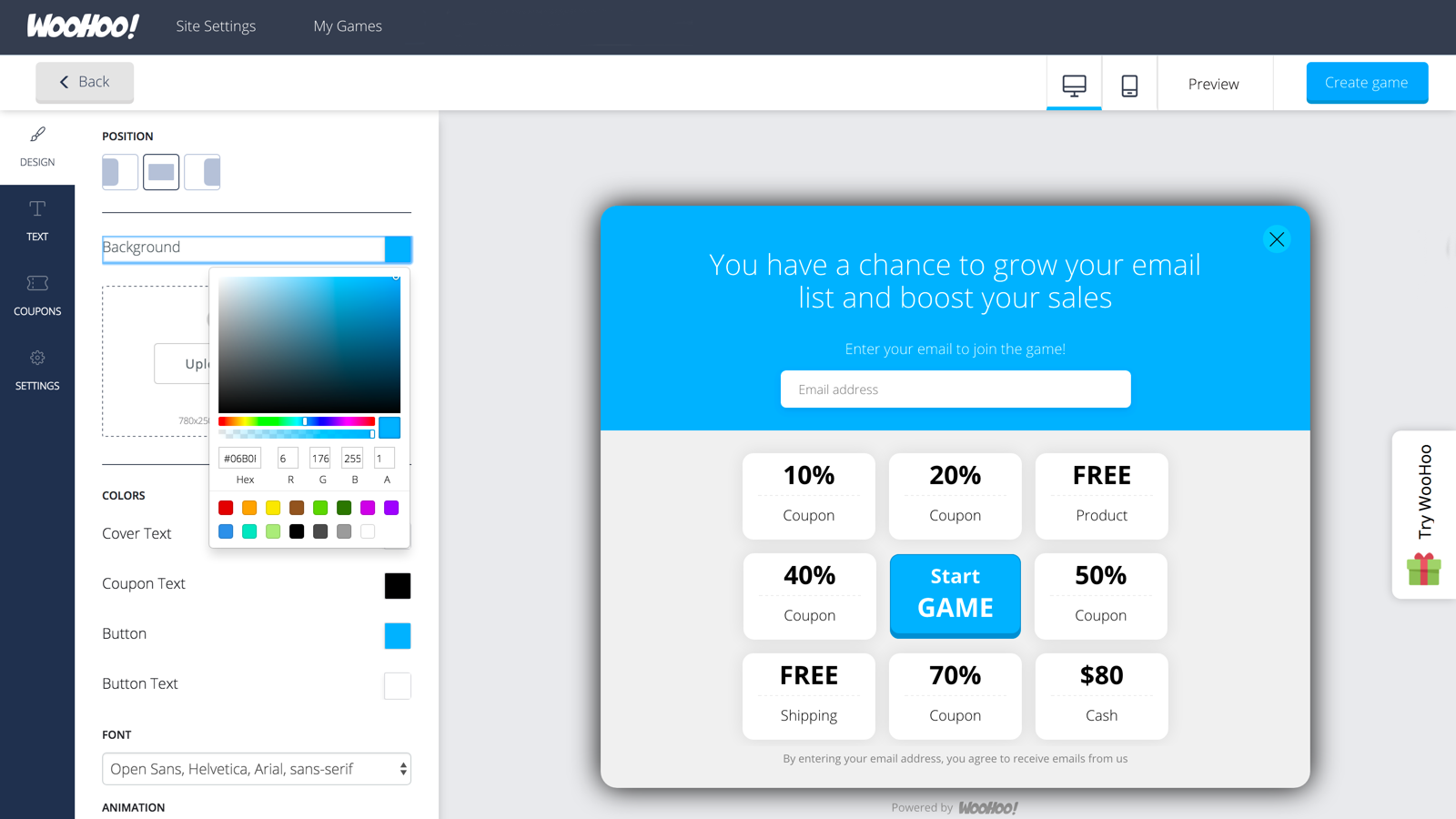
If your goal is to make the shopping experience fun, WooHoo is the leader in gamified lead capture. Whether it’s a ‘Spin-to-Win’ wheel, a virtual scratch card, or a ‘pick-a-gift’ game, these interactive elements tap into consumer psychology to drive significantly higher opt-in rates than static popups.
Ideal for: Brands targeting younger demographics or operating in highly competitive niches such as fashion and beauty.
WooHoo Features
- Variety of gamified formats, including Spin-to-Win, Scratch Cards, and Slot Machines
- Automatic unique coupon code generation for every winner
- Behavioral triggers like exit-intent and time-on-site to launch games strategically
- Integrated analytics to track the win rate versus actual sales conversion
WooHoo Pros and Cons
- Pros: Very high opt-in rates; easy to set up; fun for the customer
- Cons: Gamification can sometimes distract from the actual product; might not suit high-end or serious brand voices
WooHoo Ratings
- Shopify app store: 4.7/5
WooHoo Pricing
7. Poptin (Best for budget-conscious stores needing exit-intent tech)
via Poptin
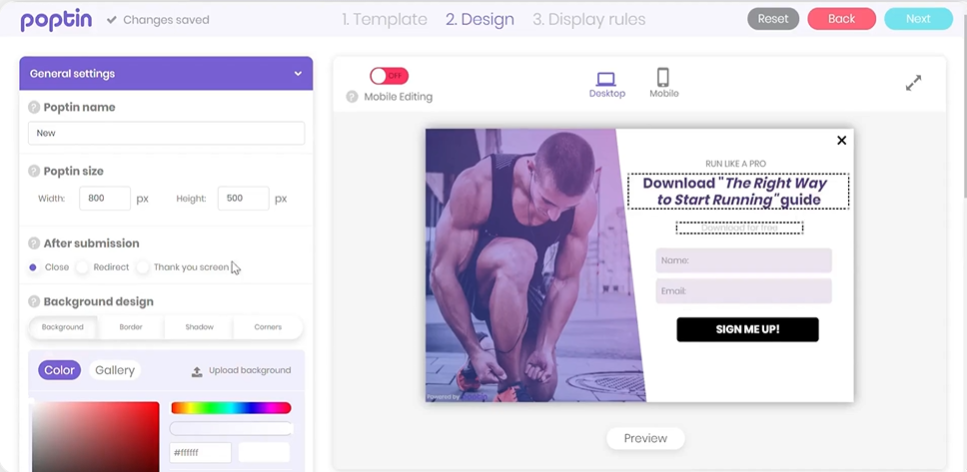
Poptin has built its reputation as one of the most reliable tools for capturing sales when a customer leaves. Their smart exit-intent technology is highly refined, accurately detecting when a user moves their mouse toward the browser tab or presses the back button on mobile.
Ideal for: Founders seeking the best balance of features-to-price. It gives them enterprise-grade behavioral triggers and customization options without the enterprise-level price tag.
Poptin Features
- Highly accurate exit-intent technology for both desktop and mobile
- Autoresponder system to send instant emails or discount codes
- Built-in lead management system to track and export subscribers
- Over 40 targeting rules based on country, device, and traffic source
Poptin Pros and Cons
- Pros: Affordable for all stages; great exit-intent accuracy; responsive customer support
- Cons: The design editor can feel slightly cluttered; template quality is good, but not as high-fashion as premium tools
Poptin Ratings
- Shopify app store: 4.9/5
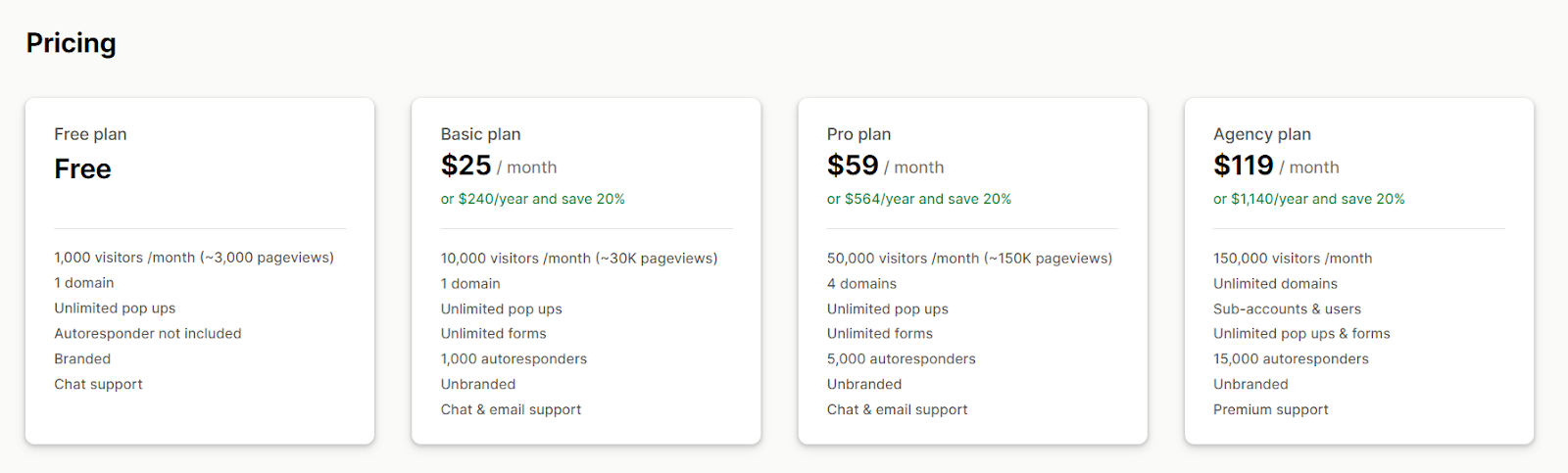
Poptin Pricing
8. Justuno (Best for enterprise-level scaling and complex audience segmentation)
via Justuno
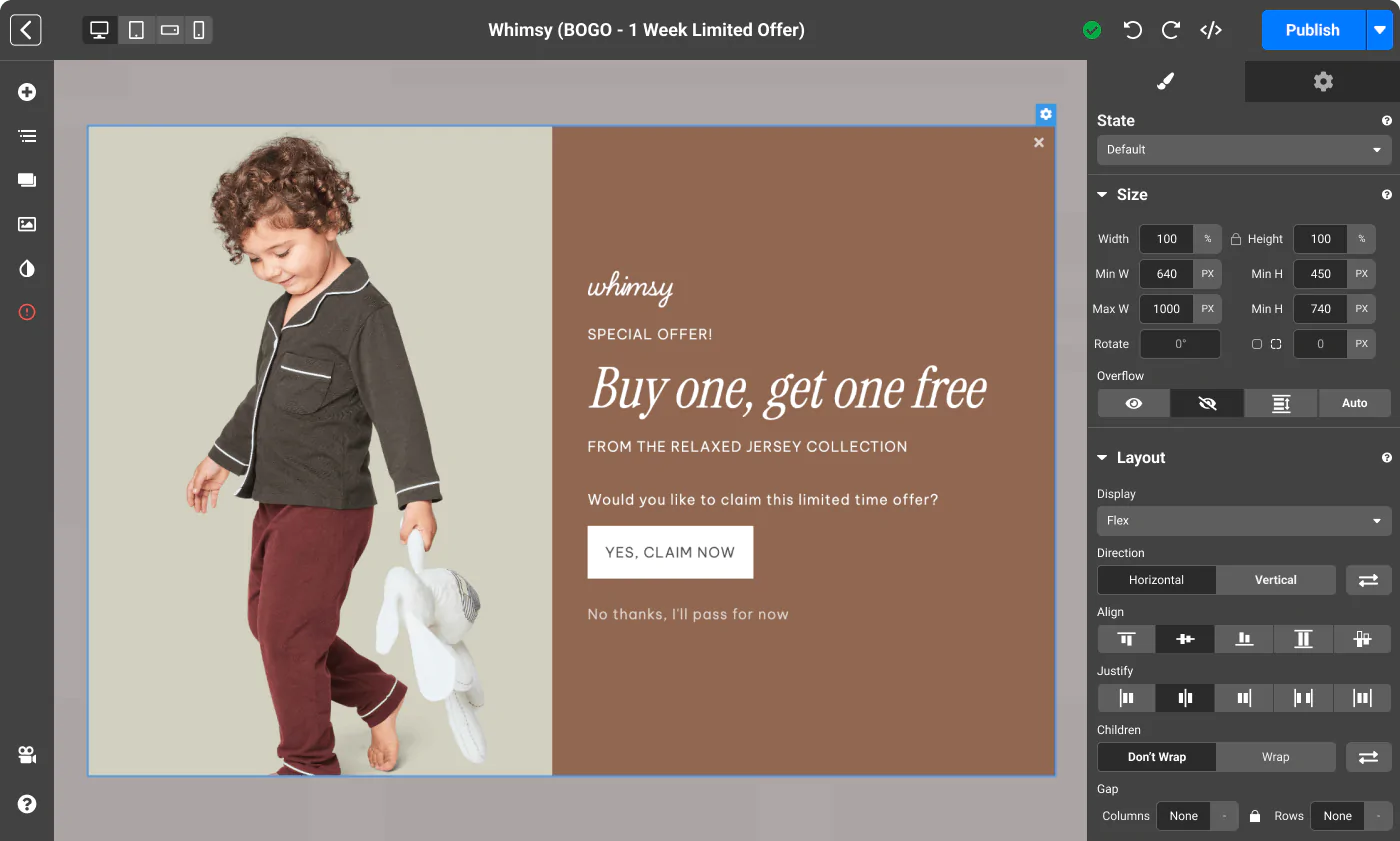
Justuno is the heavy hitter for stores that deal with massive amounts of data and complex marketing funnels. Instead of guessing where the user is, Justuno focuses on who the user is by building comprehensive visitor profiles.
This allows for hyper-granular targeting, for instance, showing a specific pop-up only to a user who clicked a specific influencer's link, lives in London, and has over $100 worth of items in their cart.
Ideal for: Teams that have a dedicated CRO (Conversion Rate Optimization) specialist who can use the platform’s Commerce AI to analyze its entire catalog. Justuno helps them show personalized product recommendations in pop-ups and cross-sell based on what other shoppers bought.
Justuno Features
- AI-powered visitor profiles that store cross-session behavioral data
- Advanced audience sync with platforms like Facebook and Google for retargeting
- Granular targeting rules based on UTM parameters, cart value, and geolocation
- Commerce AI for intelligent, high-intent product recommendations
Justuno Pros and Cons
- Pros: Unmatched targeting depth; solid for large catalogs; great for multi-channel brands
- Cons: Very steep learning curve; setup requires significant time; higher pricing tiers
Justuno Ratings
- Shopify app store: 4.6/5
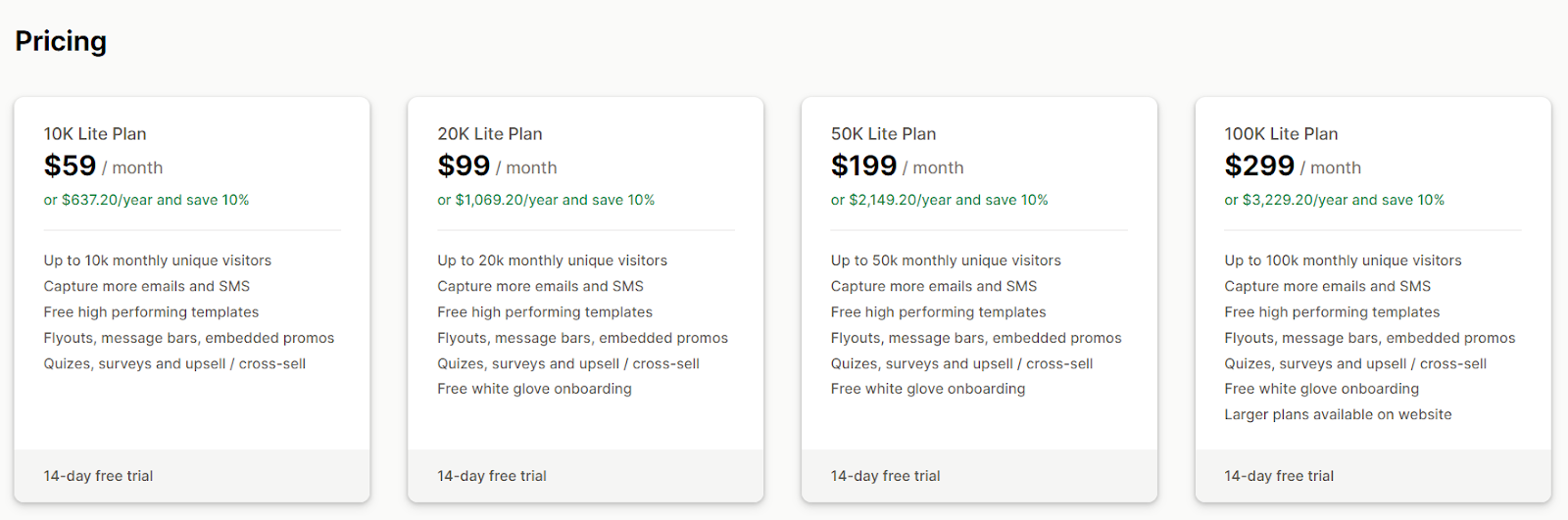
Justuno Pricing
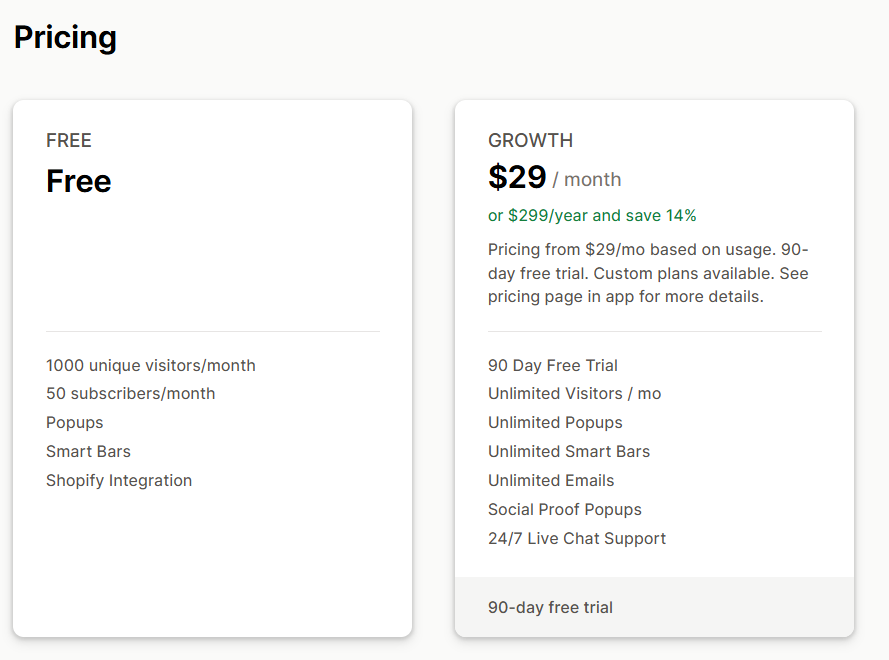
9. Pop Convert (Best for unobtrusive announcements and persistent Smart Bars)
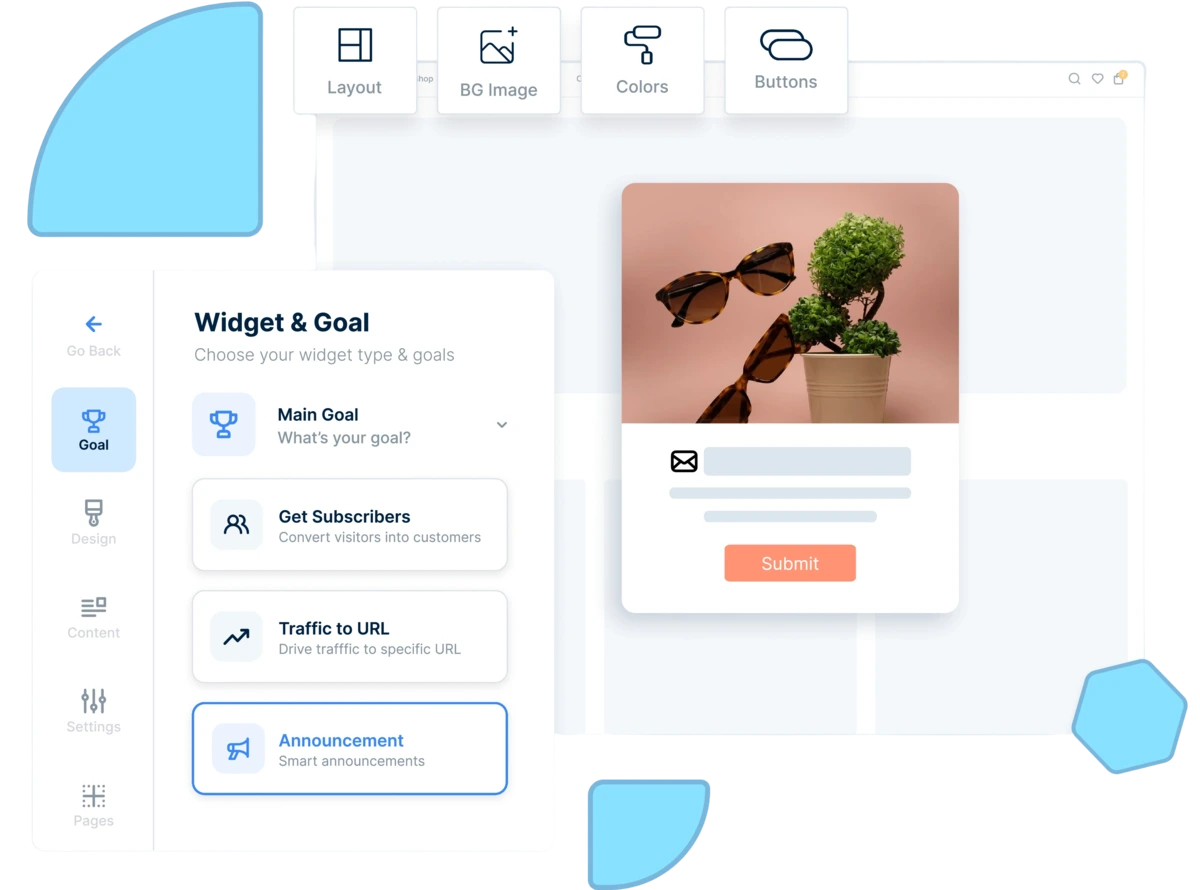
via Pop Convert
Not every message needs to be a pop-up. Pop Convert specializes in Smart Bar and banner. These are the persistent bars you see at the top or bottom of a site that display offers such as ‘Free Shipping over $50’.
They provide consistent value and urgency without obscuring the products, making them a favorite among stores that prioritize a frictionless shopping experience.
Ideal for: Marketers seeking a companion tool for a store that wants to maintain a clean look while ensuring customers don't miss important promotions or thresholds.
Pop Convert Features
- Responsive Smart Bars that adapt to mobile and desktop screens
- Countdown timers to create genuine urgency for flash sales
- Progress bars to show users how close they are to a free shipping threshold
- Social proof pop-ups that show recent sales to build trust with new visitors
Pop Convert Pros and Cons
- Pros: Extremely lightweight and fast; very easy to configure; great for announcement bars
- Cons: Not as effective for aggressive lead capture as traditional pop-ups; limited customization for complex forms
Pop Convert Ratings
- Shopify app store: 4.9/5
Pop Convert Pricing
10. Rivo (Best for building long-term loyalty and retention)
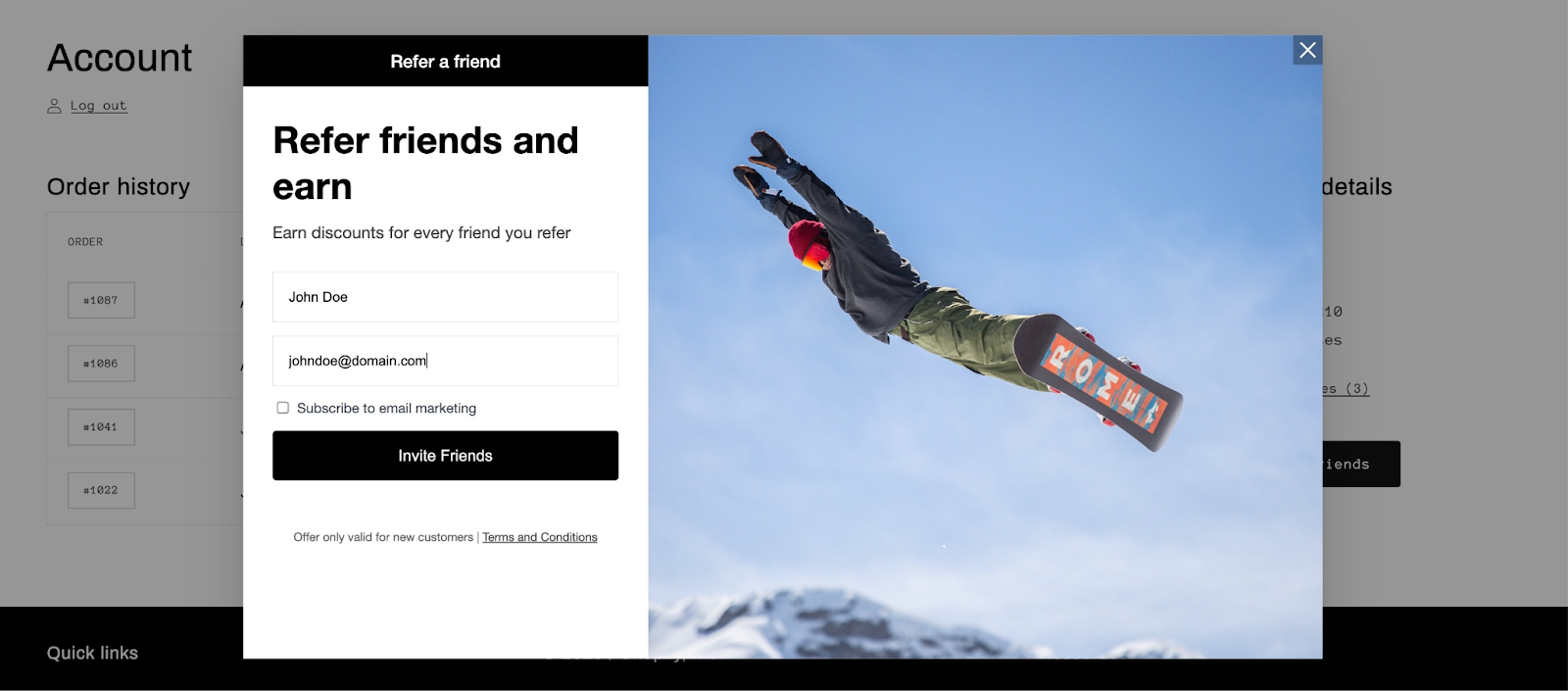
via Rivo
Rivo takes a different approach to the pop-up, focusing on the customer’s long-term relationship with the brand rather than a one-time discount. Its pop-ups are often designed to encourage visitors to join a loyalty program or check their current points balance.
It follows this approach: it’s 5x cheaper to keep an existing customer than to acquire a new one.
Ideal for: D2C brands that prioritize Lifetime Value (LTV). It transforms the standard pop-up into a tool for community building and long-term retention.
Rivo Features
- Loyalty program popups that show points balances and available rewards in real-time
- Referral nudge popups that encourage customers to share the brand with friends
- VIP tier announcements to make high-value customers feel recognized
- Integrated ways to earn display that show users how to get more points while browsing
Rivo Pros and Cons
- Pros: Excellent for long-term growth; deep Shopify account integration; very high-quality support
- Cons: Mostly focused on loyalty; if you only want simple email capture, it might be too specialized
Rivo Ratings
- Shopify app store: 4.8/5
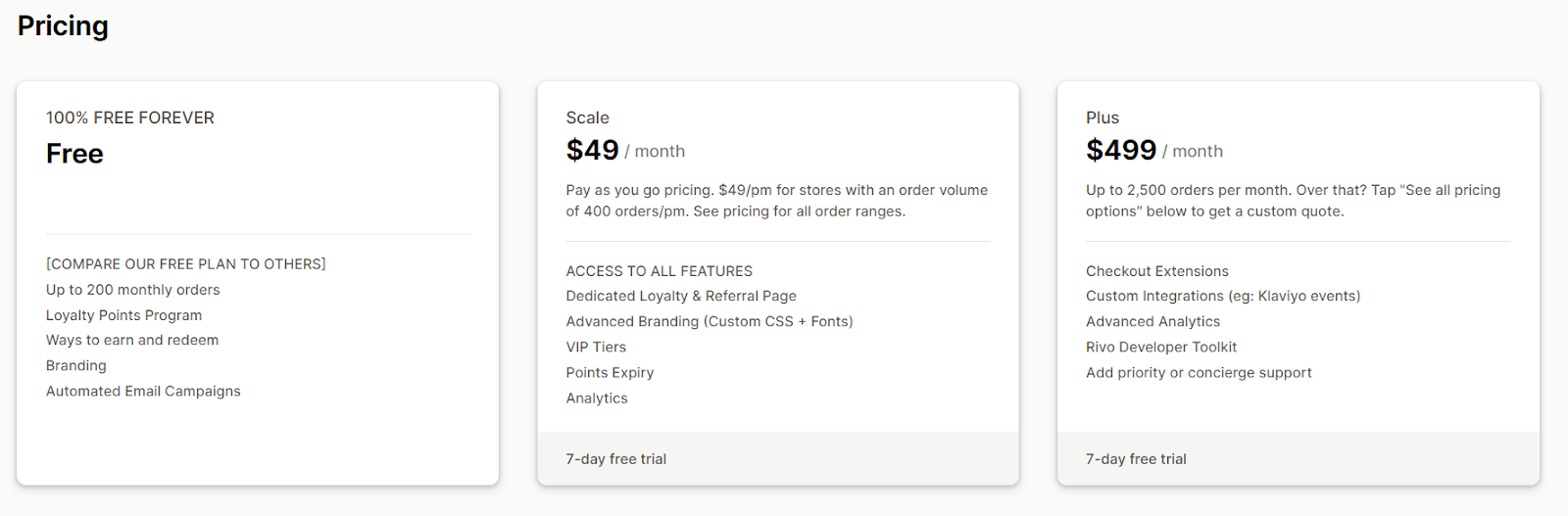
Rivo Pricing
Choosing the right Shopify tool for your growth strategy
The best Shopify pop-up app for your store depends entirely on your primary goal. If you are focused on building a long-term email database, established tools like Privy or OptiMonk offer the most promising list-management features. If your brand prioritizes a high-end, aesthetic experience, Wisepops remains the gold standard for non-intrusive design.
However, if your primary pain point is mobile cart abandonment and a lack of real-time engagement, it’s time to look beyond the static form.
Flowcart lets you stop treating every visitor as a generic lead and start treating high-intent shoppers as customers. By de-anonymizing behavior and opening a direct line to WhatsApp, you collect contact info and start the conversation that leads to a sale.
Ready to see how intent-based banners can transform your conversion rate? Book a Flowcart Demo today to validate your instinct!
FAQs
Why use a Shopify pop-up app?
Shopify pop-up apps help bridge the gap between a visitor landing on your site and making a purchase. They are used to capture contact information (email or WhatsApp), reduce cart abandonment via exit-intent triggers, and guide users toward specific promotions or product collections they might have missed.
How to use Shopify pop-up apps for lead capture?
To capture leads effectively, trigger your pop-ups based on user behavior. Set displays to appear after a visitor has spent 30 seconds browsing to ensure they are genuinely interested. Use mobile-friendly banners that don't obscure the screen and offer a clear incentive, such as a first-time discount or exclusive access, to drive immediate WhatsApp opt-ins.






%201.webp)



.png)