.png)
.png)

.png)
Key Takeaways
WhatsApp drip campaigns connect every message into a behavior-based sequence that moves customers from intent to action.
Brands use drips for cart recovery, onboarding, lead nurturing, re-engagement, support, and post-purchase retention on WhatsApp.
Flowcart powers automated WhatsApp drips with in-chat checkout, segmentation, and support flows to reduce drop-offs and increase conversions.
Most WhatsApp marketing today happens one message at a time: a welcome message when someone signs up, a reminder if a cart is abandoned, or an update after an order goes through. Each message is reasonable on its own, but none of them are connected.
But customers don’t move in single steps. They pause, return, ask questions, hesitate, and pick up where they left off. When WhatsApp messages don’t account for that progression, teams end up either sending too many follow-ups or relying on manual checks to fill the gaps.
Drip campaigns play a critical role in this scenario.
A WhatsApp drip campaign is a predefined sequence of messages that gets delivered automatically based on time or customer behavior. Instead of deciding what to send each time, the sequence is already mapped: what happens after a signup, what follows inactivity, how reminders escalate, and when communication should stop.
Knowing how to design these sequences is important, as WhatsApp is a high-attention channel. Messages are seen quickly, and mistakes show up just as fast through unsubscribes, blocks, or stalled conversions.
In this guide, we walk through the benefits of WhatsApp drip campaigns, how to set them up step by step, and the mistakes that undermine results. The aim is to help you build sequences that respond to customer behavior without adding operational overhead.
What are WhatsApp Drip Campaigns?
WhatsApp drip campaigns are automated message sequences sent over time based on a customer’s action or a defined delay. Instead of sending individual messages manually, brands set up a series of messages that progress in a logical order, each triggered by a specific event.
The trigger can be simple or behavioral.
- A new signup can start a welcome sequence.
- An abandoned cart can trigger a reminder flow.
- A completed purchase can initiate order updates followed by post-purchase guidance.
In each case, the messages are pre-planned, but their timing depends on the customer's next action.
This concept might sound similar to broadcasts, but there’s a difference. Broadcasts treat every message as a standalone send. Drip campaigns require context to move forward. If a customer ignores a message, the sequence adjusts. If they click, reply, or take any action, the next message updates accordingly or stops altogether.
On WhatsApp, this matters more than on most channels. Customers can reply at any point, ask questions, or move the conversation forward. A drip campaign uses that structure to guide someone through a journey and avoids being repetitive altogether.
Read More: Why WhatsApp is the Future of Conversational Commerce
Benefits of Running Drip Campaigns on WhatsApp
Below are the core benefits brands see when they run drip campaigns on WhatsApp instead of treating it like a one-off messaging tool.
1. High visibility without fighting for attention
Drip campaigns depend on timing. If a message arrives late or gets buried, the sequence breaks. That’s where many channels struggle: emails wait behind subject lines and filters, and SMS competes with urgency overload.
WhatsApp behaves differently. Messages appear in an active conversation thread and are typically visible shortly after delivery. For drip campaigns, that reliability matters more than sheer reach. Each step lands while the previous action is still fresh, not hours or days later when the context has faded.
This makes WhatsApp especially effective for time-sensitive sequences such as onboarding, reminders, follow-ups, and decision prompts, where delays directly reduce impact.
💡Did You Know? Gartner research indicates that 80% of customer service organizations will have abandoned native mobile apps in favor of messaging platforms.
2. Better engagement because the format feels conversational
WhatsApp drip marketing campaigns work because they unfold inside a single, continuous thread. To the customer, messages don’t register as isolated sends—they feel like part of an ongoing exchange.
Replies stay in context, and interactive elements such as buttons and quick replies reduce the effort required to respond. Instead of sending someone else to determine the next step, the conversation stays in the same place.
That continuity lowers friction across the sequence. Questions surface sooner, objections are addressed in real time, and decisions happen faster because there’s no channel switch breaking momentum. For drips focused on education, reassurance, or guided choices, this conversational structure consistently outperforms one-way messaging.
3. Higher retention through post-purchase continuity
Many brands stop using WhatsApp once a purchase is complete. Drip campaigns extend the channel beyond checkout by keeping post-purchase communication in the same thread where the journey began.
Order updates, usage guidance, care instructions, renewal reminders, and loyalty messages all arrive in one place. Customers don’t need to search their inbox or log in to an account to find information; they already know where the conversation lives.
That continuity supports retention. When help, guidance, and follow-ups are easy to access, customers are more likely to return and engage again. Well-designed post-purchase drips also create natural opportunities for cross-sell or upsell without pushing offers too early.
4. Fewer drop-offs between intent and action
Drip campaigns often fail at the last step. Not because interest disappears, but because customers are asked to switch context right when they’re ready to act. Redirects, forms, repeated logins, or slow checkout pages introduce friction at the exact moment the customer’s ready to purchase from you.
WhatsApp drips that support in-chat checkout can deliver higher ROI here. When product review, confirmation, and payment happen inside the same conversation, customers don’t have to restart or reorient themselves. The journey remains intact, which is especially important for recovery, onboarding, and high-intent follow-ups.
Flowcart supports in-chat checkout, allowing product details, address confirmation, payment selection, and order confirmation to occur in a single flow. Customer information, such as name and phone number, is already available from WhatsApp, reducing the need for manual entry. Payments can be completed using existing gateways inside the ongoing chat, so teams don’t need to rebuild their ecommerce stack or maintain a separate WhatsApp store.
A clear example of this approach is Electromart, the retail arm of Somotex operating across Nigeria, Ghana, and Kenya. Electromart already used WhatsApp to answer customer questions, but conversations often stalled after product discovery. Customers would ask about specifications or pricing, then drop off when asked to complete the purchase elsewhere.
With Flowcart, Electromart rebuilt that journey around in-chat completion instead of handoffs. Customers browsing on WhatsApp could search for products, filter by category or budget, and view inventory with images, prices, and specifications directly inside the conversation. Once a product was selected, the same thread continued into checkout.
Address confirmation, payment preference (including cash on delivery), and order confirmation all happened without leaving WhatsApp. As a result, Electromart moved from inquiry-heavy conversations to conversion-focused ones.
The impact: from the first month, Electromart began closing over 100 WhatsApp orders per month, with higher engagement and a measurable increase in chat-to-checkout conversions.
Read more customer stories by Flowcart
Next Read: WhatsApp Webview for Shopping: Complete Guide
How to Set Up WhatsApp Drip Campaigns (Step-by-Step)?
Setting up WhatsApp drip campaigns doesn’t need to be complicated. Below is a practical guide to keep complexity in check while giving you room to grow.
1. Choose the right WhatsApp setup path.
True drip campaigns require access to the WhatsApp Business API. The free WhatsApp Business App is limited to basic auto-replies and manual responses, which makes it unsuitable for multi-step, behavior-driven sequences.
Most teams access the API through an official Business Solution Provider (BSP) instead of integrating directly with Meta. A BSP handles the underlying technical connection and provides a visual interface for building workflows, managing templates, and syncing customer data. This approach shortens setup time and reduces operational overhead.
At this stage, the choice is usually straightforward:
- A BSP better serves teams without dedicated engineering support.
- Direct API access makes sense only if you plan to build, maintain, and monitor the entire system in-house.
Starting with the right setup prevents rework later and keeps automation stable as volume grows.
2. Complete business verification and account setup
Before sending any WhatsApp messages at scale, Meta requires your business to be verified. This step is mostly administrative, but small inaccuracies can delay approval or cause issues later.
You’ll need to:
- Verify your business inside Meta Business Manager using official documents that match your legal business name and address.
- Create a WhatsApp Business Account and register a dedicated phone number that has never been used on WhatsApp or the WhatsApp Business App.
- Choose a compliant display name that clearly reflects your brand and meets Meta’s naming guidelines.
Once verification is approved, this phone number becomes your official WhatsApp sending identity. Changing it later is restricted, so it’s worth setting it up carefully from the start to avoid disruptions later.
3. Create and approve message templates upfront
All proactive WhatsApp messages must use pre-approved templates. These templates form the foundation of your drip campaigns, so it’s important to plan them before building any workflows.
When creating templates:
- Keep the copy clear, concise, and easy to scan on mobile.
- Use dynamic fields for personalization, such as names, order details, or dates.
- Add buttons where action matters, like “View order,” “Continue,” or “Get help.”
- Design each template around a single purpose, for example, welcome, education, reminder, offer, or follow-up.
Most drip campaigns rely on multiple templates working together. Submitting them early prevents approval delays and ensures your campaigns are ready to launch when the time is right.
4. Import contacts and build meaningful segments
Drip campaigns only work when the right people enter the right sequence. That begins with clean, permission-based contact data. Import only contacts who have explicitly opted in to receive WhatsApp messages, then organize them into segments based on:
- Lifecycle stage: New leads, active customers, or inactive users.
- Behavior: Cart abandonment, recent purchases, or content engagement.
- Engagement level: Past replies, clicks, or message interactions.
Thoughtful segmentation keeps messages relevant, reduces fatigue, and lowers the likelihood of opt-outs, especially as campaign volume increases.
5. Map the journey and design the sequence
Before writing a single message, be clear about what the sequence is meant to achieve. Each drip should solve a specific customer problem, not try to cover everything at once.
A welcome sequence guides new users and sets expectations; a cart recovery sequence addresses hesitation and timing; and a post-purchase sequence helps customers derive value and return.
Once the goal is defined, build the flow step by step.
Decide what action triggers the sequence, space messages intentionally: usually 24 to 72 hours apart, and adjust what comes next based on how customers respond. Clicks, replies, and inactivity should shape the path, not assumptions or fixed schedules.
This is where WhatsApp’s conversational format works in your favor. Messages arrive in context, follow a natural progression, and feel like part of an ongoing exchange rather than a series of disconnected reminders.
6. Test, launch gradually, and refine
Before going live, test every part of the sequence using internal numbers and a small customer group. Confirm that personalization fields populate correctly, links open as expected, and message timing feels natural rather than rushed.
When you launch, start with a single campaign instead of rolling out everything at once. In the first few days, watch delivery rates, replies, and opt-outs closely. These early signals tell you whether the sequence is landing well or needs adjustment.
Scale only after performance looks stable. Ongoing improvement comes from observation, not assumption. Refine timing, wording, and sequencing based on how customers actually respond, and let real behavior guide what you change next.
Next Read: AI Agents on WhatsApp: How Businesses Are Automating Conversations
Popular WhatsApp Drip Campaign Use Cases
WhatsApp drip campaigns work best when they’re tied to specific moments in a customer’s journey. Here are a few use cases where brands see the most reliable performance across industries.
1. Abandoned cart recovery
Best for: Ecommerce and D2C brands
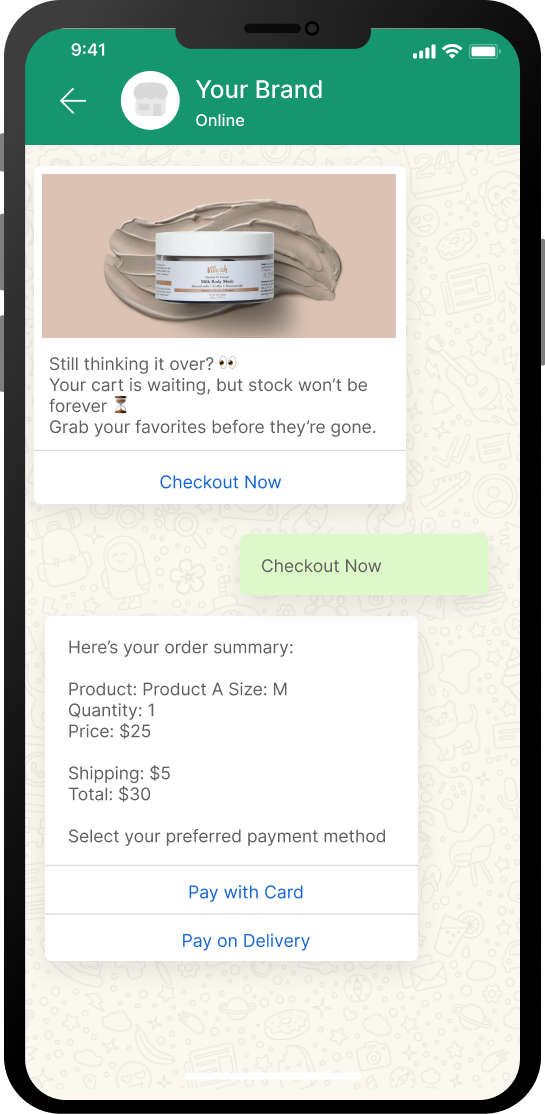
Abandoned cart recovery is the most widely used WhatsApp drip campaign because it targets customers who are already close to making a purchase. In most cases, abandonment results from hesitation. Shoppers pause when they’re unsure about sizing, delivery timelines, return policies, or payment methods, and WhatsApp gives brands a chance to address those questions before intent fades.
How the sequence works:
- 15–60 minutes after abandonment: Send a gentle check-in that acknowledges the action and offers help, rather than pushing a discount.
- 24 hours later: Share information that removes friction, such as size guides, delivery timelines, or return and exchange details.
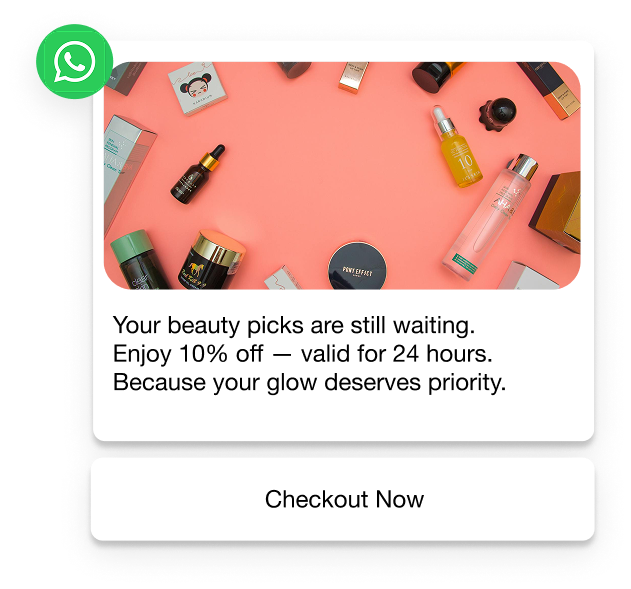
- 48–72 hours later: Introduce a limited incentive only if needed, while keeping the message supportive and low-pressure.
Why it performs:
Unlike email reminders, WhatsApp lets customers respond immediately with questions or concerns. That change, from reminder to conversation, makes a meaningful difference. Objections surface early, responses stay in the same thread, and decisions happen faster, which is why WhatsApp cart recovery rates consistently outperform email-based follow-ups.
At this point, the difference comes down to how the recovery flow is executed. With Flowcart, the recovery sequence doesn’t stop at a reminder. When a shopper drops off mid-purchase, Flowcart detects the abandonment and triggers a WhatsApp follow-up at a defined interval.
The message brings the customer back into the same flow using in-chat product previews and one-tap checkout, instead of redirecting them to restart the purchase on a separate page. Payments remain connected through existing gateways, and support teams can step in if the customer has questions.
In Flowcart’s case, this return-to-checkout experience is powered through a WhatsApp Webview. Instead of sending customers to an external browser or asking them to reload a checkout page, Flowcart opens the cart, product details, and payment flow directly inside WhatsApp.
It keeps the entire recovery journey within the same conversation and interface while removing the friction that often occurs at the final step, such as extra page loads, broken sessions, or repeated logins. Thus, delivering a recovery flow that feels continuous and significantly reduces drop-offs caused by context switching.
2. Order updates and delivery notifications
Best for: Ecommerce, marketplaces, retail
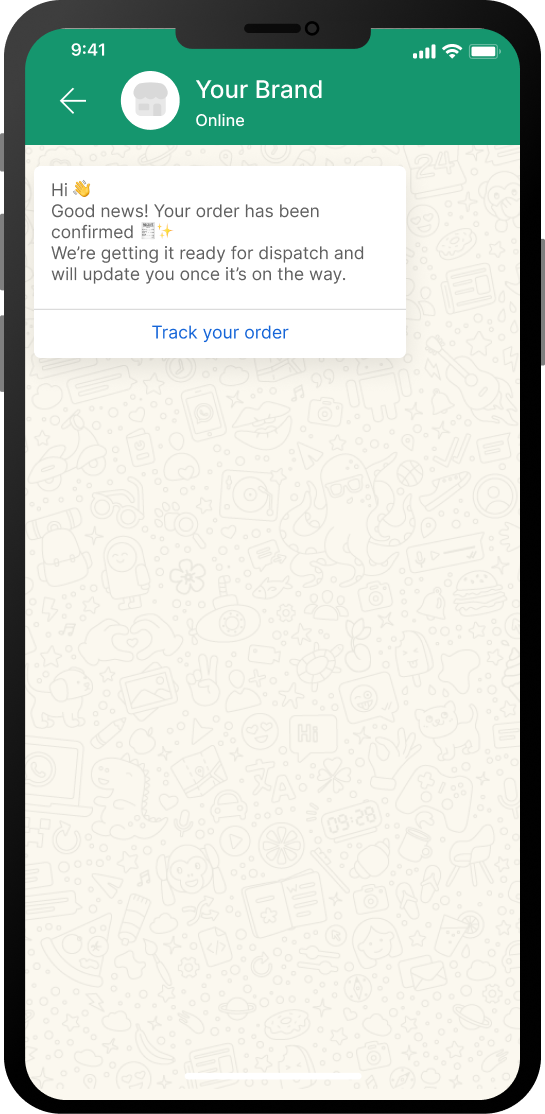
Order updates are among the most common WhatsApp automated sequences because they address a moment of heightened customer anxiety. Once payment is complete, customers want immediate confirmation that everything worked and clear visibility into what happens next.
Typical sequence:
- Immediately after purchase: Send order confirmation message with key details such as order ID and estimated delivery date.
- When the order ships: Schedule a shipping update that includes tracking information and carrier details.
- On delivery day: Inform them with a delivery reminder or simple instructions for receiving or setting up the product.
- After delivery: Ask for feedback and/or share helpful usage tips as a follow-up.
Why it performs:
Proactive updates reduce “Where is my order?” queries and prevent support tickets before they’re raised. Because the conversation stays open, many brands extend these sequences with product education or light recommendations after delivery, turning necessary transactional messages into opportunities to build trust and drive retention.
3. Lead Nurturing and Sales Qualification
Best for: SaaS, B2B services, real estate, coaching
Lead nurturing works differently on WhatsApp because expectations around response time are much shorter. Prospects aren’t prepared to wait days for an email reply or a scheduled callback. When interest is fresh, speed and relevance keep the conversation moving.
How teams use it:
- Immediately after inquiry: Confirm the request and set expectations as a quick acknowledgement.
- Follow-up messages: Tailor educational content or resources to the lead’s stated use case or industry.
- Social proof: Reduce risk and build confidence with customer stories, results, or testimonials.
- Next-step prompt: Send a low-pressure invitation to book a demo, consultation, or call when intent is clearer.
Why it performs:
The conversation stays active instead of cooling off in an inbox. Leads get value while interest is still high, and sales teams engage only when buying signals appear. This improves qualification quality and reduces time spent chasing unresponsive prospects.
This is also where segmentation shapes the outcome. In a lead-nurture flow, not every prospect needs the same level of education. Someone who clicked a pricing link needs a different follow-up than someone who downloaded a guide or viewed a specific product page. Flowcart supports this by using AI-driven segmentation to group leads based on actions, such as clicks, content engagement, or product interest, and route them into the right nurture sequence automatically.
Related Read: WhatsApp Lead Automation: How to Automate Lead Capture
4. Welcome and onboarding sequences
Best for: New users, first-time buyers, app signups
Welcome sequences play a critical role in shaping early customer behavior. When people sign up or place their first order, they’re often unsure what to do next. A well-timed WhatsApp drip removes that uncertainty and helps them move forward with confidence.
This is how the typical flow looks:
- After signup: Set expectations and outline clear next steps with a welcome message.
- Early follow-up: Reduce decision fatigue by offering help or guided recommendations.
- Education and reassurance: Build trust with product tips, how-to content, or social proof.
- Ongoing support cues: Help customers with information on how to get help, access loyalty benefits, or join a community.
Why it performs:
Customers who know where to start convert faster and engage more consistently. Structured onboarding prevents early drop-offs due to confusion or overload, laying the foundation for stronger long-term relationships.
With Flowcart, these entry points feed directly into automated welcome flows. Click-to-WhatsApp ads and QR scans trigger the right onboarding journey within the same chat, aligning with the original intent and guiding users step by step. Instead of wasting high-intent traffic, brands turn first contact into a structured start, reducing early drop-offs and setting up stronger long-term engagement.
5. Re-engagement and win-back campaigns
Best for: Brands with repeat buyers or long sales cycles
Re-engagement campaigns focus on customers who have gone quiet, not cold. These are people who already recognize the brand but haven’t interacted with or purchased from it in recent months. WhatsApp drips let teams restart conversations without appearing abrupt or promotional.
How it works:
- Inactivity trigger: Start the marketing campaign after a defined period of inactivity, such as 30 days without engagement or purchase.
- Contextual reminders: Reference past purchases, browsing behavior, or stated interests to re-establish relevance in messages.
- Selective incentives: Introduce offers only if needed, rather than leading with discounts.
- Conversation-first close: Invite a reply or preference update in final messages, while avoiding pushing a one-time deal.
Why it performs:
Reactivating an existing customer costs significantly less than acquiring a new one. WhatsApp’s conversational format makes these messages feel timely and personal, reducing the risk of being ignored or unsubscribed compared to broad win-back broadcasts.
In a WhatsApp win-back flow, loyalty points become the re-entry hook. Instead of asking dormant customers to browse again, the sequence can remind them of unused points, expiring rewards, or points they’re close to unlocking based on past behavior.
With Flowcart, these loyalty prompts can be triggered within the re-engagement sequence to target customers who haven’t purchased in a while or haven’t redeemed points recently. Because points can be viewed and redeemed directly in WhatsApp, the win-back flow doesn’t require customers to log in to another system. It brings them back into the conversation with a concrete reason to act, which makes reactivation feel intentional.
Next Read: WhatsApp Retention Campaigns: Proven Strategies to Drive Loyalty & Repeat Sales
💡Did You Know? Harvard Business Review research shows that increasing customer retention by just 5% can boost profits by 25-95%, depending on industry and customer segment.
6. Customer support and FAQ automation
Best for: High-volume support teams
Customer support is one of the fastest places where WhatsApp automated sequences show value. Many inbound questions are repetitive, time-sensitive, and easy to resolve if answers arrive quickly. Drips and automated replies handle these requests instantly, without waiting for an agent.
How the sequence works:
- Order and delivery queries: Real-time tracking links and delivery status updates.
- Product questions: Size, fit, or usage guidance based on common requests.
- Returns and exchanges: Clear steps, timelines, and policy explanations.
- Payment issues: Retry links, failure explanations, or escalation when needed.
Why it performs:
Instant responses reduce wait times and prevent ticket backlogs. Routine questions are resolved automatically, while agents step in only for exceptions or complex cases. The result is faster resolution, lower support load, and a more consistent customer experience without increasing headcount.
With Flowcart’s WhatsApp Flows, most routine queries are resolved end-to-end without agent involvement. The system uses context like order history or previous interactions to personalise responses, and hands off to a live agent only when the situation requires it. This keeps response times low, reduces ticket backlogs, and lets support teams focus on exceptions without adding headcount or sacrificing experience.
Common Mistakes in WhatsApp Drip Marketing (and How to Avoid Them)
Below are the most common mistakes teams make when running WhatsApp drips, along with the best practices that prevent them.
1. Messaging users without explicit WhatsApp consent
Many brands assume that a purchase, form fill, or website visit automatically grants permission to send WhatsApp messages. It does not. Messaging without an explicit WhatsApp opt-in is the fastest way to lose your account.
WhatsApp actively enforces this. Accounts are restricted or banned when consent cannot be proven, opt-in language is vague, or opt-outs are ignored.
✅Best practice to gain user consent:
- Use a copy that names the channel and intent, instead of a vague checkbox like “Stay updated”.
“I agree to receive updates and offers via WhatsApp from [Brand Name].
I understand I can opt out anytime by replying STOP.”
This makes consent explicit, channel-specific, and defensible.
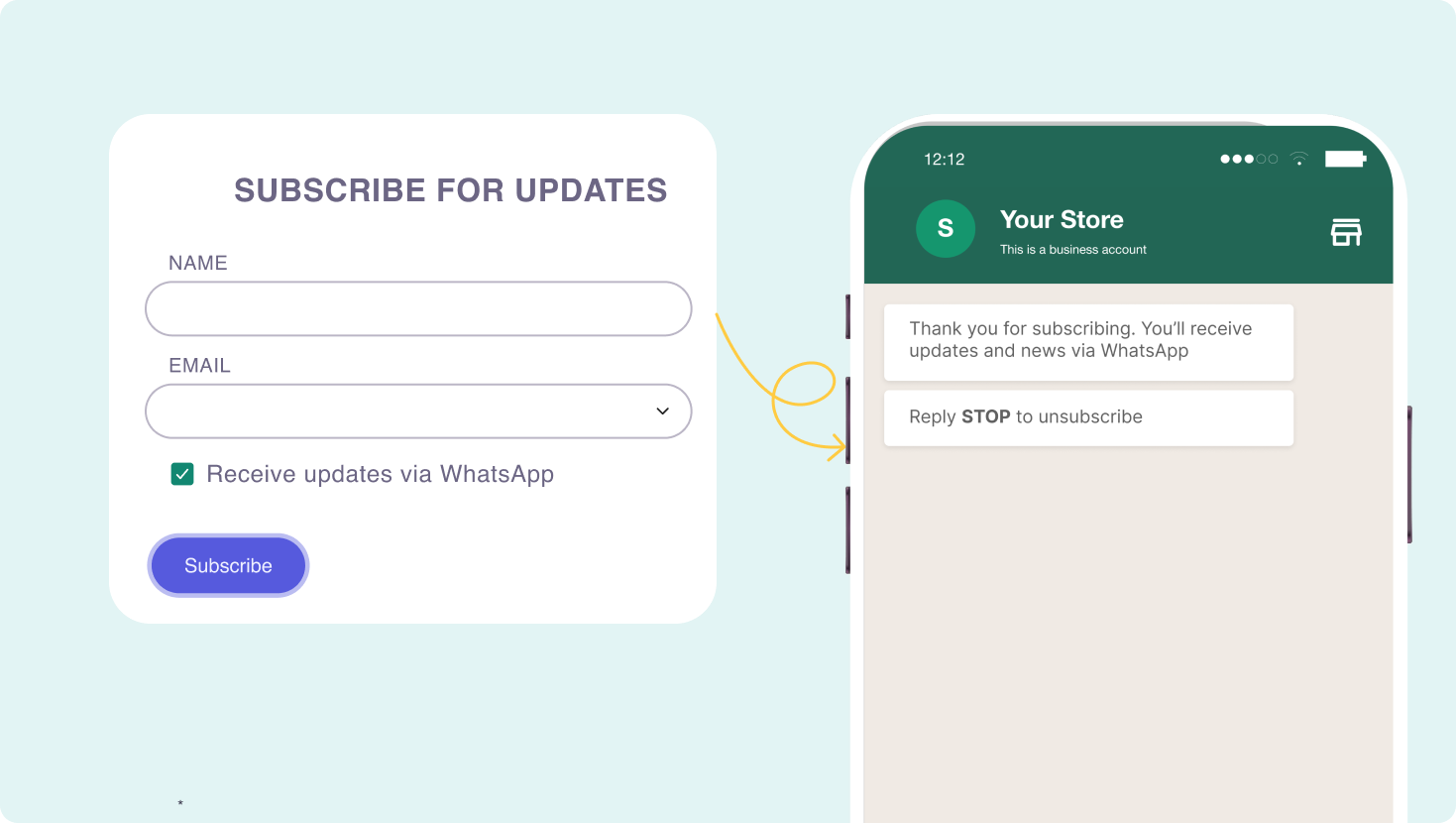
WhatsApp subscription and opt-out process
- Include structured fields such as opt-in channel, method, source URL, and timestamp in every contact record.
- Sync consent across all systems so opted-out users are never re-added.
- Avoid burying opt-outs in footers or jargon; instead, keep it obvious:
“Want fewer updates? Reply STOP to unsubscribe or PAUSE to hear from us less often.”
This lowers frustration and reduces blocks compared to forcing a hard unsubscribe.
- Honor opt-outs immediately across all campaigns and sequences.
If consent records cannot survive an audit, the campaign should not run.
2. Sending too many messages too quickly
High message volume is often mistaken for healthy marketing. In reality, aggressive frequency triggers spam signals and increases block rates.
Common errors include sending multiple promotional messages within a short window, batching entire lists at once, or repeating reminders too closely.
✅Best practice to reduce spam on WhatsApp:
- Space promotional messages at least 24–72 hours apart.
- Limit promotional drips to one or two messages per week per user.
- Use staggered sending instead of blasting everyone at once.
- Warm up new numbers gradually before scaling volume.
- Offer frequency controls instead of forcing complete unsubscribe.
If unsubscribe or block rates rise, reduce frequency immediately.
3. Sending messages to invalid or unverified numbers
Weak data hygiene undermines WhatsApp performance. Messages sent to outdated numbers, missing country codes, or contacts no longer active on WhatsApp waste budget and drag down account quality over time.
✅Best practice for better data management:
- Store every phone number in international format, including the country code, and enforce this at the point of capture rather than fixing it later.
- Validate ownership at signup to filter out typos, duplicate numbers, and contacts who never intended to hear from you.
- Pay close attention to delivery reports; numbers that fail to deliver your messages shouldn’t carry over into future campaigns.
- Send every new drip or list update to a small batch first to catch formatting errors, invalid numbers, or unexpected failures before they affect the full audience.
- Schedule quarterly cleanups to remove dormant, invalid, or unresponsive numbers before they become a liability.
When handled this way, delivery failures stop being a mystery and become early warnings that protect both the sender's and the recipient's reputations and reduce spend.
4. Sending generic, one-size-fits-all messages
Generic messages are instantly recognizable and quickly ignored. Customers know when a message wasn’t meant for them. This happens when teams skip segmentation and rely on copy-paste templates across the entire database.
✅Best practice to send targeted messages on WhatsApp:
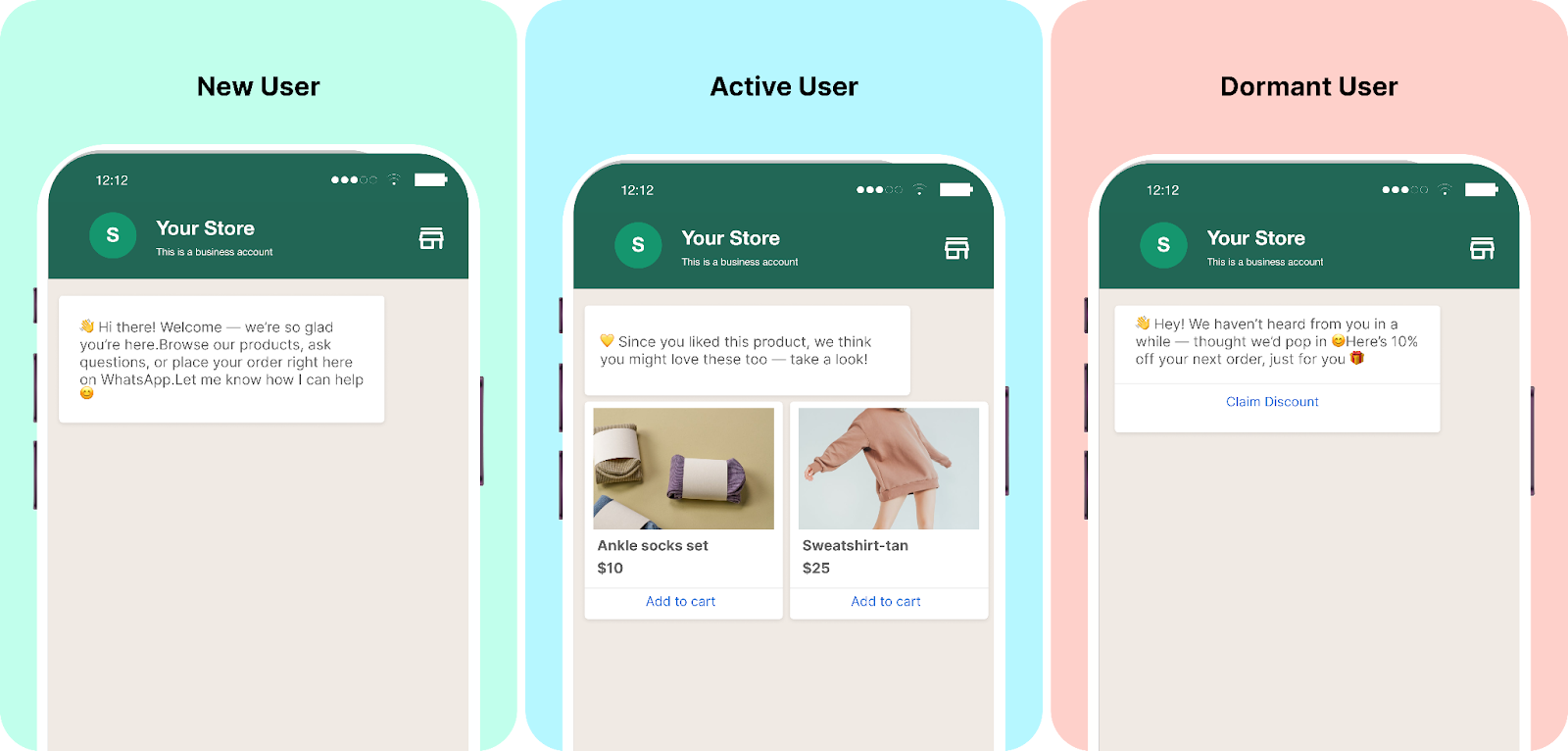
WhatsApp user segments on smartphones
- Personalize beyond names by using real context, such as last viewed products, recent purchases, order status, or previous interactions.
- Segment contacts before launching campaigns. Group users by lifecycle stage (new, active, dormant), behavior (cart abandoned, purchased, inactive), and engagement level to avoid irrelevant messaging.
- Build separate drip sequences for each segment. New users need onboarding and clarity; active customers respond to recommendations and value-add; dormant users need re-engagement cues rather than announcements.
- Reference past actions explicitly to make messages feel deliberate. Lines like “Since you recently ordered…” or “You were looking at…” reduce the perception of generic messages.
- Let customer behavior decide progression. Clicks, replies, and inactivity should alter the next message instead of forcing everyone through the same fixed schedule.
Lower opt-outs usually indicate better targeting than heavier incentives ever will.
5. Poor template management
Templates fail most often because teams treat approval as a formality. Rushed submissions, policy-blind copy, or resending rejected drafts without changes slow campaigns down and weaken account quality over time.
✅Best practice for WhatsApp template management:
- Run an internal review before submission to catch policy issues, unclear intent, or overly promotional language early.
- Maintain a small, reliable library of approved templates that cover core use cases instead of creating new ones from scratch each time.
- Prepare fallback templates for time-sensitive campaigns, so launches don’t stall if a primary draft is rejected.
- Log rejection reasons and patterns to inform how future templates are written and structured.
- Monitor template quality ratings regularly and refresh messaging when performance or ratings decline.
Strong template discipline reduces approval delays, protects sender reputation, and keeps campaigns moving without last-minute fixes.
6. Not measuring performance after launch
Launching a drip is not the finish line. Teams that skip measurement end up repeating weak sequences, missing early warning signs, and struggling to justify results to stakeholders.
✅Best practice for measuring performance after launch:
- Track delivery, opens, clicks, replies, and conversions to understand where attention drops and action stalls.
- Watch block and unsubscribe rates as health indicators, not just engagement metrics.
- Compare results across segments, send times, and sequence types instead of relying on overall averages.
- Review performance regularly and adjust copy, timing, or logic based on patterns, not assumptions.
- Change one variable at a time so improvements can be traced to a clear cause.
Effective drip campaigns improve through steady iteration, not a one-time setup.
Additional Read: WhatsApp Marketing Mistakes to Avoid (And How to Fix Them)
Why WhatsApp Drip Campaigns Should Be Your Next Priority?
WhatsApp drip campaigns work best when they’re treated as systems. The difference between high-performing drips and ignored ones usually comes down to continuity: whether each step responds to customer behavior, context carries forward, and the journey ends in a clear outcome.
Across onboarding, recovery, nurturing, retention, and support, the same pattern shows up. When messages are connected, timed correctly, and allowed to progress inside a single conversation, teams reduce manual effort, and customers move forward with less friction.
If you’re already using WhatsApp for parts of the journey, the next step is to tighten the connections between them. Seeing how automated sequences, in-chat checkout, segmentation, loyalty, and support flows work together is often easier than trying to piece them together on paper.
If you want to explore how Flowcart supports end-to-end WhatsApp drip marketing in practice, you can schedule a demo to walk through use cases relevant to your business.
Frequently Asked Questions (FAQs)
Can I run drips without the API?
The WhatsApp Business App supports basic auto-replies, but it can’t handle multi-step sequences, behavior-based triggers, or proper automation. True drip campaigns require access to the WhatsApp Business API.
What’s the difference between broadcasts and drips?
Broadcasts are one-time messages sent to a list, with no memory of what happens next. Drips are structured sequences where each message depends on timing or customer behavior. One is a send; the other is a system.
How long can drip sequences be?
There’s no fixed limit. Most effective drip campaigns consist of three to seven messages, delivered over days or weeks. Length should depend on the use case and engagement, not on filling a predefined sequence.
Do I need templates for every message?
Yes, for any proactive message sent outside the 24-hour reply window. Transactional and support replies within an active conversation don’t require templates, but marketing and follow-ups do.
How does a WhatsApp drip campaign work?
A customer action or time delay triggers the first message in a drip campaign. Each subsequent message is sent based on predefined rules, such as clicks, replies, or inactivity. The sequence progresses, adapts, or stops depending on the customer's next action.

.png)




%201.webp)



.png)