

Key Takeaways
- Loyalty programs fail when rewards are delayed, hidden, or disconnected from where customers already engage. WhatsApp fixes this by keeping loyalty visible and timely.
- WhatsApp loyalty works because of high message visibility, real-time triggers, and the ability to earn, track, and redeem rewards without switching channels.
- Automation turns loyalty into a system. Points, reminders, and re-engagement run based on behavior instead of manual follow-ups.
- In-chat commerce and WhatsApp webviews close the gap between reward and purchase, reducing drop-offs and increasing conversions.
- The right platform matters. Native point tracking, CRM sync, and commerce integration are more important than message volume alone.
- Brands that treat WhatsApp as a relationship channel see higher repeat purchases and stronger lifetime value.
Loyalty programs fail because customers hear about them too late, through channels they don’t check, and in formats that are hard to follow.
For example, Darling Hair, a hair manufacturer and distributor in Kenya, tracked their stylist’s loyalty points using paper vouchers and with the help of sales representatives. Even though they had reward points available, there was minimal visibility.
When Darling Hair moved its loyalty program onto WhatsApp using Flowcart, tracking became automatic and visible inside ongoing conversations. The team could see purchase patterns in real time and re-engage customers when it mattered. The outcome was concrete: sales increased by 300%, and unique customer accounts grew from 2,000 to 13,500.
This guide explains how WhatsApp loyalty programs work and why you should fix common loyalty gaps.
Why WhatsApp Is a Powerful Channel for Customer Loyalty?
Customer loyalty depends on two things: visibility and timing. Customers need to know what they’ve earned, and brands need a way to act while intent is still active. WhatsApp is an ideal fit in this situation because:
- It has over 3.2 billion users globally, with 83% opening the app every day and spending an average of 30 minutes daily, giving your loyalty messages maximum visibility.
- WhatsApp messages have 98% open rates, compared to roughly 20% for email, and 45–60% click-through rates, versus email’s 2–5%.
- Around 80% of messages are opened within five minutes, which matters when rewards, reminders, or offers are time-sensitive.
Thanks to WhatsApp, customers do not have to log in to a portal or search their inbox to retrieve points. The updates appear in the same places where conversations already occur.
Additionally, trust is built into this channel. WhatsApp uses end-to-end encryption, which makes customers more comfortable sharing information and completing transactions. In fact, it also ensures that verified businesses carry a verification badge, indicating that customers are speaking to a legitimate brand.
Personalization is also a key reason 53% of retailers automate messaging over WhatsApp Business Platform, enabling more personalized customer service at scale. You can send messages to your customers based on their purchase history, behavior, and engagement patterns, making loyalty rewards a genuine touchpoint in your relationship with them.
Setting up automation to trigger loyalty messages can also help you cover milestones like birthday rewards, early access during sales, and reminders about expiring points. Put simply, running your loyalty program on WhatsApp makes it an active part of your marketing campaign, enticing customers to re-purchase and re-engage.
How WhatsApp Loyalty Programs Work?
WhatsApp loyalty programs use three components: the WhatsApp Business platform (API) for messaging and automation, a loyalty system or CRM to track points and customer activity, and automated workflows that trigger messages based on customer interactions with your brand.
Once connected, loyalty programs cease to be a separate system and become part of the buying flow. Plus, customers can themselves become a part of this journey by:
- Scanning a QR code at checkout or on packaging opens a WhatsApp chat instantly.
- Sending a keyword like JOIN or LOYALTY starts enrollment in seconds.
- Clicking a link from a website, ad, or email opens a pre-filled WhatsApp message.
For example, Flowcart places QR codes on in-store packaging, making it comfortable for customers to scan them and opt in for updates and rewards via WhatsApp.
💡Pro Tip: Add instant bonus points on signup to give customers a reason to engage right away.
Once enrolled, rewards are tied directly to customer actions. For example, purchases auto-trigger points through POS or ecommerce integrations; brands can award points per visit, per spend, or during specific campaigns, or allocate points to buyers based on referrals, reviews, surveys, or repeat purchases.
This removes the most common loyalty failure point: customers not knowing how many reward points they have. In fact, WhatsApp also lets you inform them when they’ve reached a reward threshold. That way, they can request redemption directly inside the chat, have the system auto-verify their eligibility, and deliver rewards as discount codes, QR codes, or confirmation messages.
Loyalty programs also depend highly on your customers’ behavior triggers. For example:
- Post-purchase messages confirm points and suggest next steps.
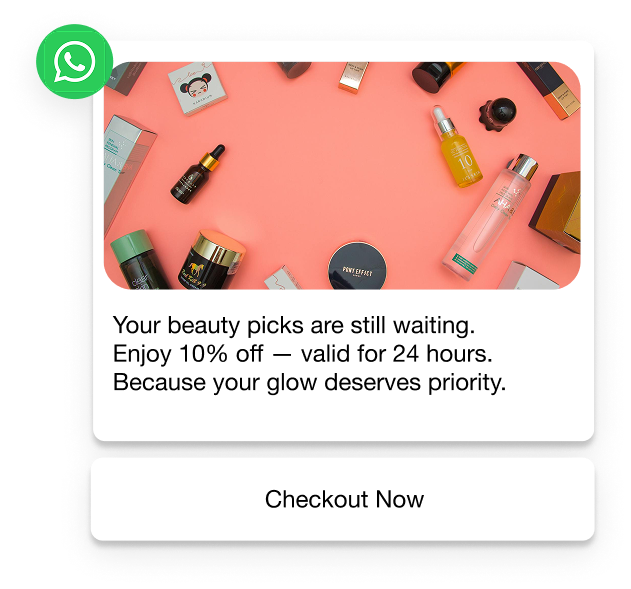
- Cart reminders bring customers back with targeted incentives.
- Replenishment reminders appear when repeat buying is likely.
- Birthday and anniversary messages deliver time-bound rewards.
- Inactive customers receive targeted nudges instead of blanket campaigns.
Since these messages are highly context-driven, they reduce the risk of sounding promotional. Thus, allowing space for relevance and personalization for relationship-building with your buyer.
In practice, a WhatsApp loyalty program works because it removes friction at every step. Customers join easily, see rewards clearly, and act without switching channels. For brands, loyalty becomes measurable, automated, and tied directly to revenue rather than follow-ups.
Next Read: WhatsApp Webview for Shopping: Complete Guide
Smart WhatsApp Loyalty Strategies for 2026
As businesses prepare to introduce the next big thing in their buyer’s journey, WhatsApp loyalty strategies must evolve beyond basic point-collection systems. Here are the key strategies to help define customer loyalty success over the next year.
1. Sending Hyper-Personalized Loyalty Messages
You can use advanced AI segmentation to deliver individualized experiences. For example, use automated systems to analyze behavioral patterns, like purchase history, browsing behavior, emotional cues in chat tone, and spending frequency, to deliver messages precisely tailored to each customer's mindset.
Put simply, rather than treating loyalty as a points game, embed rewards and benefits into ongoing customer conversations.
The process can look something like this: an AI-powered system detects that a customer is repeatedly browsing athletic wear but hasn't purchased. In response, it can trigger a personalized WhatsApp message, "We noticed you're into fitness so here's 15% off our premium running shoes, plus free shipping."
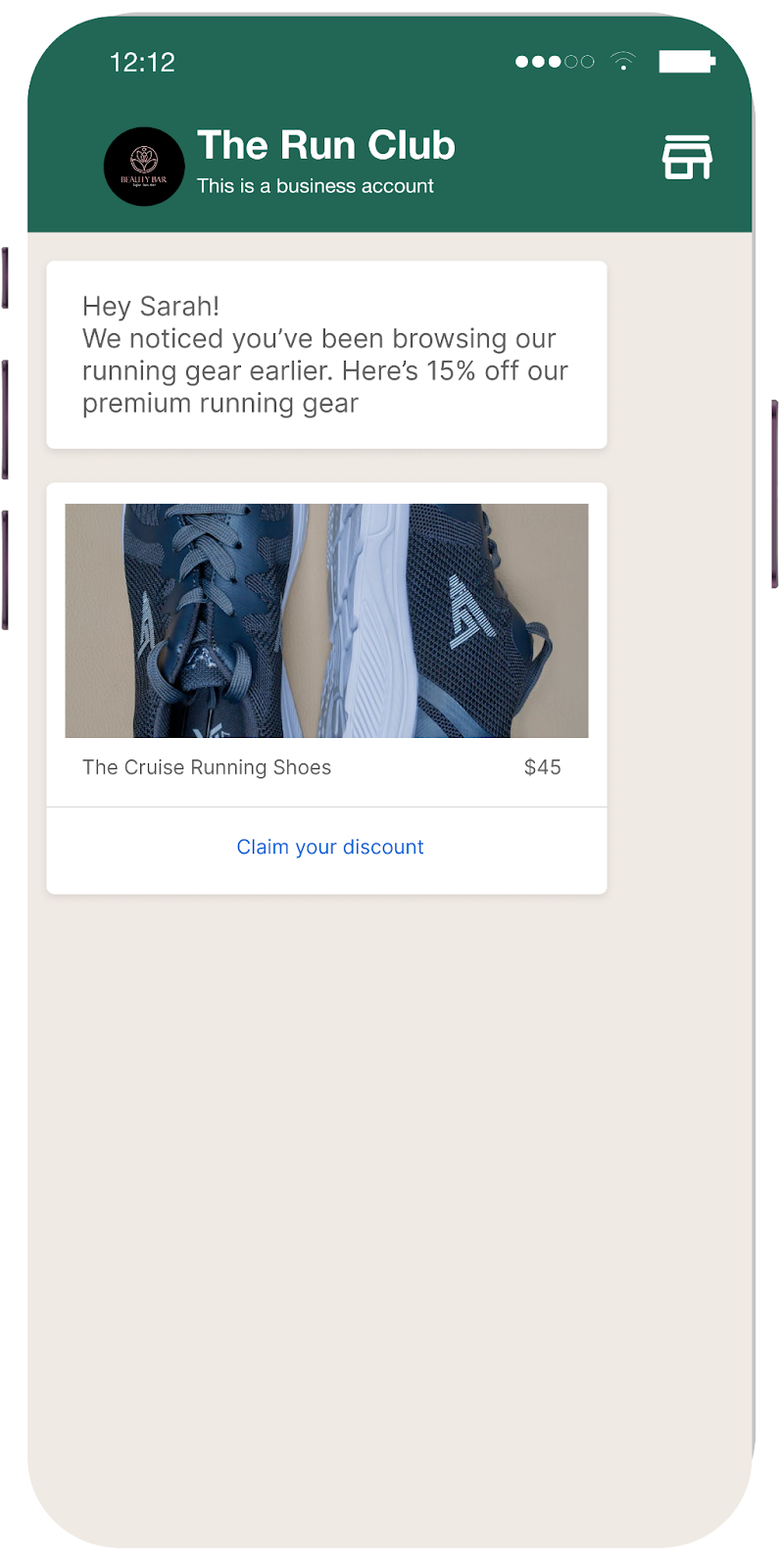
Personalizing loyalty messages in WhatsApp chat using segmentation
This differs fundamentally from broadcast campaigns because it's triggered by specific behavior patterns and delivered at the moment of highest intent.
Predictive personalization makes this process even better. AI predicts behavior before it happens, in contrast to being dependent on customers’ activities. So, if a customer's purchase pattern suggests they typically reorder vitamins every 30 days, the system can proactively send a reminder at day 28: "Ready to refill? Your next order is 15% off."
This seamless experience dramatically improves satisfaction and makes your team exponentially more efficient.
2. Integrating In-Chat Commerce
WhatsApp is evolving from a communication channel into a complete shopping interface. Customers discover products, receive personalized recommendations, and complete purchases without ever leaving the app.
This shift is powered by conversational flows and WhatsApp webviews, which allow brands to open rich, app-like shopping screens directly inside the chat.
The mechanics work like this: a customer asks via WhatsApp, "What's new in your fall collection?" An AI chatbot provides personalized product recommendations based on their style history.
The customer selects an item, and a payment link appears in the same chat thread, prompting them to complete the transaction with a single tap. Next, the backend sends a confirmation message immediately, followed by automated shipping updates in the same conversation.
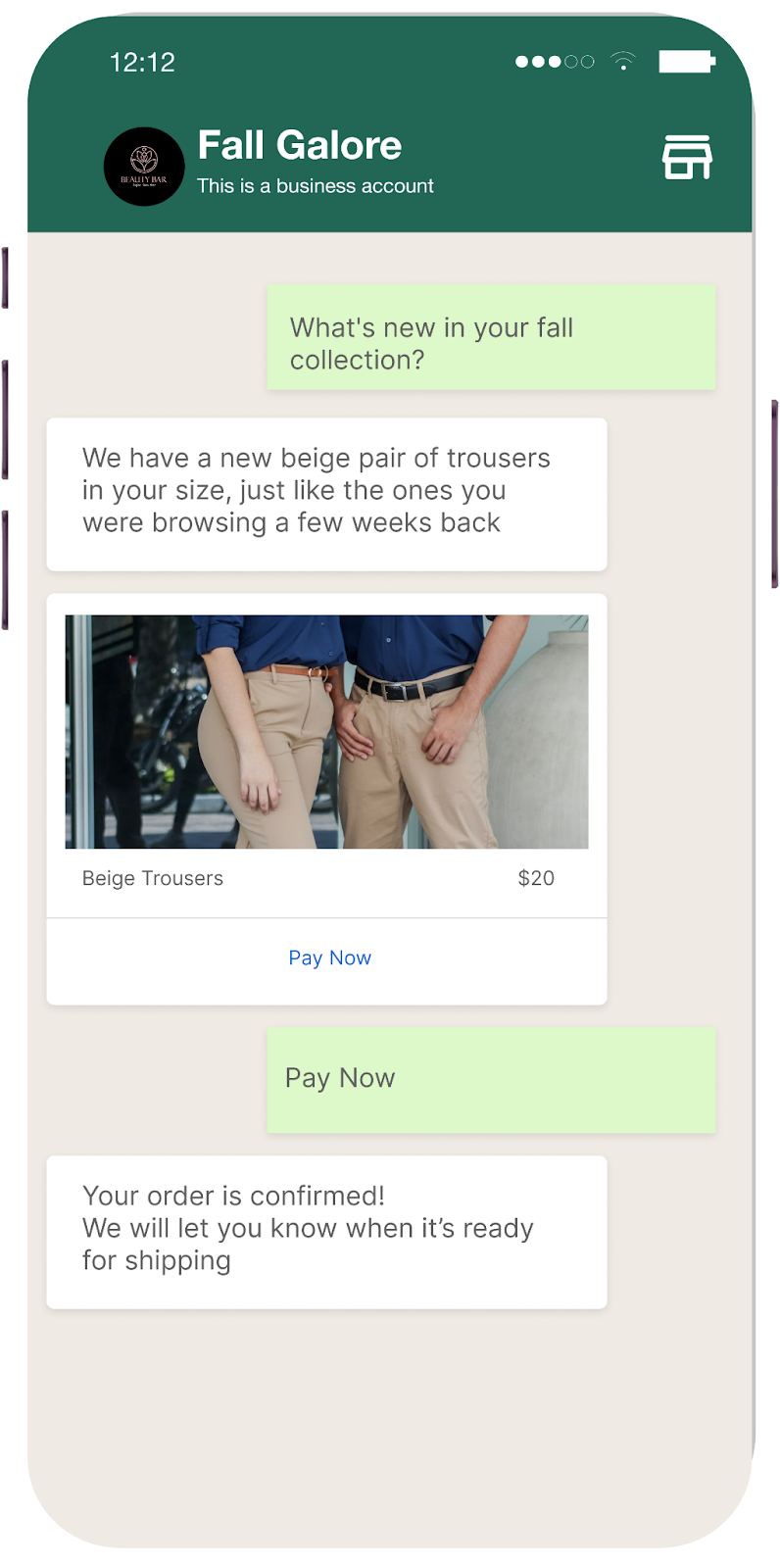
Online purchasing through WhatsApp Chat
Integration with payment processors such as PayPal and Stripe, along with local payment methods, makes this experience even more inclusive.
For loyalty programs specifically, this means customers can redeem points directly within WhatsApp, instantly receive discounts applied to their purchase, and proceed to checkout within the same chat thread.
💡Flowcart builds on this model with in-chat checkout, so loyalty and purchase don’t split across tools or pages. Customers can browse products, apply loyalty rewards, and complete payments directly in WhatsApp via webviews, without redirects or separate shops. By keeping checkout inside the conversation, Flowcart reduces drop-offs and helps loyalty incentives convert into completed orders rather than stalled intent.
Additional Read: WhatsApp Lead Qualification: Turn WhatsApp Leads Into Revenue
3. Inviting buyers to community-based exclusive access programs
WhatsApp Communities and WhatsApp Groups have long fostered a sense of belongingness and exclusivity among people. But how can you use it to your advantage?
You can create structured community spaces where top-tier loyal customers enjoy exclusive benefits: early product access, private Q&A sessions with founders, behind-the-scenes content, exclusive discounts available only to community members, and peer interaction that improves their rapport with the brand.
For example, a luxury fashion brand might establish a "VIP Circle" WhatsApp Community where members can view new designs 48 hours before public release, enjoy premium customer support for consultations, and get additional discounts during sales.
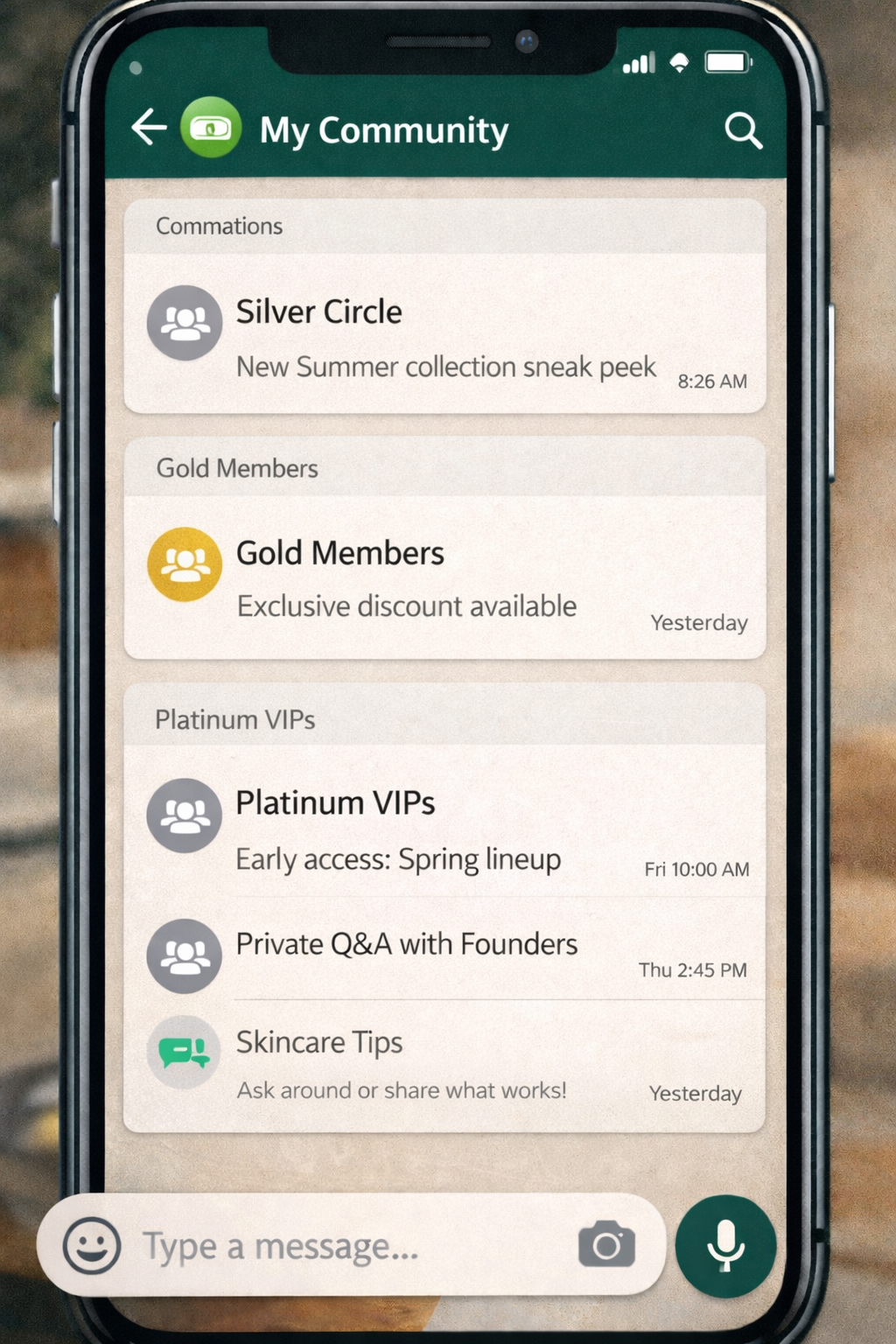
WhatsApp communities loyalty tiers on display
Here’s an example structure for your reference:
- Tiered Communities: Separate communities for different loyalty tiers (Silver, Gold, Platinum), each with escalating exclusivity and benefits.
- Topic-Based Sub-Groups: Within a main community, specific groups focus on different interests, like "Summer Collection," "Skincare Tips," and "New Member Q&A", allowing members to self-segment while feeling part of a larger ecosystem.
- Exclusive Content: Communities receive early tutorials, behind-the-scenes footage, sneak peeks of upcoming products, and educational content unavailable anywhere else. This drives consistent customer engagement, with members checking in regularly for new exclusive drops.
Community-based loyalty can drive measurable increases in engagement frequency and redemption rates because members feel they're part of something exclusive.
4. Organizing interactive challenges
Gamified loyalty strategies such as quizzes, spin-to-win games, progress bars, achievement badges, and challenge-based rewards directly trigger emotional engagement within WhatsApp conversations.
Rather than passively receiving "You earned 10 points," customers actively earn rewards, creating a sense of accomplishment and enjoyment.
For example, a coffee shop sends a weekly coffee-knowledge quiz via WhatsApp. Correct answers earn bonus points, and participation itself earns base points. Hence, driving weekly engagement, with customers looking forward to the quiz.
Similarly, you can organize a challenge-based reward system by sending customers messages like, "Purchase any two items this week to unlock 50 bonus points". It creates short-term urgency, while the challenge framework makes participation feel like an achievement.
An alternative approach to this reward system is to use progress visualization tactics. Your loyalty program can display visual progress bars, like, "You're 40% toward your next reward, only 60 more points!" Seeing progress motivates continued engagement.
This approach works particularly well in categories where customers benefit from guidance before buying. In practice, brands like Uncover have used interactive quizzes on WhatsApp to both personalise recommendations and drive revenue, ultimately making WhatsApp a stronger sales channel than email.
The key is restraint. Interactive challenges should feel helpful and achievable, not like games layered onto a purchase. When done right, they keep customers engaged, informed, and moving steadily toward their next order.
Must Read: WhatsApp Retention Campaigns: Proven Strategies to Drive Loyalty & Repeat Sales
Implementation Framework for Loyalty Programs
To successfully adopt these strategies, businesses should:
- Choose the right platform: Select a WhatsApp management platform that offers AI chatbots, CRM integration, automation, analytics, and community management.
Here’s a comparison table of WhatsApp marketing tools for your reference:
This comparison highlights an important takeaway: the right WhatsApp platform depends on how central loyalty is to your growth strategy. If loyalty is treated as a core revenue driver, features like native point tracking, behavioral automation, and commerce integration matter far more than message volume alone. Use the table to narrow your options based on your business model, technical capacity, and the level of integration you want between loyalty and purchases and re-engagement.
You can also test the waters with Flowcart’s 7-day free trial. It’s a straightforward way to understand how native point tracking, automated rewards, and in-chat commerce fit into your retention strategy before making a long-term decision.
- Integrate backend systems: Ensure seamless connections between your WhatsApp CRM, POS, e-commerce platform, and payment processors. This integration is foundational to everything else.
- Start with quick wins: Don't implement all strategies simultaneously. Begin with trigger-based messaging (easiest to launch, highest ROI), then add gamification, then build communities.
- Measure everything: Track metrics like enrollment rate, point earning rate, redemption rate, customer lifetime value impact, and revenue directly attributed to WhatsApp loyalty. Use data to optimize continuously.
- Prioritize personalization: Invest in AI that understands individual customer contexts, preferences, and emotions, since generic broadcast loyalty programs can underperform.
- Build for community: Create exclusive spaces where loyal customers feel part of something special, not just members of a points program. Community drives the deepest loyalty.
The brands winning at WhatsApp loyalty will be those that view the channel as the primary relationship interface where customers discover products, make purchases, earn rewards, and feel genuinely valued.
Next Read: How to Build Customer Loyalty Using WhatsApp Broadcasts
How to Set Up WhatsApp Loyalty Automation With Flowcart
Setting up loyalty on WhatsApp only works if it’s simple for customers and manageable for your team. Flowcart is built around that idea: define the rules once, and let the system handle the rest inside WhatsApp.
There are three parts to the setup, and none of them require custom development.
1. Define how customers earn points
The first step is deciding which customer actions should be rewarded. Flowcart allows you to assign points based on commercial and engagement signals that already exist in your business.
You can award points based on purchase value, repeat purchases, or specific product categories. Points can also be earned for completing surveys, sharing feedback, or participating in seasonal campaigns. These rules are configured upfront and apply automatically to every eligible customer interaction.
Once a rule is active, points are credited in real time. Customers receive confirmation messages inside WhatsApp immediately after the action occurs, without needing to contact support or check a separate dashboard.
2. Automate loyalty communication and redemption
After point rules are in place, Flowcart manages the full loyalty lifecycle without manual follow-ups.
Customers can view their point balance, explore available rewards, and redeem points directly within WhatsApp. Redemptions can be applied to future purchases as discounts, store credit, physical gifts, or cash-out options via mobile money, depending on how the program is configured.
On the automation side, Flowcart triggers messages based on customer behavior. Post-purchase confirmations, reminders for unused points, limited-time reward campaigns, and seasonal promotions are sent automatically. Loyalty points can also be used strategically to recover abandoned carts or to nudge customers toward new products using existing balances.
Because these interactions happen in the same conversation where customers already shop and ask questions, loyalty feels connected to the buying process rather than layered on afterward.
3. Track impact on engagement and revenue
Flowcart provides clear visibility into how loyalty affects business outcomes. Teams can see which customers earn and redeem points most often, which rewards drive repeat purchases, and how loyalty members compare with non-members in order frequency and lifetime value.
For customers, the experience stays simple. There are no apps to install, no portals to log into, and no emails to search for. Loyalty updates arrive where they already spend time.
For internal teams, this translates into higher repeat orders without increasing ad spend, improved customer lifetime value, and reliable data on who your most loyal customers are and what keeps them engaged.
Flowcart is used by hundreds of companies worldwide because it turns loyalty into a continuous system rather than a campaign that requires constant attention. If you want to see how WhatsApp loyalty would work with your own catalog and customer data, the most effective next step is to schedule a demo.
FAQs
What are WhatsApp loyalty programs?
WhatsApp loyalty programs enable businesses to run rewards, points, and re-engagement directly within WhatsApp conversations. Customers earn, track, and redeem rewards without apps, logins, or emails. Everything happens in the same chat they already use to browse and buy.
What types of rewards can businesses offer through WhatsApp loyalty programs?
Businesses can offer discounts, store credit, free products, cashback, early access, or limited-time promotions. Rewards can be tied to spend, frequency, referrals, or engagement actions like feedback. The format stays flexible and visible inside WhatsApp.
Can customers join a loyalty program directly via WhatsApp?
Yes, customers can join by scanning a QR code, clicking a WhatsApp link, or sending a keyword to a business number. Enrollment occurs in the chat, typically within seconds, without forms or external sign-ups.
How do businesses automate loyalty points and rewards on WhatsApp?
Automation is handled through WhatsApp APIs connected to CRM, POS, or ecommerce systems. Points are credited automatically after purchases or actions, and messages are triggered based on behavior. Rewards, reminders, and redemptions run without manual follow-ups.
Are WhatsApp loyalty programs effective in increasing customer retention?
Yes, because messages are seen quickly and rewards are easy to access, customers stay more engaged. Brands consistently see higher repeat purchases and stronger lifetime value compared to email-led loyalty programs.
Is it possible to personalize loyalty rewards on WhatsApp?
Yes, rewards can be personalized using purchase history, frequency, engagement level, and timing. This allows businesses to send relevant offers instead of generic points updates, which improves redemption and repeat buying.




%201.webp)



.png)